You usually notice tinnitus when everything else is quiet. At night. Early morning. During a pause in conversation. The room is silent, but your ear is not. There is a sound, and once you notice it, it becomes hard to ignore.
A persistent ringing, buzzing, or hissing sound in the ears that no one else medically, is called tinnitus, and it affects millions of people worldwide. According to the World Health Organization (WHO) and global hearing health reports, nearly 15–20% of adults experience tinnitus at some point in their lives, and about 1 in 10 people develop chronic or recurring symptoms that interfere with sleep, concentration, and daily activities.
In India, rising exposure to traffic noise, urban pollution, earphone overuse, and workplace noise hazards has increased ENT doctor consultation for hearing-related complaints. Data published in the Indian Journal of Otolaryngology & Head and Neck Surgery suggests that tinnitus and hearing disturbances account for a growing share of outpatient ENT visits, particularly among adults over 40 and young professionals exposed to prolonged headphone or mobile use.
The good news is that modern ENT treatment can identify the cause and provide complete relief. Some people describe it as ringing. Others say buzzing, hissing, or a sharp high note that does not fade. You might even find yourself checking appliances or asking someone nearby if they hear it too. They don’t. Specialist from a top ENT Hospital in Delhi explains tinnitus in simple terms and also answers “Can tinnitus causes hearing loss?”
What is Tinnitus Meaning?
When doctors explain tinnitus meaning, they usually start by saying it is not a disease. That statement is technically correct, but it doesn’t always help you understand what is happening.
Tinnitus simply means you are hearing a sound that does not come from the outside world. The sound is being generated somewhere along your hearing pathway. That pathway includes the ear, the nerve, and the parts of the brain that process sound.
Nothing is “imaginary” about tinnitus. The sound feels real because it is being processed as real.
Why the Tinnitus Sound Feels So Personal? Why only your ears hear this sound?
There is no universal tinnitus sound. That surprises many people. One person hears a soft ringing. Another hears a sharp whistle. Someone else notices a low hum that feels almost mechanical. The tinnitus sound can change during the day. It may get louder when you are tired or stressed. It may reduce when you are distracted.
This variation matters. It helps an ENT understand where the issue might be coming from.
Tinnitus of Ear: One Ear, Both Ears, or Inside the Head?
Sometimes tinnitus affects both ears evenly. Sometimes it affects only one. Tinnitus in one ear often feels more alarming, and for good reason. While it does not automatically mean something serious, it does need proper evaluation.
Unilateral tinnitus can be linked to local ear problems, nerve issues, or structural causes. This is why persistent tinnitus on one side should always be discussed with an ENT doctor.
Tinnitus Symptoms
The sound itself is only part of the experience. Tinnitus symptoms often affect how you feel and function
You may notice:
- Trouble falling asleep
- Irritation without clear reason.
- Difficulty focusing
- Feeling overwhelmed by normal noise
- Anxiety about silence.
These reactions are common. They do not mean the tinnitus is worsening. They mean your brain is reacting to an unfamiliar signal.
Tinnitus Causes
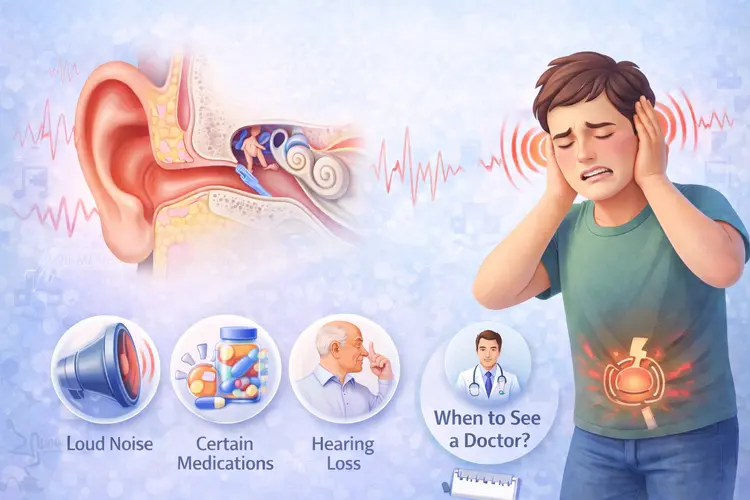
Over 80–90% of tinnitus cases are linked to hearing system damage, most commonly from noise exposure, age-related hearing loss (presbycusis), ear infections, or wax blockage. According to the National Institute on Deafness and Other Communication Disorders (NIDCD), nearly 50% of chronic tinnitus patients also have measurable hearing loss, while prolonged exposure to sounds above 85 decibels significantly increases risk.
In many cases, tinnitus appears after:
- Long-term exposure to loud sound.
- Gradual age-related hearing changes
- Ear infections or fluid issues.
- Earwax blockage
- Certain medications
- Sudden stress affecting the nervous system
So, Can Tinnitus Cause Hearing Loss?
This is the question you came here for. Here is the honest answer.
Tinnitus does not damage your hearing. It does not destroy ear structures. It does not reduce hearing ability on its own. What usually happens is the opposite. Subtle hearing damage occurs first. The brain notices missing or altered sound signals. Tinnitus appears as a response
In simple terms, tinnitus is often a signal, not the cause.
Why Hearing Loss and Tinnitus Often Appear Together?
When hearing cells in the inner ear are damaged, they stop sending certain sound frequencies to the brain. The brain does not like silence in those frequencies. It compensates. That compensation can feel like tinnitus.
This explains why tinnitus often becomes more noticeable at night, when external sound is minimal. It also explains why many people with tinnitus are later found to have mild hearing loss, even if they did not notice it earlier.
Why Ignoring Tinnitus is harmful?
Nearly 50–60% of chronic tinnitus patients also develop measurable hearing loss, and untreated cases are associated with poor sleep, reduced concentration, anxiety, and decreased quality of life. According to the National Institute on Deafness and Other Communication Disorders (NIDCD), persistent tinnitus indicate inner ear damage, nerve dysfunction, or circulatory issues that require ENT treatment
Also Prolonged exposure to noise levels above 85 decibels further increases the risk of inner ear damage and persistent ringing.
Even though tinnitus does not directly cause hearing loss, ignoring it can delay diagnosis of problems that do affect hearing.
This is where an ENT specialist and an Audiology doctor in Delhi is needed to be consulted for:
- Hearing thresholds
- Ear health
- Nerve functions
- Risk factors
How ENT Doctors Actually Evaluate Tinnitus
An ENT doctor will listen carefully to how you describe the sound.
You may undergo:
- Hearing tests
- Tympanometry
- Clinical ear examination
If needed, imaging may be advised. Not always. Only when signs point in that direction.
A structured approach prevents unnecessary fear.
Tinnitus Treatment in Delhi
If tinnitus is caused by earwax blockage, simple ear cleaning or suction removal often resolves symptoms immediately. For ear infections or inflammation, medications such as antibiotics or anti-inflammatory drugs are prescribed. When related to allergies or sinus congestion, antihistamines and nasal treatments help reduce ear pressure and ringing.
Patients with diabetes, thyroid imbalance, or blood pressure problems may notice improvement once these conditions are controlled medically.
Treatment focuses on:
- Addressing underlying ear issues
- Improving hearing when hearing loss exists
- Reducing awareness of the sound
Tinnitus Retraining Therapy and Brain Adaptation
Tinnitus retraining therapy is based on a simple idea. The brain can learn to ignore sounds it no longer finds important. This therapy uses low-level sound combined with counseling. Over time, tinnitus moves from the foreground of attention to the background.
Many people reach a point where tinnitus no longer bothers them, even though the sound technically remains.
Devices like:
- White noise machines
- Mobile apps
- Hearing aid maskers are also prescribed if patient’s condition allows.
Living With Tinnitus Without Letting It Control You
People often fear tinnitus will take over their lives. That fear is understandable, but it is usually unnecessary. Avoid silence completely. Soft background sound helps. Protect your ears from loud noise. Manage stress realistically.
Tinnitus does not cause hearing loss, but it often tells you that your hearing system needs attention. Ignoring it leads to worry. Understanding it brings control.
If tinnitus has been bothering you especially if it affects sleep or concentration, professional evaluation helps. Primus Hospital offers experienced ENT specialists, audiology services and structured tinnitus management in one place
You do not need to live guessing what the sound means. Consult the specialists at Primus Hospital and get clear answers