Delhi’s air quality often plummets. It reaches alarming levels. This happens especially during the winter months. The air quality index, or AQI, measures air pollution. An AQI over 400 is considered severe AQI conditions. This level triggers emergency health warnings. The air becomes highly toxic. It poses grave Health risks due to pollution. Everyone is affected. But children and the elderly suffer most. This toxic air is a silent enemy. It attacks nearly every organ system. It causes immediate illness. It causes long-term, chronic disease.
The main culprit is fine particulate matter. It is called PM2.5. These particles are incredibly tiny. They are smaller than a single human hair. They penetrate deep into the lungs and even enter the bloodstream. This widespread exposure causes major problems. In this article, we will explain how this toxic air affects the body. We detail the harm to the lungs and discuss why expert care is non-negotiable
What Severe AQI Really Means
The Air Quality Index (AQI) is a yardstick. It measures how polluted the air is. It runs from 0 to 500. A higher number means more pollution. It means greater health concern.
AQI Categories and Health Warnings
- Poor (201-300): Breathing difficulties are common. This happens especially upon exertion.
- Very Poor (301-400): Everyone may experience respiratory illness. Prolonged exposure is highly dangerous
- Severe (401-500+): Severe AQI conditions trigger health warnings. The entire population is likely to be affected. Serious health effects occur. People are advised to stay indoors
When the AQI is above 400. This severe level means emergency conditions. Breathing this air for even a short time. It is equivalent to smoking several cigarettes. This highlights the serious Risks due to high AQI
Direct Attack on the Lungs
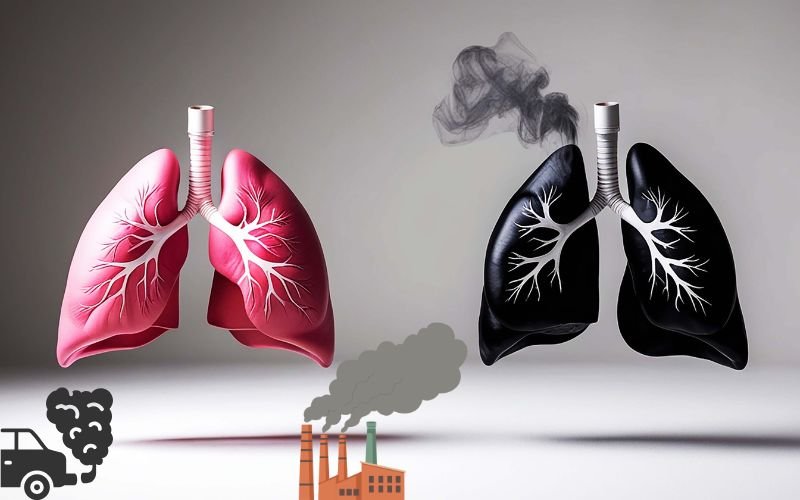
The lungs are the first line of defense. They bear the heaviest load. Inhaling the tiny PM2.5 particles. This triggers immediate inflammation. It causes long-term, irreversible damage. This is a primary Health risks due to pollution. Bronchitis is so common these days that every 3rd person has some symptoms of it due to polution levels.
Acute and Chronic Lung Damage
- Acute Symptoms: Coughing. Wheezing. Shortness of breath. Throat and nasal irritation. Even healthy people report chest tightness.
- Exacerbated Conditions: Severe AQI conditions make existing conditions worse. Asthma attacks become more frequent. Chronic Obstructive Pulmonary Disease (COPD) worsens rapidly
- Long-Term Disease: Prolonged exposure. It is directly linked to lung cancer. This is true even for non-smokers. It causes chronic bronchitis. It causes reduced lung function
Specialized doctors are needed. A skilled Pulmonology specialist in Delhi manages these complex, chronic illnesses. They work to preserve the remaining lung capacity.
The Heart Connection: Cardiovascular Risks Due to High AQI
The polluted air does not stop at the lungs. Fine particles enter your bloodstream. They cause systemic inflammation. This places extreme strain on the heart. This is one of the most serious Risks due to high AQI.
How Pollution Harms the Heart
- Vascular Damage: PM2.5 particles damage the blood vessel linings. This causes inflammation. It leads to hardening of the arteries. This is called atherosclerosis.
- Blood Clotting: Pollution makes blood thicker. It promotes clot formation. Clots can block blood flow. This leads to a heart attack. It leads to a stroke
- High Blood Pressure: Toxic air exposure raises blood pressure
- Arrhythmias: The pollution may interfere with the heart rhythm. This causes irregular heart beats.
Even short-term exposure during severe AQI conditions. It can trigger chest pain. It can cause heart failure in vulnerable people.
Systemic Threats: Beyond the Lungs and Heart
The Health risks due to pollution extend far beyond the cardiorespiratory system. Pollution is a major stressor for the entire body.
Other Organ Systems Affected
- Brain and Cognition: Pollution particles can cross the blood-brain barrier. They cause neuroinflammation. This can lead to headaches. It causes “smog hangover” or mental sluggishness. Long-term exposure increases the risk of Parkinson’s. It increases the risk of Alzheimer’s.
- Fetal Health: Pregnant women exposed to severe AQI conditions. They face higher risks. Risks include low birth weight. Risks include premature birth.
- Immune System: Chronic inflammation make the body weak. It makes people more prone to infection
- Eyes and Skin: Irritation of the eyes is common. Eyes feel dry. They feel itchy. Skin problems and allergies worsen.
Seeking Care at Best Pulmonology Hospital in Delhi
Managing complex illnesses caused by pollution is tough. You need expert care a dedicated facility. A Pulmonology hospital in Delhi offers this.
The Role of Lung Doctors in Delhi
A specialized Lung doctors in Delhi can provide crucial services.
- Diagnosis and Monitoring: They employ high-tech lung tests. They perform a preemptive assessment of damage. They follow up on the course of diseases.
- Individualized Treatment Plans: For Asthma or COPD, they develop individualized treatment regimes. They are task-oriented in symptom management. They aim to reduce flare-ups
- Infection Management: Pollution increases the weakness ofthe lungs. This exposes them to infection. Experts give efficient and timely treatment.
Choosing the Best lung hospital in Delhi is a decision. It protects your long-term health
Minimizing Risks Due to High AQI.
While policy changes are needed. Personal action is essential. You must minimize your exposure
Practical Steps for Protection
- Stay Indoors: Limit outdoor activity. Do this during peak pollution hours. Peak hours are usually morning and late evening
- Use N95 Masks: When going outside is necessary. Wear an N95 mask. Cloth or surgical masks do not filter PM2.5 effectively.
- Air Purification: Use high-efficiency air purifiers indoors. Keep windows tightly shut
- Hydration and Diet: Drink plenty of water. Eat antioxidant-rich foods. This helps the body fight oxidative stress
A Pulmonology specialist in Delhi can advise. They suggest the best masks and air purifiers.
The Health risks due to pollution in Delhi are undeniable. Severe AQI conditions are a deadly threat. Protecting the respiratory and cardiovascular systems is paramount. This requires continuous vigilance. It requires proactive medical care
Primus Hospitals is recognized. It is a leading Pulmonology hospital in Delhi. Our dedicated team. It includes highly experienced Pulmonology specialist in Delhi. We provide comprehensive treatment. We manage acute respiratory distress. We manage chronic lung disease. Primus Hospitals protect you from the serious risks due to high AQI. Get in touch with us today!
FAQs
Studies show the risk is significant. Long-term exposure to high PM2.5 levels. It is classified as carcinogenic. It is placed in the same category as tobacco. The risk is alarmingly high
Experts advise caution. They warn against any strenuous outdoor activity. This is true when the AQI is above 150. The safest range for all activity is below 50
Children breathe faster. They inhale more pollutants per minute. Their lungs are still developing. This makes them highly sensitive to pollution damage.
Look for hospitals. They have a dedicated Pulmonology department. They have advanced diagnostic tools. They should have experienced Lung doctors in Delhi.
Short-term exposure can cause acute symptoms. It can trigger heart attacks in people. People with pre-existing conditions. Repeated short-term exposures. They can accumulate. This leads to chronic, long-term harm.