
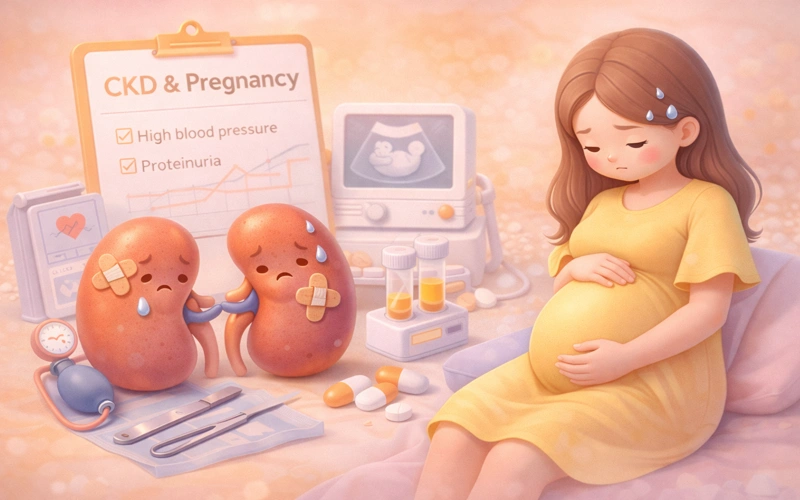
Chronic kidney disease affects approximately 10% of the global population as per International Society of Nephrology. Pregnancy in women with kidney disease requires structured medical monitoring due to higher maternal and fetal risks.
Can kidney problems affect pregnancy? Yes. Reduced kidney function increases the likelihood of hypertension, proteinuria, preeclampsia, preterm delivery, and fetal growth restriction. Women with declining renal function before conception face greater risk of accelerated kidney damage during pregnancy. Stage 3 kidney disease and pregnancy require careful risk assessment, especially when estimated glomerular filtration rate (eGFR) declines below clinical safety thresholds. Baseline proteinuria and blood pressure control influence outcomes significantly.
Kidney Disease During Pregnancy and Nephrology Hospital in Delhi
Chronic kidney disease affects nearly 10% of the global population International Society of Nephrology. Women with pre-existing CKD entering pregnancy face higher maternal and fetal complication rates compared to women with normal renal function. Pregnancy increases blood volume by approximately 40–50%, placing additional strain on kidneys already functioning below optimal capacity. Reduced renal reserve can lead to worsening creatinine levels, uncontrolled hypertension, and rising proteinuria.
Women with baseline proteinuria greater than 1 g/24 hours have higher risk of adverse outcomes National Center for Biotechnology Information. Increased protein loss correlates with greater likelihood of preeclampsia and preterm birth. CKD patients show elevated rates of preeclampsia, reported up to 40% in advanced stages Indian Journal of Nephrology. Preeclampsia significantly increases risk of premature delivery and fetal growth restriction.
Can Kidney Problems Affect Pregnancy in Delhi?
Women with eGFR below 40 ml/min/1.73 m² face higher risk of renal function decline during pregnancy National Center for Biotechnology Information. Reduced filtration capacity increases the likelihood of worsening creatinine levels and persistent hypertension. Baseline proteinuria greater than 1 g per 24 hours significantly increases maternal and fetal complications National Center for Biotechnology Information. High protein levels in urine correlate with preterm birth and fetal growth restriction.
Preeclampsia rates in women with advanced CKD have been reported up to 40% in clinical series Indian Journal of Nephrology. Preeclampsia raises the risk of early delivery and placental insufficiency. Fetal survival rates in women requiring dialysis have improved to approximately 70–90% with intensive dialysis regimens MSD Manual. Outcomes depend on dialysis frequency and close monitoring.
Can kidney problems affect pregnancy? Yes, particularly when renal function is reduced before conception. Risks include miscarriage, preterm delivery, intrauterine growth restriction, and worsening maternal kidney disease. Pregnancy planning for women with CKD in Delhi requires multidisciplinary care involving obstetricians and nephrologists. Early referral to a good Renal Hospital in Delhi improves monitoring and reduces preventable complications.
Causes of Kidney Problems During Pregnancy in Delhi
Pre-existing chronic kidney disease is the leading cause of renal complications in pregnancy National Kidney Foundation. Women with baseline renal impairment enter pregnancy with reduced nephron reserve, increasing risk of worsening kidney function. Pregnancy-induced hypertension and preeclampsia are major contributors to acute kidney injury. Preeclampsia affects up to 40% of women with advanced CKD Indian Journal of Nephrology. Severe cases can cause sudden rise in creatinine and reduced urine output.
Acute kidney injury during pregnancy may result from:
- Severe dehydration
- Hemorrhage
- Sepsis
- HELLP syndrome
Urinary tract infections occur more frequently during pregnancy due to hormonal and anatomical changes. Untreated infections can progress to pyelonephritis, increasing risk of kidney damage. Autoimmune disorders such as lupus nephritis also increase maternal renal risk. Active disease before conception significantly raises complication rates.
Women with eGFR below 40 ml/min/1.73 m² face higher risk of deterioration during pregnancy National Center for Biotechnology Information.
Symptoms of Kidney Disease During Pregnancy
Proteinuria greater than 1 g per 24 hours indicates increased renal stress and higher complication risk, National Center for Biotechnology Information. Foamy urine signal significant protein loss and requires laboratory confirmation.
Persistent blood pressure readings above 140/90 mmHg during pregnancy increase risk of kidney deterioration and preeclampsia Indian Journal of Nephrology. Hypertension combined with proteinuria requires urgent nephrology evaluation. Reduced urine output, especially less than 500 ml in 24 hours, may indicate acute kidney injury. Sudden drop in urine volume requires immediate hospital assessment.
Swelling of the face, hands, or legs that worsens rapidly suggests fluid retention. Edema accompanied by headache or visual disturbances may indicate preeclampsia.
Other warning symptoms include:
- Severe or persistent headache
- Blurred vision
- Shortness of breath
- Nausea with upper abdominal pain
Stage 3 Kidney Disease and Pregnancy in Delhi
Stage 3 chronic kidney disease is defined by an eGFR between 30–59 ml/min/1.73 m² National Center for Biotechnology Information. Women in this stage carry higher maternal and fetal risk compared to Stage 1–2 CKD. An eGFR below 40 ml/min/1.73 m² significantly increases the likelihood of accelerated renal decline during pregnancy National Center for Biotechnology Information. Baseline renal reserve becomes limited as pregnancy increases blood volume and metabolic demand.
Proteinuria greater than 1 g per 24 hours is associated with adverse pregnancy outcomes National Center for Biotechnology Information. Rising protein levels during pregnancy require closer nephrology monitoring.
Monitoring frequency changes in Stage 3 CKD:
- Blood pressure checks at every antenatal visit
- Serum creatinine monitoring every 2–4 weeks
- Urine protein assessment regularly
- Fetal growth scans in the second and third trimester
Chronic kidney disease affects nearly 10% of the global population International Society of Nephrology. Pregnancy in women with reduced kidney function increases maternal and fetal risks, especially when renal reserve is already compromised.
Women with eGFR below 40 ml/min/1.73 m² and proteinuria greater than 1 g/24 hours face higher likelihood of renal decline and adverse pregnancy outcomes National Center for Biotechnology Information. Stage 3 kidney disease and pregnancy require structured monitoring, blood pressure control, and regular renal function assessment.
Preeclampsia rates may reach up to 40% in advanced CKD cases Indian Journal of Nephrology. Early identification of symptoms such as hypertension, swelling, reduced urine output, and rising creatinine is critical.
Consult a nephrology hospital in Delhi if you have pre-existing CKD and are planning pregnancy.
Primus Hospital offers multidisciplinary management combining obstetrics and nephrology expertise for high-risk pregnancies. Early consultation at a specialized Kidney hospital in Delhi improves maternal safety, fetal monitoring, and delivery planning.