
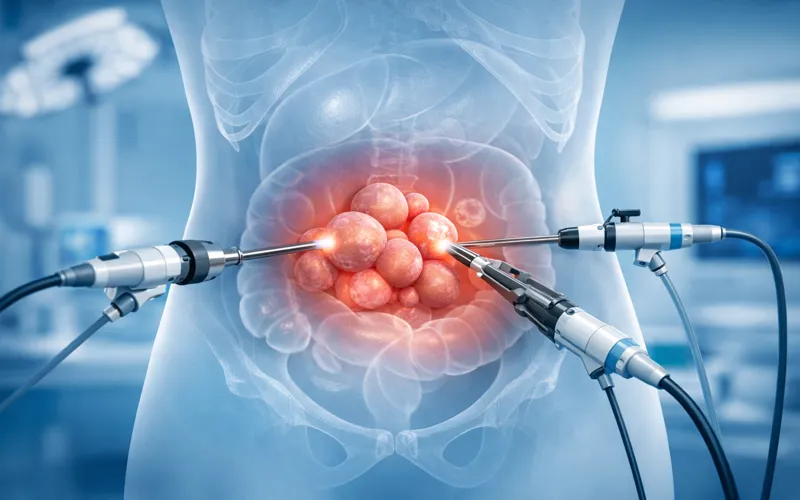
20%–80% of women develop uterine fibroids by age 50 according to Women’s Health Data. This prevalence makes fibroids one of the most common benign uterine tumors in reproductive-age women. Surgical treatment becomes necessary in about 25% of women when fibroids cause symptoms such as heavy bleeding, pelvic pressure, or fertility problems.
Myomectomy is a surgical procedure that removes uterine fibroids while preserving the uterus. Doctors perform this surgery when fibroids cause persistent symptoms or affect pregnancy planning. Hospitals offering surgery in Delhi commonly perform myomectomy using open, laparoscopic, or hysteroscopic surgical techniques depending on fibroid size, number, and location.
Myomectomy Meaning and Fibroid Removal Surgery in Delhi
Myomectomy is a surgical procedure that removes uterine fibroids (non-cancerous tumors) while preserving the uterus. Doctors recommend this surgery when fibroids cause symptoms such as heavy menstrual bleeding, pelvic pain, pressure on nearby organs, or infertility. The procedure focuses on removing fibroid growths without removing the uterus.
Uterine fibroids removal surgery in Delhi is commonly performed in specialized surgery hospitals using different surgical techniques. Surgeons evaluate fibroid size, number, and location inside the uterus before selecting the surgical method. Myomectomy allows doctors to remove fibroid tissue while maintaining uterine structure.
Unlike hysterectomy, which removes the uterus completely, myomectomy preserves reproductive organs. This surgical approach is often recommended for women who want to maintain fertility or avoid complete uterine removal. Hospitals performing fibroid procedure use imaging tests and gynecological evaluation to determine whether myomectomy is the appropriate treatment option.
When Uterine Fibroids Require Removal Surgery
Persistent bleeding that does not respond to medication often requires surgical removal of fibroids.
Myomectomy surgery is recommended when fibroids grow large enough to cause pelvic pressure, abdominal enlargement, or pain during menstruation. Large fibroids may press on nearby organs such as the bladder or bowel.
Top Doctors advise uterine fibroids removal surgery when fibroids affect fertility or pregnancy outcomes. Fibroids located inside the uterine cavity can interfere with embryo implantation or increase miscarriage risk. Gynecologists in Delhi consider surgery when fibroids show rapid growth or reach significant size on imaging tests. Ultrasound or MRI scans help determine whether myomectomy is required to remove fibroid tissue while preserving the uterus.
Types of Myomectomy Surgery Used in Delhi Hospitals
Hospitals in Delhi use three main types of myomectomy for uterine fibroid removal.
Open Myomectomy (Abdominal Myomectomy)
Open myomectomy is performed through an abdominal incision to access the uterus directly. Surgeons usually recommend this method when fibroids are large, numerous, or deeply embedded in the uterine wall. This approach allows complete removal of multiple fibroids during a single surgery.
Laparoscopic Myomectomy
Laparoscopic myomectomy uses small abdominal incisions and a camera-guided surgical instrument to remove fibroids. This minimally invasive technique is commonly used in Delhi hospitals when fibroids are moderate in size and fewer in number. The procedure typically results in smaller scars and shorter recovery time.
Hysteroscopic Myomectomy
Hysteroscopic myomectomy removes fibroids located inside the uterine cavity. Surgeons insert a hysteroscope through the vagina and cervix without making abdominal incisions. This method is usually used for submucosal fibroids that grow within the uterine lining.
How Uterine Fibroids Removal Surgery Is Performed
Myomectomy is performed under general anesthesia and usually takes 1–4 hours according to John Hopkins Medicine. Gynaecology surgery hospitals in Delhi follow a structured surgical process to remove fibroid tissue while preserving the uterus.
Doctors begin the procedure with pre-operative imaging such as ultrasound or MRI to identify fibroid size, number, and exact location in the uterus. This evaluation helps surgeons select the appropriate surgical technique.
During the surgery, the surgeon accesses the uterus through an abdominal incision, small laparoscopic openings, or a hysteroscope inserted through the cervix, depending on the fibroid location. The fibroid growths are then carefully separated from the surrounding uterine muscle.
After removing the fibroids, the surgeon repairs the uterine wall with sutures to restore the normal uterine structure. Controlling bleeding during this stage is an important part of the procedure.
Recovery Timeline After Myomectomy Surgery
Hospital stay after open (abdominal) myomectomy typically lasts 1–3 days depending on patient recovery and surgical complexity. Gynaecology surgery hospitals in Delhi monitor patients during this period to assess pain control, bleeding, and early healing.
Recovery time varies based on the surgical technique used. Patients who undergo open myomectomy generally require about 4–6 weeks for full recovery before resuming normal physical activity (Johns Hopkins Medicine).
Minimally invasive procedures such as laparoscopic myomectomy usually allow faster recovery, and many patients return to routine activities within 2–4 weeks depending on surgical findings and post-operative healing.
Doctors in Delhi hospitals usually recommend avoiding heavy lifting and strenuous exercise during the early recovery period to allow proper healing of the uterine wall. Follow-up consultations help doctors evaluate surgical healing and monitor for any complications after fibroid removal surgery.
Can Uterine Fibroids Return After Myomectomy Surgery
Fibroids return in approximately 15%–30% of patients within 5 years after myomectomy according to clinical research published by the National Center for Biotechnology Information (NCBI). Recurrence occurs because the surgery removes existing fibroids but does not prevent new fibroids from forming.
Fibroid recurrence risk depends on several medical factors. Women who develop fibroids at a younger reproductive age may have a higher chance of developing new fibroids later. Hormonal influences and genetic predisposition also affect recurrence risk.
Doctors in gynaecology surgery hospitals in Delhi evaluate fibroid number and uterine condition during surgery to reduce the likelihood of residual fibroid tissue. Complete removal of visible fibroids during the procedure helps lower the risk of early recurrence.
Gynecology surgery hospitals in Delhi perform myomectomy using different surgical approaches such as open, laparoscopic, and hysteroscopic techniques, depending on fibroid size, number, and location. Proper diagnosis through ultrasound or MRI helps doctors select the most appropriate surgical method for fibroid removal.
Early evaluation and treatment planning allow gynecologists to manage fibroids before symptoms worsen or complications develop.
Primus Super Speciality Hospital in Delhi provides advanced gynaecological surgical care for conditions such as uterine fibroids. The hospital offers diagnostic evaluation, imaging assessment, and surgical management including myomectomy performed by specialized gynaecology surgeons.