
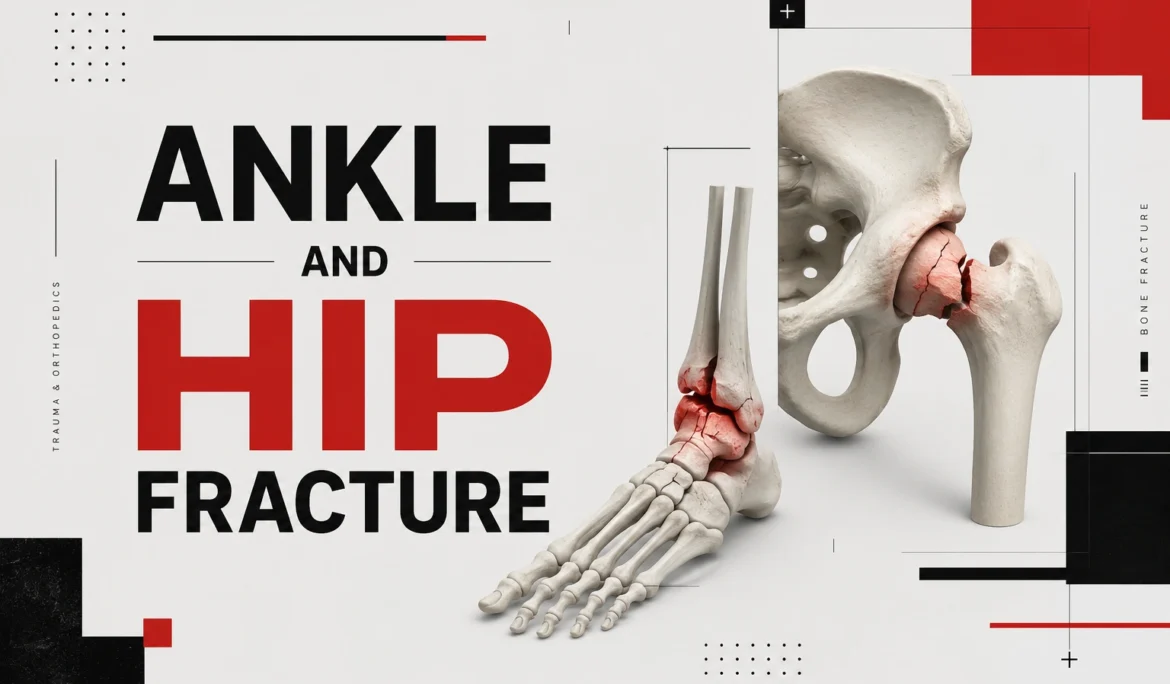
More than 95% of hip fractures result from falls, and surgery is generally recommended within 24–48 hours for medically stable patients to reduce complications and support recovery.
Ankle and hip fractures require prompt diagnosis and appropriate treatment to restore mobility and reduce the risk of long-term complications. While ankle fractures can occur during sports injuries, road accidents, or falls, hip fractures are more common among older adults and often require urgent surgical intervention.
Patients seeking ankle fracture treatment in Delhi or hip fracture treatment in Delhi have access to advanced diagnostic facilities, experienced orthopedic surgeons, and modern surgical techniques. Treatment plans depend on the fracture type, bone displacement, patient age, activity level, and overall health.
Ankle Fracture Symptoms and Causes
Stable ankle fractures may heal in approximately 6 weeks, although complete recovery can take several months depending on the severity of the injury and rehabilitation.
Common Ankle Fracture Symptoms
Seek immediate medical attention if you experience any of the following symptoms after an injury:
- Severe pain around the ankle that worsens with movement
- Rapid swelling around the ankle joint
- Bruising or discoloration
- Difficulty or inability to bear weight on the affected foot
- Visible deformity or an abnormal ankle position
- Tenderness when touching the injured area
- Reduced range of motion in the ankle
Some fractures may initially resemble a severe ankle sprain. Persistent pain, swelling, or difficulty walking after an injury should be evaluated by an orthopedic specialist using X-rays or other imaging tests.
Common Causes of an Ankle Fracture
An ankle fracture usually occurs when excessive force is applied to the ankle joint. Common causes include:
- Slipping or falling on uneven surfaces
- Road traffic accidents
- Sports injuries involving sudden twisting or direct impact
- Falls from a height
- Workplace accidents
- High-impact trauma during recreational activities
Older adults and individuals with reduced bone strength may sustain an ankle fracture even after a relatively minor fall.
Types of Ankle Fractures
Orthopedic specialists in Delhi classify ankle fractures according to the location and extent of the injury. The most common types include:
- Lateral malleolus fracture: A break in the lower end of the fibula, which is the most frequently reported ankle fracture.
- Medial malleolus fracture: A fracture involving the inner part of the tibia near the ankle.
- Bimalleolar fracture: Simultaneous fractures of both the medial and lateral malleolus, often causing ankle instability.
- Trimalleolar fracture: A complex injury involving three parts of the ankle joint that usually requires surgical treatment.
- Open fracture: The broken bone pierces the skin, creating a medical emergency that requires immediate surgical care.
Ankle Fracture Treatment and Surgery in Delhi
Most stable ankle fractures heal in about 6 weeks, while complete recovery may take several months depending on the fracture type, treatment approach, and rehabilitation program as per American Academy of Orthopaedic Surgeons
Treatment for an ankle fracture depends on the location of the break, the degree of bone displacement, joint stability, and the patient’s overall health. Orthopedic specialists in Delhi evaluate the injury through a physical examination and imaging tests such as X-rays. In complex cases, a CT scan may be recommended to assess the fracture pattern and plan treatment.
Ankle Fracture Treatment without surgery in Delhi
Orthopedics Doctor recommend conservative treatment for stable fractures where the broken bones remain properly aligned. Common non-surgical treatment options include:
- Immobilization with a cast, splint, or walking boot
- Limiting weight-bearing until the fracture begins to heal
- Pain management with prescribed medications
- Ice application and leg elevation to reduce swelling
- Regular follow-up X-rays to monitor bone healing
Once the fracture shows signs of healing, a structured physiotherapy program helps restore ankle strength, flexibility, and balance.
Ankle Fracture Surgery
The most common procedure is Open Reduction and Internal Fixation (ORIF). During this surgery, the orthopedic surgeon repositions the fractured bones and secures them using metal plates, screws, or rods to maintain proper alignment while healing occurs.
The choice of surgical technique depends on the fracture pattern, bone quality, and the patient’s activity level. After surgery, the ankle is usually protected with a splint or cast before gradual rehabilitation begins.
Hip Fracture Symptoms and Causes
A hip fracture is a break in the upper portion of the femur (thigh bone) near the hip joint. It is a serious orthopedic injury that often requires urgent medical attention and, in many cases, surgery.
Common Hip Fracture Symptoms
A hip fracture usually causes immediate symptoms that make standing or walking difficult. Common signs include:
- Severe pain in the hip or groin
- Inability to stand or bear weight on the affected leg
- Swelling or bruising around the hip
- Stiffness and reduced range of motion
- The injured leg appearing shorter than the other
- The affected foot turning outward
- Difficulty moving the hip after a fall or accident
Common Causes of a Hip Fracture
Hip fractures can result from both low-impact and high-impact injuries. The most common causes include:
- Falls, particularly in older adults
- Osteoporosis, which weakens the bones and increases fracture risk
- Road traffic accidents
- Falls from stairs or significant heights
- Sports-related injuries
- Direct trauma to the hip during workplace or recreational accidents
Hip Fracture Treatment and Surgery in Delhi
The American Academy of Orthopaedic Surgeons recommends that medically stable patients undergo hip fracture surgery within 24–48 hours whenever possible, as early treatment helps reduce complications and supports faster recovery.
Diagnosis of a Hip Fracture
An accurate diagnosis helps determine the most appropriate treatment approach. Orthopedic specialists typically perform:
- A detailed physical examination
- X-rays to identify the fracture location and severity
- CT scans for complex fractures
- MRI when X-rays appear normal but a fracture is still suspected
Hip Fracture Treatment without Surgery in Delhi
Conservative treatment may include:
- Pain management
- Restricted weight-bearing
- Mobility aids such as walkers or crutches
- Physiotherapy in Delhi and rehabilitation
- Regular follow-up imaging to monitor healing
Patients managed without surgery require close medical supervision because prolonged immobility can increase the risk of complications.
Hip Fracture Surgery
Most displaced hip fractures require surgery to stabilize the bone and allow early mobilization. The choice of procedure depends on the fracture pattern, patient age, and bone quality.
Common surgical procedures include:
- Internal Fixation: Metal screws, plates, or intramedullary nails are used to stabilize the fractured bone while it heals.
- Partial Hip Replacement (Hemiarthroplasty): The damaged femoral head is replaced while the hip socket remains intact. This procedure is commonly performed for certain femoral neck fractures.
- Total Hip Replacement: Both the femoral head and the hip socket are replaced with artificial components. This option may be recommended for selected patients with severe joint damage or pre-existing arthritis.
Ankle and hip fractures require timely medical attention to prevent complications and support proper healing. Early diagnosis, accurate imaging, and personalized treatment can restore mobility and improve recovery outcomes. Whether the injury requires conservative management or surgery, following the recommended treatment plan and rehabilitation program is essential for regaining strength and returning to daily activities.
If you or a loved one has sustained an ankle or hip fracture, the experienced orthopedic team at Primus Hospital provides comprehensive fracture care, from emergency diagnosis to advanced surgical treatment and rehabilitation.
Schedule a consultation with the specialists providing orthopaedic treatment in Delhi at Primus Hospital today to receive timely evaluation and the most appropriate treatment for ankle and hip fractures in Delhi.