








Learning that your kidneys are filling with cysts is frightening, and the first question is usually whether anything can be done. This guide explains what polycystic kidney disease is, its types, how it is diagnosed, and treated at hospitals in Delhi. So you and your family can plan with facts instead of fear.
Polycystic kidney disease (PKD) has no cure, but it is treatable. Blood pressure control, medicine to slow cyst growth, early treatment of infections and, when the kidneys fail, dialysis or a transplant all help people live longer. In the common adult form, many people live long, full lives with proper care.
What Is Polycystic Kidney Disease?
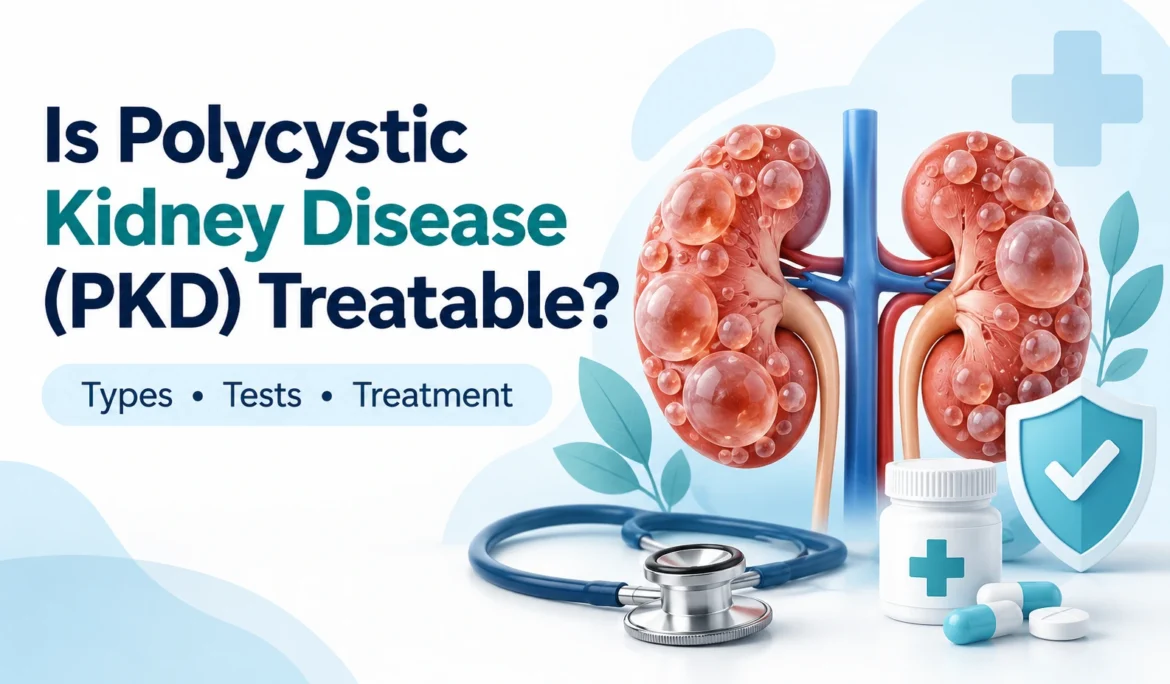
Polycystic kidney disease is a genetic condition in which many fluid-filled cysts form in the kidneys, as the NIDDK explains. As the cysts grow, they crowd healthy kidney tissue.
- It runs in families, so a parent can pass it to a child.
- The cysts can raise blood pressure and, less often, appear in the liver.
- It can also affect blood vessels in the brain and heart.
Types of Polycystic Kidney Disease (PKD)
There are two main types. They differ in age of onset and outlook.
| Autosomal dominant PKD (ADPKD) | Autosomal recessive PKD (ARPKD) | |
| Also called | Adult PKD | Infantile PKD |
| How common | About 90% of PKD cases | About 1 in 25,000 people |
| When it shows | Usually diagnosed between ages 30 and 50 | Early infancy, sometimes before birth |
| Kidney failure | More than half reach it by age 70 | About half of children who survive infancy, by age 15 to 20 |
| Chance of passing it on | 50% for each child | 25% for each child |
The figures come from the NIDDK, the Cleveland Clinic and the National Kidney Foundation.
Symptoms to Watch For
PKD often causes no symptoms until the cysts reach about half an inch. Then you may notice:
- Pain in the back or side
- Headaches
- High blood pressure
- Blood in the urine, which needs prompt medical review
- Kidney or bladder infections
Complications of Polycystic Kidney Disease
PKD can affect more than the kidneys. These are the problems doctors watch for, based on the NIDDK and the National Kidney Foundation.
| Complication | What to know |
| High blood pressure | Cysts can raise it; careful control can slow or prevent kidney failure |
| Liver cysts | The most common non-kidney complication of ADPKD; more common in women, and the risk rises with each pregnancy |
| Brain aneurysm | Large aneurysms are life-threatening and need immediate treatment |
| Infections | Bladder and kidney infections need prompt antibiotics |
| Pain | Back and side pain as cysts grow; check before taking over-the-counter painkillers |
| Kidney failure | More than half of people with ADPKD reach it by age 70 |
Who Faces a Faster Course
The National Kidney Foundation lists these groups as higher risk for faster loss of kidney function:
- Men
- People with high blood pressure
- People with protein or blood in the urine
- Women with high blood pressure who have had three or more pregnancies
This is why regular blood pressure checks and urine tests matter, even when you feel well.
Polycystic Kidney Disease Tests and Diagnosis in Delhi
Doctors choose tests based on your age, family history and the number of cysts. In Delhi, these are the usual steps.
| Test | What it shows |
| Ultrasound | Cysts in both kidneys. The National Kidney Foundation calls it the most reliable, low-cost, non-invasive test |
| CT scan | A more detailed view of smaller cysts than ultrasound |
| MRI | Kidney and cyst size, and how fast they are growing |
| Genetic test (blood or saliva) | Confirms the gene change when imaging is unclear; results can take days to weeks, and it misses PKD in about 15% of people who have it |
If you are over 40 with a family history and your ultrasound is normal, PKD is unlikely. If a parent, brother or sister has PKD, ask a nephrologist about screening.
Treatment of Polycystic Kidney Disease
Treatment of polycystic kidney disease aims to slow the damage and treat each complication as it appears.
| Goal | Option |
| Control blood pressure | Lower salt intake; ACE inhibitors or ARBs may be prescribed |
| Slow kidney decline | Tolvaptan, approved by the US FDA in April 2018 for adults at risk of ADPKD; a nephrologist decides who is suitable |
| Treat infections | Prompt antibiotics for bladder or kidney infections |
| Manage pain | Find the cause first; ask before using over-the-counter painkillers, as some can harm the kidneys |
| Protect the brain | Large brain aneurysms need immediate treatment, so stop smoking and control blood pressure and cholesterol |
| Kidney failure | Dialysis or a kidney transplant |
Polycystic Kidney Disease Treatment in Delhi at Primus
If you are searching for polycystic kidney disease treatment in Delhi, Primus Super Speciality Hospital has a renal sciences department that brings together nephrology, dialysis, renal transplant and urology, along with 24×7 emergency care.
Life With Polycystic Kidney Disease
Daily habits matter, because blood pressure is the main thing you can control.
- Salt: Keep it low. No specific diet is known to prevent cysts, but less salt helps blood pressure.
- Water: Drink plenty of plain water and cut back on caffeine.
- Movement: Exercise regularly and stay hydrated, but avoid contact sports.
- Habits: Do not smoke, and keep a healthy weight.
- Pregnancy: About 80% of women with PKD have uneventful pregnancies, but high blood pressure or weaker kidneys raise the risk of pre-eclampsia.
- Family planning: A genetic counsellor can explain the 50% or 25% chance of passing PKD to a child.
When to Seek Urgent Care
See a doctor promptly, or go to the emergency department, if you have:
- Blood in your urine
- Fever with back or side pain, which can point to a kidney infection
- A sudden, severe headache, because a brain aneurysm needs immediate treatment
- Sharp, worsening pain in your side or abdomen
Polycystic kidney disease cannot be cured, but it is treatable. Controlling blood pressure, treating infections early, using medicines such as tolvaptan where a nephrologist advises it, and planning for dialysis or a transplant when needed can protect the kidneys for years. If PKD runs in your family, or you notice blood in your urine or pain in your side, do not wait for symptoms to worsen.
Book an appointment with the kidney team at Primus Hospital, or visit the hospital for an evaluation.