









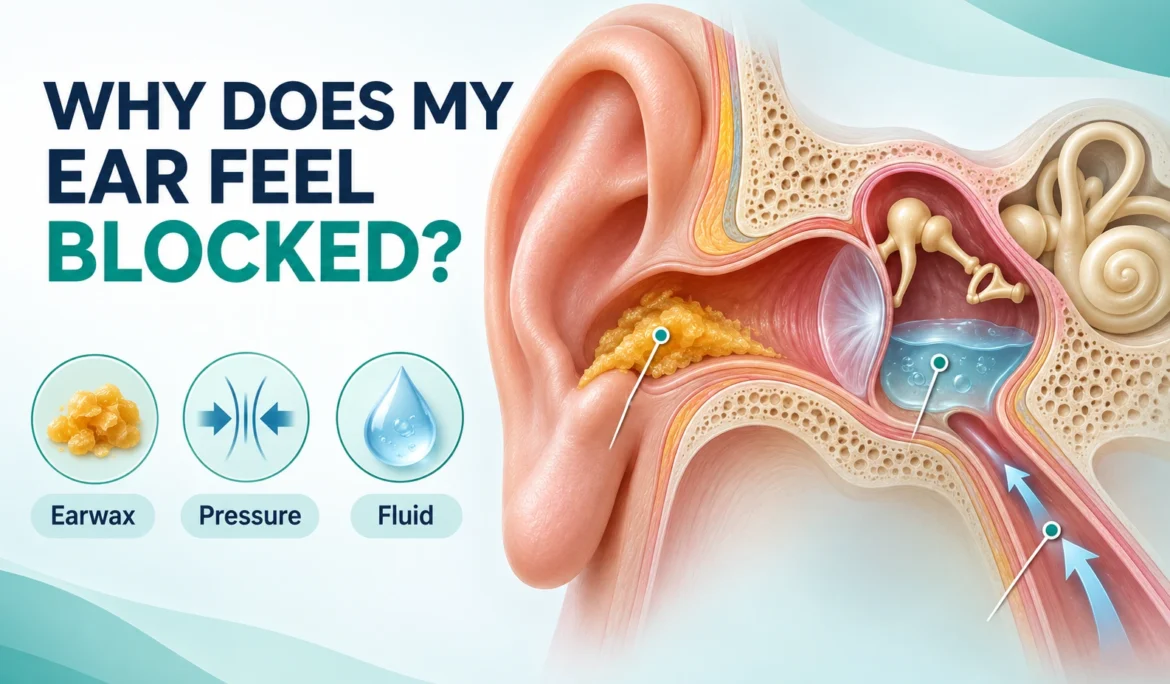
Sudden hearing loss developing within 3 days may require specialist assessment within 24 hours, according to NICE guidelines. Blocked ears can cause pressure, fullness, muffled hearing, or popping sensations. Common causes of ear congestion include earwax buildup, Eustachian tube dysfunction, infections, allergies, and air pressure changes.
A sudden blockage in the ear does not always indicate trapped earwax. Some hearing problems require urgent medical attention.
Consult an ENT specialist in Delhi if you experience sudden hearing reduction, persistent ear congestion, or concerning symptoms. An ear examination can help identify the cause and guide appropriate treatment.
Common Causes of Ear Congestion in Delhi
Several conditions can cause blocked ears, including earwax buildup, Eustachian tube dysfunction, infections, allergies, and air pressure changes.
Earwax Buildup
Excess earwax can obstruct the ear canal and cause fullness or muffled hearing. Cotton swabs may push wax deeper into the canal. The NHS earwax guidance recommends medical assessment when suspected earwax symptoms persist after 5 days of appropriate self-care.
Eustachian Tube Dysfunction
The Eustachian tube connects the middle ear to the back of the nose. It helps regulate middle-ear pressure. Colds, allergies, and inflammation can disrupt its function, causing pressure, popping, and reduced hearing clarity.
According to Chelsea and Westminster Hospital NHS Foundation Trust, symptoms lasting more than 3 weeks warrant specialist assessment.
Middle-Ear Fluid and Ear Infections
Fluid behind the eardrum can create a blocked-ear sensation. Middle-ear infections may also cause pain, fever, and hearing changes.
The ICMR antimicrobial treatment guidelines identify fever of 39°C or higher as one severity criterion for acute otitis media in children.
Allergies and Sinus Congestion
Allergic inflammation and nasal congestion can affect Eustachian tube function. This may produce ear fullness alongside sneezing, nasal blockage, or a runny nose.
Air Pressure Changes
Flying and altitude changes can create pressure differences across the eardrum. These changes may cause temporary ear blockage, popping, or discomfort.
Seek urgent medical assessment if ear congestion occurs with sudden hearing loss.
Earwax Blockage vs. Eustachian Tube Dysfunction in Delhi
Earwax blockage occurs when accumulated wax obstructs the external ear canal. It can cause muffled hearing, fullness, and discomfort. According to NHS guidance, softened earwax may clear naturally over approximately 2 weeks.
Eustachian tube dysfunction affects pressure regulation behind the eardrum. Colds, allergies, and air pressure changes can trigger symptoms such as popping, pressure, and muffled hearing.
| Feature | Earwax Blockage | Eustachian Tube Dysfunction |
| Affected area | External ear canal | Middle-ear pressure regulation |
| Common symptoms | Fullness, muffled hearing | Pressure, popping, muffled hearing |
| Typical triggers | Wax accumulation | Colds, allergies, pressure changes |
| Diagnosis | Ear examination | Ear examination and selected hearing tests |
Both conditions can produce similar symptoms. An ENT specialist in Delhi can examine the ear to distinguish wax obstruction from middle-ear pressure problems.
Blocked Ears After a Cold, Allergy, or Flight in Delhi
Ear Congestion After a Cold
Colds can cause inflammation around the Eustachian tube, disrupting middle-ear pressure regulation. This may produce fullness, popping sounds, or muffled hearing even after nasal symptoms improve.
Blocked Ears During Flights
Changes in cabin pressure can create a pressure difference across the eardrum. Swallowing, yawning, or gently equalising ear pressure may relieve discomfort. Avoid forceful pressure-equalisation attempts.
Ear Fullness During Allergies
Allergic inflammation can affect the nose and Eustachian tube, causing congestion and ear pressure.
According to Chelsea and Westminster Hospital NHS Foundation Trust, symptoms persisting beyond 3 weeks warrant specialist assessment.
Consult an ENT specialist in Delhi if ear congestion continues, worsens, or accompanies hearing changes.
Sudden Hearing Loss and Blocked-Ear Warning Signs in Delhi
Sudden Hearing Reduction
Hearing loss developing within 3 days or less requires urgent attention. According to NICE guidelines, unexplained sudden hearing loss occurring within the previous 30 days requires specialist assessment within 24 hours when external or middle-ear causes do not explain it.
Sudden hearing loss may feel like ordinary ear congestion. Do not assume earwax or a cold causes the blockage. Seek urgent medical assessment instead of waiting for home remedies.
Other Symptoms Requiring Medical Attention
Seek prompt medical assessment if blocked ears accompany:
- Severe or worsening ear pain.
- Ear discharge or bleeding.
- Significant dizziness or vertigo.
- Facial weakness.
- Fever with concerning ear symptoms.
Tell the ENT specialist in Delhi when your symptoms began and whether hearing changed suddenly. Report associated pain, dizziness, discharge, or recent illness. The clinician can examine your ear and arrange hearing tests when necessary.
Safe Home Measures for Clogged Ears in Delhi
Pressure-Related Ear Congestion
Swallow, yawn, or chew to help equalize middle-ear pressure. The Chelsea and Westminster Hospital NHS Foundation Trust also describes gentle pressure-equalization techniques for Eustachian tube dysfunction.
Avoid forceful attempts to unblock your ears, particularly when experiencing pain.
Possible Earwax Buildup
For suspected earwax buildup, the NHS recommends 2–3 drops of suitable olive or almond oil, 3–4 times daily for 3–5 days. Keep the affected ear facing upward for 5–10 minutes after application.
Avoid almond oil if you have an almond allergy. Do not use ear drops if you have a perforated eardrum.
Practices to Avoid
- Do not insert cotton swabs, hairpins, or sharp objects into your ears.
- Do not attempt to remove deeply lodged earwax yourself.
- Do not use ear drops indiscriminately for infections or unexplained symptoms.
Seek medical assessment for persistent blockage. Sudden hearing loss requires urgent evaluation, not home treatment.
How ENT Specialists Diagnose Blocked Ears in Delhi
Medical History and Ear Examination
An ENT specialist in Delhi begins by reviewing when the blockage started and whether it affects one or both ears. Report ear pain, discharge, dizziness, recent infections, and hearing changes.
The doctor uses an otoscope to examine the ear canal and eardrum. This examination can identify earwax buildup, inflammation, or visible signs of middle-ear problems.
Hearing and Middle-Ear Tests
An ENT doctor may recommend audiometry to measure hearing levels or tympanometry to assess eardrum movement and middle-ear function.
The ICMR hearing impairment guidelines describe these assessments in pediatric care.
Specialist Referral
Seek urgent assessment if hearing suddenly decreases. An ENT hospital in Delhi can arrange further evaluation when the initial examination indicates hearing loss or middle-ear disease.
Treatment for Ear Congestion Based on the Cause in Delhi
Earwax Blockage
An ENT specialist may recommend wax-softening drops or professional earwax removal. The NHS describes irrigation and microsuction as clinical removal methods.
Eustachian Tube Dysfunction
Treatment depends on the underlying cause. An ENT doctor may address associated nasal inflammation, allergies, or persistent middle-ear pressure problems.
Ear Infections and Middle-Ear Fluid
An ENT specialist examines the ear before recommending treatment. Antibiotics are not necessary for every ear infection.
The ICMR antimicrobial guidelines describe a 48–72-hour observation period for selected children with non-severe acute otitis media following clinical assessment.
Persistent middle-ear fluid may require hearing tests and further evaluation.
Sudden Hearing Loss
Seek urgent specialist assessment for sudden hearing reduction. Do not delay evaluation while attempting earwax removal or home remedies.
Blocked ears can result from earwax buildup, Eustachian tube dysfunction, allergies, infections, or pressure changes. The underlying cause determines whether symptoms require self-care, medical treatment, or specialist assessment.
Persistent ear congestion, recurring blockage, pain, or discharge warrants an ear examination. Sudden hearing loss requires urgent medical assessment, even without pain or other symptoms.
If your ear feels blocked or your hearing has changed, consult an ENT specialist in Delhi. An ENT examination and appropriate hearing tests can identify the cause and guide treatment.
FAQs
Earwax buildup, Eustachian tube dysfunction, infections, or pressure changes can affect one ear. Sudden hearing reduction may also feel like a blockage. Seek urgent medical assessment if hearing decreases suddenly.
Yes. Earwax accumulation, allergies, nasal congestion, and air pressure changes can cause clogged ears without infection. An ear examination helps identify the underlying cause.
Consult an ENT specialist for persistent ear congestion, recurrent blockage, pain, or discharge. Seek urgent assessment for sudden hearing loss, significant dizziness, or facial weakness. The doctor can examine your ears and recommend hearing tests when clinically indicated.