In 2019, over 8.5 million people worldwide were living with Parkinson’s disease (World Health Organization). Parkinson’s disease is not curable. Doctors manage symptoms through medication, therapy, and in selected cases, surgery. The condition is progressive, meaning symptoms worsen over time. Early diagnosis and neurology treatment in Delhi help control motor and non-motor symptoms effectively.
Between 2000 and 2019, disability and deaths due to Parkinson’s disease increased by more than 100% globally, according to the World Health Organization. This rise reflects aging populations and longer life expectancy.
Parkinson’s disease usually begins after age 60, and risk increases with advancing age, as reported by the National Institute of Neurological Disorders and Stroke. Delhi has a growing elderly population, which directly increases neurological disease burden in the region.
Men develop Parkinson’s disease more frequently than women, according to global clinical data. Age-related neurodegeneration and dopamine-producing neuron loss define the disease process. Early neurological evaluation in Delhi helps confirm diagnosis before complications develop.
Parkinson’s Disease in Hindi
Parkinson’s disease in Hindi is commonly referred to as “मस्तिष्क में तंत्रिका कोशिकाओं में क्षति ”. Doctors classify it as a neurodegenerative disorder, meaning it gradually damages nerve cells in the brain.
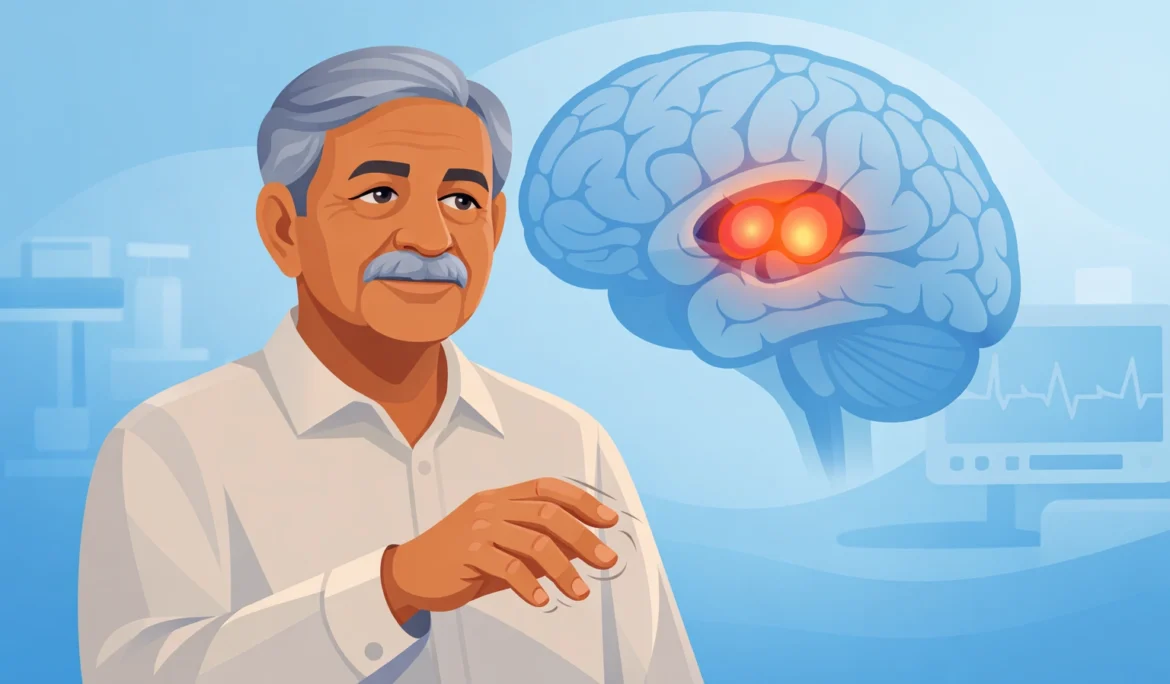
The disease affects dopamine-producing neurons. Dopamine is a chemical messenger responsible for movement control. Loss of these neurons leads to symptoms such as tremors, stiffness, and slow movement.
Symptoms usually begin after age 60, and progression occurs over several years, according to the National Institute of Neurological Disorders and Stroke. Early neurological evaluation in Delhi helps confirm the diagnosis through brain and neurology examination rather than a single laboratory test.
MRI and Diagnosis in Delhi Hospitals
Mayo Clinic states that MRI does not directly diagnose Parkinson’s disease, but doctors use it to rule out other causes such as stroke, brain tumors, or normal pressure hydrocephalus.
Doctors diagnose Parkinson’s disease primarily through clinical evaluation. They assess tremor, rigidity, bradykinesia, and postural instability. There is no single blood test or MRI scan that confirms the condition.
MRI becomes important when symptoms appear before age 50 or when progression is atypical. In such cases, neurologists in Delhi use imaging to exclude secondary parkinsonism caused by structural brain lesions.
Parkinson’s Disease Treatment Options in Delhi
The NHS confirms that levodopa is the most effective medication for controlling motor symptoms of Parkinson’s disease. Brain Doctors usually combine levodopa with carbidopa to reduce side effects and improve brain delivery.
Levodopa directly increases dopamine levels in the brain. Doctors prescribe it when symptoms begin to interfere with daily activities. Over time, some patients develop motor fluctuations after 5–10 years of long-term levodopa use, according to the Parkinson’s Foundation.
Doctors also prescribe dopamine agonists. These drugs mimic dopamine effects and may delay the need for higher levodopa doses in early-stage patients. MAO-B inhibitors help prevent dopamine breakdown and provide mild symptom control.
In advanced stages, neurologists may recommend Deep Brain Stimulation (DBS) when medications fail to control tremors or when severe motor fluctuations occur. DBS involves surgical placement of electrodes in specific brain regions to regulate abnormal signals.
Neurologists in Delhi adjust medication doses based on symptom severity, duration of disease, and patient age. Regular follow-up helps monitor side effects such as dyskinesia, hallucinations, or blood pressure fluctuations.
Parkinson’s Disease Complications in Delhi Patients
The Parkinson’s Foundation reports that motor complications such as dyskinesia may develop after 5–10 years of long-term levodopa therapy.
Motor complications include tremor progression, muscle rigidity, slowed movement, balance impairment, and increased fall risk. Postural instability increases as the disease advances. Falls become more frequent in later stages due to impaired reflexes.
Non-motor complications affect sleep, mood, cognition, and autonomic function. Patients may develop depression, constipation, low blood pressure, and memory decline.
Symptoms typically begin after age 60, and progression varies by individual, according to the National Institute of Neurological Disorders and Stroke.
Advanced stages may involve swallowing difficulty and speech impairment. Early neurological monitoring in Delhi allows doctors to adjust medications before severe functional decline occurs.
When to Visit a Neurology Hospital in Delhi for Parkinson’s
Parkinson’s disease most commonly begins after age 60, according to the National Institute of Neurological Disorders and Stroke. Any persistent tremor, stiffness, or slowed movement in this age group requires neurological evaluation.
Consult a neurology hospital in Delhi if tremors persist for more than a few weeks or progressively worsen. Early assessment allows doctors to distinguish Parkinson’s disease from stroke, medication side effects, or other movement disorders.
Seek immediate consultation if symptoms include balance instability, frequent falls, speech difficulty, or swallowing problems. These signs indicate advancing disease or complications.
Patients under age 50 with parkinsonian symptoms should also undergo evaluation to rule out secondary causes through imaging and specialist assessment. Early diagnosis allows structured medication planning and long-term neurological monitoring.
In 2019, over 8.5 million people worldwide were living with Parkinson’s disease, and there is currently no cure, according to the World Health Organization.
Parkinson’s disease is a progressive neurological disorder. Doctors manage symptoms through medications such as levodopa, structured monitoring, and in selected cases, Deep Brain Stimulation. Early evaluation reduces the risk of advanced motor and non-motor complications.
Patients in Delhi who experience persistent tremor, slowed movement, or balance instability should seek neurological assessment without delay. Diagnosis remains clinical, and MRI supports exclusion of other causes when required.
If you are looking for a neurology hospital in Delhi for Parkinson’s disease evaluation, consult the Neurology Department at Primus Hospital, Delhi.
Schedule an appointment with a brain specialist in Delhi for structured diagnosis, medication planning, and long-term neurological follow-up. Early consultation allows timely intervention and complication monitoring.