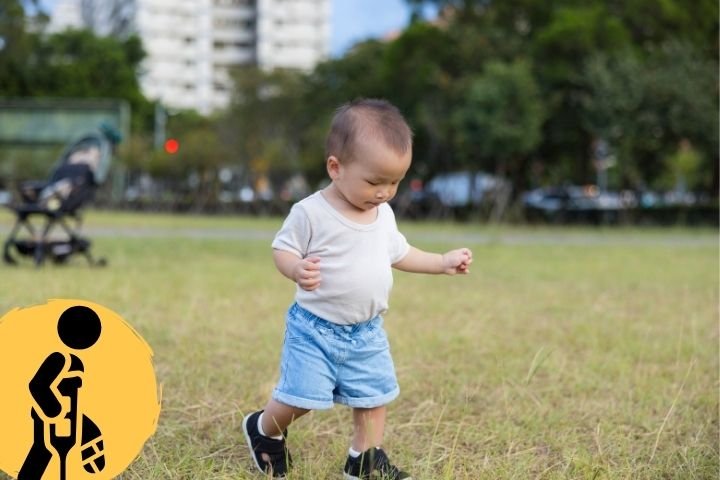
If your child has been limping without a clear injury, or complaining of pain around the hip, thigh, or even the knee, you are probably confused. Children often. They complain often. Most pains disappear. But when the limp does not go away, and the discomfort seems to increase instead of settle, it raises questions no parent wants to face.
Every year, around 1 in 1,200 children are diagnosed with a rare hip disorder that can permanently change the shape of the femoral head if not detected early. Known medically as Legg-Calvé-Perthes Disease, this condition accounts for nearly 15% of non-traumatic hip disorders in children.
The disease most commonly affects children between 4 and 10 years of age, with a male-to-female ratio of approximately 4:1. In nearly 10–15% of cases, both hips may eventually be involved. What makes Perthes disease particularly alarming is that pain is often mild or absent in the early stages, even though the femoral head is already undergoing avascular necrosis, a process where bone tissue dies due to lack of blood supply.
This guide explains Perthes disease treatment in Delhi from the best orthopedic hospital in Delhi, step by step, so you know what you are dealing with and what decisions actually matter.
What is Perthes Disease?
Leg Calve Perthes disease affects the hip joint in growing children. The ball part of the hip joint temporarily loses its blood supply. When this happens, the bone weakens. Over time, it may flatten or change shape before healing again.
This process does not happen overnight. It unfolds over months or even years.
The condition usually appears between the ages of four and ten. Boys are affected more often than girls. It is not caused by injury, poor parenting, or physical activity. In most cases, the exact cause remains unknown.
Perthes Disease Symptoms You Might Notice First
Children rarely explain hip pain clearly. That is why symptoms are often confusing at first.
You may notice:
- A limp that comes and goes
- Pain in the hip, thigh, or knee
- Stiffness after sitting or sleeping
- Reduced movement of the hip
- Fatigue after walking short distances
Pain is not always severe. That is what makes it easy to miss.
Perthes disease progresses through phases. The younger the child at diagnosis, the better the hip can remodel as it heals. Delayed diagnosis can allow the bone to deform before treatment begins.
That is why assessment for good orthopedic treatment in Delhi is essential when symptoms persist beyond a few weeks.
Perthes Disease Stages
Doctors describe the condition in phases, often called perthes disease stages. These stages help predict outcome and guide treatment.
The main stages include:
- Initial loss of blood supply
- Bone breakdown and softening
- Bone regrowth
- Healing and reshaping
Perthes Disease Radiology: How Doctors See the Problem
Diagnosis relies heavily on imaging. Perthes disease radiology is a sequence of observations over time.
Pediactricians and Orthopedic Doctors in Delhi may recommend:
- Perthes disease X ray to detect bone shape changes
- MRI when X-rays are unclear in early stages
- Serial imaging to monitor healing
X-rays may appear normal early on. That does not mean nothing is wrong. Experience matters in reading subtle signs.
What About Perthes Disease Orthobullets?
You may come across perthes disease orthobullets while researching online. These resources are used by medical students and doctors to understand classification and management principles.
While useful academically, they cannot replace a real clinical examination or personalised treatment plan. Every child’s hip behaves differently.
Perthes Disease Treatment in Delhi: What Actually Helps
There is no single medicine that “cures” Perthes disease. Treatment focuses on protecting the hip while it heals and keeping the joint properly aligned.
Perthes disease treatment depends on:
- Age of the child
- Stage of the disease.
- Severity of hip involvement
- Range of motion
Common approaches include:
- Activity modification
- Physiotherapy to maintain movement.
- Pain management.
- Bracing in selected cases.
Many children improve without surgery. The disease follows a predictable biological course, avascular necrosis, fragmentation, revascularisation, and remodelling over several years. Once collapse or flattening of the femoral head occurs during the fragmentation stage, the damage is irreversible.
Children diagnosed below the age of six, with a well-contained and relatively spherical femoral head, are treated without surgery mostly. In these cases, treatment focuses on strict activity modification, elimination of impact loading, and targeted physiotherapy to preserve hip abduction and internal rotation. Anti-inflammatory medicines are used only for symptomatic relief and have no role in altering disease progression.
In children older than six years, or in younger children who demonstrate femoral head extrusion, reduced hip motion, or advanced fragmentation on imaging, surgery is preferred to mechanically reposition the femoral head deeper within the socket so that healing occurs in a protected, spherical environment. Delaying surgery once containment is compromised significantly worsens long-term outcomes.
When Surgery Becomes Necessary
Surgery is not the first option. It is considered when the hip joint is losing alignment or when conservative care fails.
Perthes disease treatments involving surgery aim to keep the hip ball well seated in the socket during healing.
Procedures may include:
- Femoral osteotomy
- Pelvic osteotomy
- Combined corrective procedures
These are carefully planned surgeries done by experienced pediatric orthopedic surgeons. Timing is crucial. The most commonly performed procedure is a femoral varus osteotomy which realigns the femur to improve acetabular coverage of the femoral head. This procedure has consistently demonstrated superior long-term hip congruency, particularly in children between six and eight years of age. In cases where acetabular insufficiency contributes significantly to poor containment, pelvic osteotomies such as Salter or triple osteotomy may be required to reorient the socket itself. In severe disease, combined femoral and pelvic procedures are sometimes necessary to achieve adequate containment.
Why a Specialized Hospital in Delhi Makes a Difference
Perthes disease is not managed by general orthopedics alone. It requires pediatric orthopedic expertise, radiology support, rehabilitation, and long-term follow-up.
A dedicated Pediatrics orthopedic hospital in Delhi offers this coordination. Children are not treated like small adults. Their bones behave differently.
Choosing the right Orthopedic hospital in Delhi ensures access to:
- Pediatric imaging protocols
- Child-focused physiotherapy
- Growth monitoring
The Role of Pediatric Care
Because this condition affects children, support systems matter. A trusted Pediatrics hospital in Delhi understands how to care for both the child and the family.
Children need reassurance. Parents need clarity. Both need time.
Why Super Speciality Hospitals Are Preferred
A Super speciality hospital in Delhi brings together pediatric orthopedics, advanced imaging, anesthesia teams familiar with children, and rehabilitation experts.
Life After Treatment: What You Should Expect
Most children return to normal activities. Some may have mild stiffness. Regular follow-ups ensure the hip develops properly.
Patience is part of treatment. Rushing recovery causes harm.
Perthes disease is not an emergency, but it is not something to delay either. Early diagnosis, correct staging and specialised care protect your child’s future mobility.
If your child keeps limping or has hip pain, see experts who know a lot about pediatric orthopedic conditions. Primus Hospital offers complete care for Perthes disease, with experienced doctors, cutting-edge tests and rehabilitation that focuses on children
Giving your child early advice today can help them move for the rest of their life. Make an appointment at Primus Hospital and move forward with confidence. Also know about the home remedies for joint pain.