
Polycystic kidney disease (PKD) affects approximately 1 in every 400 to 1,000 people worldwide, making it one of the most common inherited kidney disorders as per NCB. The condition develops when multiple fluid-filled cysts form inside the kidneys, gradually enlarging the organs and interfering with their ability to filter waste from the blood.
Over time, these cysts may grow larger and increase in number, which can lead to high blood pressure, kidney enlargement, and declining kidney function. In many patients, symptoms begin to appear between 30 and 40 years of age, although the disease may develop earlier or later depending on genetic factors.
Many people diagnosed with this condition often ask an important question: Is polycystic kidney disease fully curable? While PKD currently has no complete cure, modern nephrology treatments in Delhi can help manage symptoms, slow disease progression, and prevent complications.
What Polycystic Kidney Disease Means for Delhi Patients?
Polycystic kidney disease (PKD) is a genetic disorder in which clusters of fluid-filled cysts develop inside the kidneys, gradually increasing their size and affecting their ability to filter blood properly. These cysts grow over time and can replace healthy kidney tissue, leading to progressive kidney damage.
In a healthy person, the kidneys filter waste products and excess fluids from the blood to produce urine. In PKD, however, the growth of cysts disrupts normal kidney structure. According to kidney health research, in advanced cases, the kidneys may enlarge to three to four times their normal size due to cyst formation.
The condition is usually inherited and may remain unnoticed for many years before symptoms appear. As the cysts enlarge, patients may begin to experience high blood pressure, abdominal discomfort, frequent urination, or kidney infections.
Types of Polycystic Kidney Disease
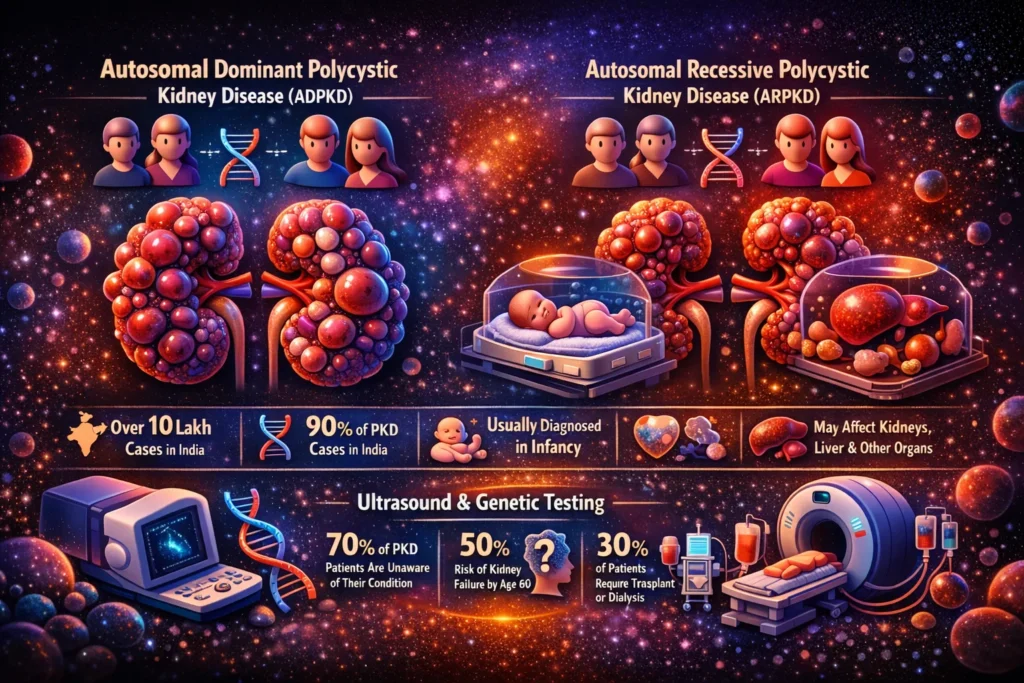
Polycystic kidney disease occurs in two main genetic forms that differ in inheritance pattern, age of onset, and severity.
Autosomal Dominant Polycystic Kidney Disease (ADPKD)
Autosomal dominant polycystic kidney disease is the most common type of PKD, accounting for the majority of cases worldwide. In this form, a person develops the disease when one defective gene is inherited from either parent.
Autosomal Recessive Polycystic Kidney Disease (ARPKD)
Autosomal recessive PKD is a rare and more severe form of the disease that usually appears during infancy or early childhood. In this condition, the child must inherit two abnormal genes, one from each parent.
ARPKD may cause enlarged kidneys shortly after birth and can affect kidney function early in life. In some cases, it may also affect the liver and other organs.
Doctors at kidney disease treatment hospitals in Delhi use imaging tests such as ultrasound and genetic evaluation to identify the type of PKD and monitor the progression of kidney cysts, which helps guide long-term treatment and disease management.
Is Polycystic Kidney Disease Curable?
Polycystic kidney disease currently has no complete cure because the condition is caused by inherited genetic mutations that lead to continuous cyst formation in the kidneys. Once these genetic changes are present, the disease cannot be completely reversed.
Why PKD Cannot Be Fully Cured
In polycystic kidney disease, abnormal genes cause kidney cells to form fluid-filled cysts that gradually enlarge over time. These cysts replace normal kidney tissue and interfere with the kidneys’ ability to filter waste from the blood.
Because the disease originates at the genetic level, current medical treatments cannot remove the underlying cause of cyst formation.
Focus of Kidney Treatment
Although PKD cannot be completely cured, treatment focuses on slowing disease progression and managing complications. Doctors aim to protect remaining kidney function and prevent long-term damage.
Renal Treatment strategies may include:
- Controlling high blood pressure
- Managing kidney infections
- Monitoring kidney function regularly
- Reducing complications such as kidney stones
Certain medications may also help slow cyst growth and protect kidney function in some patients.
Polycystic Kidney Disease Treatment Options in Delhi
Treatment for polycystic kidney disease focuses on slowing kidney damage and managing complications rather than eliminating the cysts completely (Naryana Health). Doctors aim to preserve kidney function for as long as possible through medical monitoring and supportive treatment.
Blood Pressure Control
High blood pressure is one of the most common complications of PKD and can accelerate kidney damage. Nephrology Doctors often prescribe blood pressure medications such as ACE inhibitors or ARBs to help control hypertension and protect kidney function.
Medicines to Slow Kidney Disease Progression
Certain medications help slow cyst growth and delay kidney function decline in some patients with autosomal dominant polycystic kidney disease. These medicines work by reducing cyst expansion and controlling fluid accumulation in kidney tissues.
Managing Kidney Infections and Complications
Patients with PKD may experience recurrent kidney infections, kidney stones, or abdominal pain caused by enlarging cysts. Doctors may prescribe antibiotics or other medications to treat infections and manage symptoms.
Lifestyle and Dietary Management
Lifestyle changes can also help protect kidney health. Doctors often recommend:
- Reducing sodium intake
- Maintaining healthy body weight
- Drinking adequate fluids
- Avoiding smoking
- Monitoring kidney function through regular check-ups
Polycystic kidney disease is a genetic condition that causes multiple fluid-filled cysts to develop inside the kidneys, gradually affecting their ability to filter waste from the blood. Although the disease cannot currently be completely cured, early diagnosis and proper medical care can help slow its progression and manage complications effectively.
Primus Hospital in Delhi provides comprehensive care for patients with kidney disorders, including polycystic kidney disease diagnosis, monitoring, and advanced treatment options. The hospital’s nephrology team evaluates kidney health through laboratory tests, imaging scans, and clinical assessment to determine the stage of the disease and recommend appropriate treatment.
Patients seeking expert care for polycystic kidney disease treatment in Delhi can consult the nephrology specialists at Primus Hospital for personalized treatment planning and long-term kidney health management.