40% of people experience sciatica at least once in their lifetime, making it a common nerve-related pain condition as per the study by Harvard. Sciatica affects adults aged 30–50 years most frequently, with rising cases reported in urban regions like Delhi due to sedentary work patterns and spine stress.
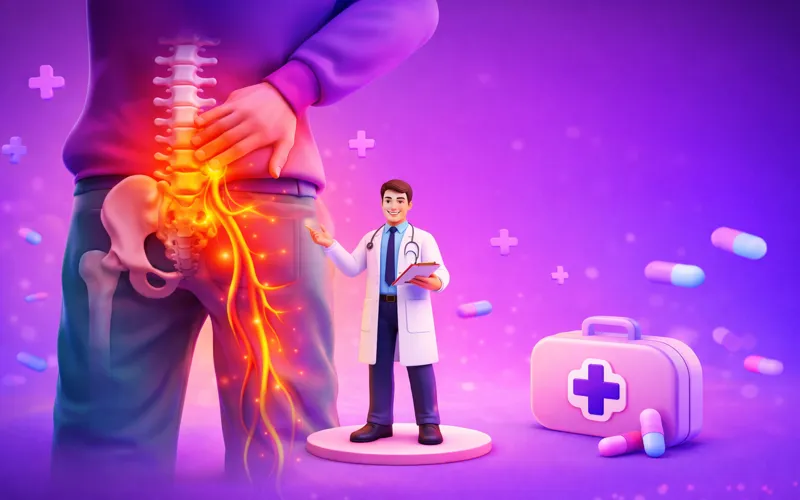
Sciatica refers to pain caused by irritation or compression of the sciatic nerve, which runs from the lower back to the legs. Patients report symptoms such as lower back pain radiating to the left or right leg, numbness, or tingling sensations. These symptoms vary depending on nerve compression severity and side involvement.
Neurosurgery hospitals in Delhi manage sciatica using structured diagnosis methods such as MRI and neurological exams. Treatment plans include medication, physiotherapy, targeted exercises, and surgical intervention in advanced cases. Neurology specialist in Delhi focus on relieving nerve compression and restoring normal nerve function through clinically guided treatment pathways.
Sciatica Meaning in Hindi
In Hindi, sciatica is called “सायटिका दर्द”, which describes pain that starts from the lower back and travels through the hip, buttock, and down the leg due to sciatic nerve irritation.
In clinical terms, sciatica is a neuropathic pain condition caused by compression or inflammation of the sciatic nerve in the lumbar spine. In Delhi patients, symptoms commonly present as unilateral (left or right side) radiating leg pain, along with tingling, numbness, or muscle weakness depending on the affected nerve root level.
Sciatica Causes and Nerve Compression Types
This condition commonly develops due to long sitting hours, poor posture, and age-related spinal degeneration.
Sciatica develops when the sciatic nerve is compressed or irritated in the lower spine. The most common trigger in Delhi cases is herniated intervertebral disc pressing on lumbar nerve roots. This leads to radiating pain from the lower back to one leg, either left or right.
Other causes include spinal stenosis, where the spinal canal narrows and compresses nerves, and spondylolisthesis, where one vertebra slips over another. These conditions increase nerve pressure and worsen pain severity, especially during movement or prolonged standing.
Sciatica Left Side vs Right Side Pain Differences
Sciatica symptoms vary depending on which sciatic nerve root is compressed.
Left Side Sciatica Pain
Left-sided sciatica occurs when nerve compression affects the left lumbar nerve root. Patients typically report sharp pain starting from the lower back and radiating through the left buttock, thigh, and down to the foot. This may also include tingling, numbness, or weakness in the left leg, especially while sitting or bending forward.
Right Side Sciatica Pain
Right-sided sciatica develops when the right lumbar nerve root is compressed. Symptoms mirror left-sided pain but occur on the right leg. Delhi patients often experience increased discomfort while walking, standing for long durations, or lifting heavy objects, with pain radiating from the lower spine to the right leg and foot.
Sciatica Symptoms That Require Neurosurgery in Delhi
Surgery is recommended only when sciatica symptoms persist beyond 6–12 weeks or when severe nerve damage is suspected. In Delhi neurosurgery practice, this threshold is used to identify patients who do not respond to medication or physiotherapy.
Patients require neurosurgical evaluation when they experience progressive leg weakness, loss of bladder or bowel control, or severe radiating pain that does not improve with conservative treatment. Persistent numbness in the leg or foot and difficulty walking or standing are also warning signs of advanced nerve compression.
Sciatica Treatment Options Delhi
Sciatica management in Delhi neurosurgery hospitals focuses on reducing nerve compression and restoring normal nerve function.
1. Medicine-Based Management
Doctors in Delhi often prescribe anti-inflammatory medicines and muscle relaxants to reduce nerve irritation and control acute pain. These help decrease inflammation around the affected lumbar nerve root.
2. Physiotherapy and Rehabilitation
Physiotherapy is used to improve spinal flexibility and reduce pressure on the sciatic nerve. Guided movement therapy and posture correction are commonly recommended in Delhi clinics to prevent recurrence.
3. Image-Guided Diagnosis and Monitoring
MRI and neurological examinations are used in neurosurgery hospitals in Delhi to identify the exact site of nerve compression. This helps in planning precise treatment.
4. Neurosurgical Intervention
Surgery is considered when symptoms persist beyond 6–12 weeks or when severe nerve compression occurs. Procedures focus on removing or reducing pressure on the affected nerve root to restore mobility and reduce pain.
Sciatica Exercises Recommended by Delhi Specialists
Sciatica rehabilitation exercises focus on reducing nerve compression and improving spinal mobility.
1. Knee-to-Chest Stretch
This exercise helps reduce pressure on the lower spine.
- Lie on your back on a flat surface
- Pull one knee toward your chest
- Hold for 20–30 seconds
- Repeat 3–5 times on each side
2. Piriformis Stretch
This targets the muscle that can irritate the sciatic nerve.
- Lie on your back with knees bent
- Cross one leg over the other
- Pull the uncrossed leg toward your chest
- Hold for 20–30 seconds
3. Hamstring Stretch
Tight hamstrings can worsen sciatic pain.
- Sit or lie down with one leg extended
- Gently reach toward the toes
- Hold for 20–30 seconds per leg
4. Pelvic Tilt Exercise
This strengthens lower back support muscles.
- Lie on your back with knees bent
- Tighten abdominal muscles
- Press lower back into the floor
- Hold for 5–10 seconds and release
Sciatica is a nerve compression condition that can significantly affect mobility, sleep, and daily activity if left untreated. Early diagnosis using MRI and neurological assessment helps identify the exact cause of nerve pressure and guides effective treatment planning. In many cases, conservative treatment such as medication and physiotherapy is sufficient, while advanced cases may require neurosurgical intervention to relieve nerve compression.
At Primus Hospital neurosurgery specialists evaluate sciatica using structured clinical protocols designed to identify the root cause of pain and prevent long-term nerve damage. Patients receive multidisciplinary care including neurology consultation, imaging-based diagnosis, and advanced treatment options tailored to condition severity.
If you are experiencing persistent lower back pain, radiating leg pain, or numbness in the left or right leg, timely consultation at a good neurosurgery hospital in Delhi can help prevent progression and support faster recovery.