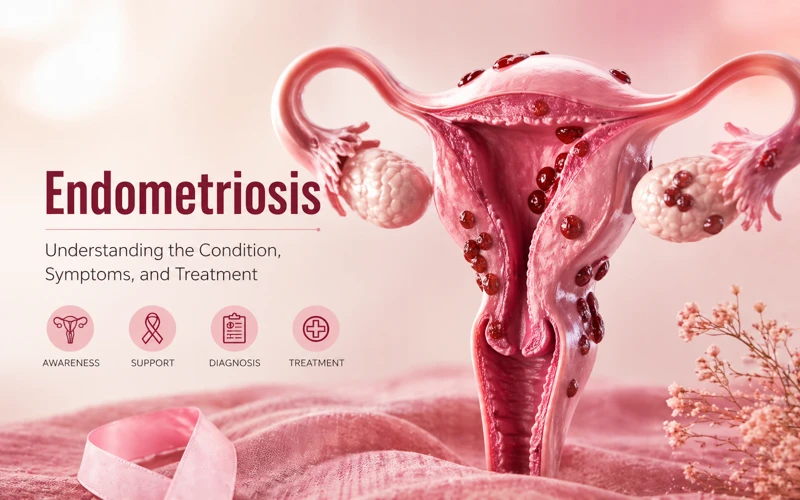
Endometriosis affects about 10% of women of reproductive age worldwide, representing nearly 190 million women globally. The condition occurs when tissue similar to the uterine lining grows outside the uterus and attaches to organs inside the pelvic cavity.
Endometriosis can affect structures such as the ovaries, fallopian tubes, pelvic lining, and bowel, leading to chronic pelvic pain and menstrual complications. The condition may also form ovarian cysts known as endometriomas and can affect fertility in a significant proportion of patients.
Diagnosis of endometriosis often requires clinical evaluation, imaging tests, and sometimes laparoscopic examination performed by gynecology specialists. Hospitals providing gynecology treatment in Delhi evaluate symptoms such as pelvic pain, painful periods, and infertility before recommending medical or surgical treatment.
What Is Endometriosis and How It Affects Women in Delhi?
Endometrial-like tissue may attach to organs such as the ovaries, fallopian tubes, pelvic lining, bladder, or bowel. This tissue responds to hormonal changes during the menstrual cycle, which can lead to inflammation, pain, and formation of scar tissue in the pelvic region.
Pelvic endometriosis develops when these abnormal tissue implants grow on pelvic organs and surrounding structures. Over time, the condition may form adhesions that connect organs abnormally inside the pelvis.
Gynecology specialists in Delhi hospitals diagnose endometriosis through clinical evaluation, ultrasound imaging, and sometimes laparoscopic examination. Identifying the location and severity of endometrial tissue growth helps doctors determine the appropriate treatment plan for patients experiencing persistent pelvic symptoms.
Common Endometriosis Symptoms Women Experience in Delhi
Diagnosis of endometriosis is often delayed by 7–10 years after symptoms begin, according to clinical data from the National Center for Biotechnology Information (NCBI). Many women initially experience symptoms that resemble common menstrual discomfort.
The most frequent symptom is chronic pelvic pain, which often becomes more intense during menstrual periods. Women with endometriosis may also experience severe menstrual cramps that begin before menstruation and continue during the cycle.
Pain during sexual intercourse, bowel movements, or urination during menstruation may also occur when endometrial tissue affects pelvic organs. These symptoms are commonly evaluated in gynecology clinics when patients report persistent pelvic pain.
Endometriosis can also cause heavy menstrual bleeding or irregular menstrual cycles in some patients. In addition, a significant number of women with endometriosis seek medical evaluation due to difficulty conceiving or infertility.
Gynecology hospitals in Delhi assess these symptoms through medical history review, pelvic examination, and imaging tests such as ultrasound or MRI to identify possible endometriosis before planning further treatment.
Pelvic Endometriosis and Endometriosis Ovarian Cyst Explained
Ovarian endometriomas occur in approximately 17%–44% of women diagnosed with endometriosis (Johns Hopkins Medicine). These cysts develop when endometrial-like tissue grows on the ovaries and forms fluid-filled sacs commonly referred to as endometriosis ovarian cysts or endometriomas.
Pelvic endometriosis occurs when endometrial tissue implants grow on pelvic organs such as the ovaries, fallopian tubes, uterine ligaments, pelvic lining, bladder, or bowel. These implants respond to hormonal changes during the menstrual cycle and may lead to inflammation, scarring, and adhesions inside the pelvic cavity.
Ovarian endometriomas are often described as “chocolate cysts” because the cyst contains old menstrual blood that becomes thick and dark over time. These cysts may cause pelvic pain, painful menstruation, and pressure in the lower abdomen.
Gynecology hospitals in Delhi diagnose pelvic endometriosis and ovarian endometrioma through pelvic ultrasound, MRI imaging, and laparoscopic evaluation when required. Identifying the presence of ovarian cysts helps doctors determine whether medical management or surgical removal is necessary.
Scar Endometriosis After Surgery
Scar endometriosis is a rare form of endometriosis that develops in surgical scars following abdominal procedures such as cesarean section or gynecological surgery (NCBI). The condition occurs when endometrial tissue implants into the surgical incision during or after the operation.
Scar endometriosis usually appears months or years after surgery as a small painful lump near the surgical scar. The swelling may increase in size or become more painful during menstrual periods because the tissue responds to hormonal changes.
Patients often report localized pain, tenderness around the scar, and cyclical swelling during menstruation. These symptoms can help doctors differentiate scar endometriosis from other surgical scar complications.
Endometriosis Treatment Options in Delhi
Endometriosis affects about 10% of women of reproductive age, and treatment depends on symptom severity and disease location. Gynecology hospitals in Delhi evaluate patient symptoms, imaging results, and fertility plans before selecting the appropriate treatment approach.
Doctors may begin treatment with pain management medications to control pelvic pain and menstrual discomfort. Non-steroidal anti-inflammatory drugs are often used to manage pain associated with endometriosis symptoms.
Hormonal therapy is commonly recommended to reduce the activity of endometrial-like tissue. Treatments such as oral contraceptive pills, progestin therapy, or hormone-regulating medications help control menstrual cycles and slow the growth of endometrial implants.
Gynecology specialists in Delhi may recommend surgical treatment when symptoms persist despite medical therapy or when endometriosis affects fertility. Surgery focuses on removing abnormal tissue growth while preserving reproductive organs whenever possible.
Endometriosis Surgery Performed in Delhi Hospitals
Endometriosis symptoms can recur in approximately 20%–40% of patients within 5 years after surgery, depending on disease severity and treatment approach. Gynecology hospitals in Delhi perform surgery when medication and hormonal therapy do not adequately control symptoms.
The most common surgical method for endometriosis is laparoscopic surgery, a minimally invasive procedure performed through small abdominal incisions. Surgeons insert a camera and specialized instruments to locate and remove endometrial tissue from pelvic organs.
During laparoscopic surgery, doctors carefully excise or destroy endometriosis implants on the ovaries, pelvic lining, fallopian tubes, or surrounding tissues. The procedure may also involve removal of ovarian endometriomas or adhesions that affect pelvic organs.
Endometriosis occurs when tissue similar to the uterine lining grows outside the uterus and affects organs within the pelvic cavity.
It may involve pelvic organs, ovaries, surgical scars, or surrounding tissues, and in some cases it can form ovarian cysts known as endometriomas. Early diagnosis through clinical evaluation and imaging helps doctors determine the location and severity of the condition.
Primus Super Speciality Hospital in Delhi provides comprehensive gynecology care for conditions such as endometriosis. The hospital offers diagnostic evaluation, advanced imaging, and minimally invasive surgical treatment performed by experienced gynecology specialists.
Patients seeking endometriosis treatment in Delhi can consult specialists at Primus Hospital to receive detailed diagnosis, discuss treatment options, and determine whether medical therapy or surgical management is required. Early consultation helps identify the condition and guide appropriate gynecological care.