According to the National Institute of Diabetes and Digestive and Kidney Diseases (NIDDK), up to 20% of adults in Western and Asian countries experience gastroesophageal reflux disease (GERD), with heartburn being its most common symptom. Heartburn is a burning sensation in the chest that occurs when stomach acid flows back into the oesophagus, the tube connecting the mouth to the stomach. Although it can feel similar to heart-related chest pain, heartburn is a digestive condition. However, sudden or severe chest pain should never be ignored because it may signal a medical emergency rather than acid reflux.
Heartburn meaning in Hindi is “सीने में जलन”, a condition caused by stomach acid irritating the lining of the oesophagus. It commonly develops after eating large meals, consuming spicy or fatty foods, lying down soon after eating, or during pregnancy. While occasional heartburn is common, symptoms that occur frequently may indicate GERD, a chronic form of acid reflux that requires medical evaluation.
This guide explains heartburn causes, symptoms, risk factors, treatment options, home remedies, and when to seek heartburn treatment in Delhi.
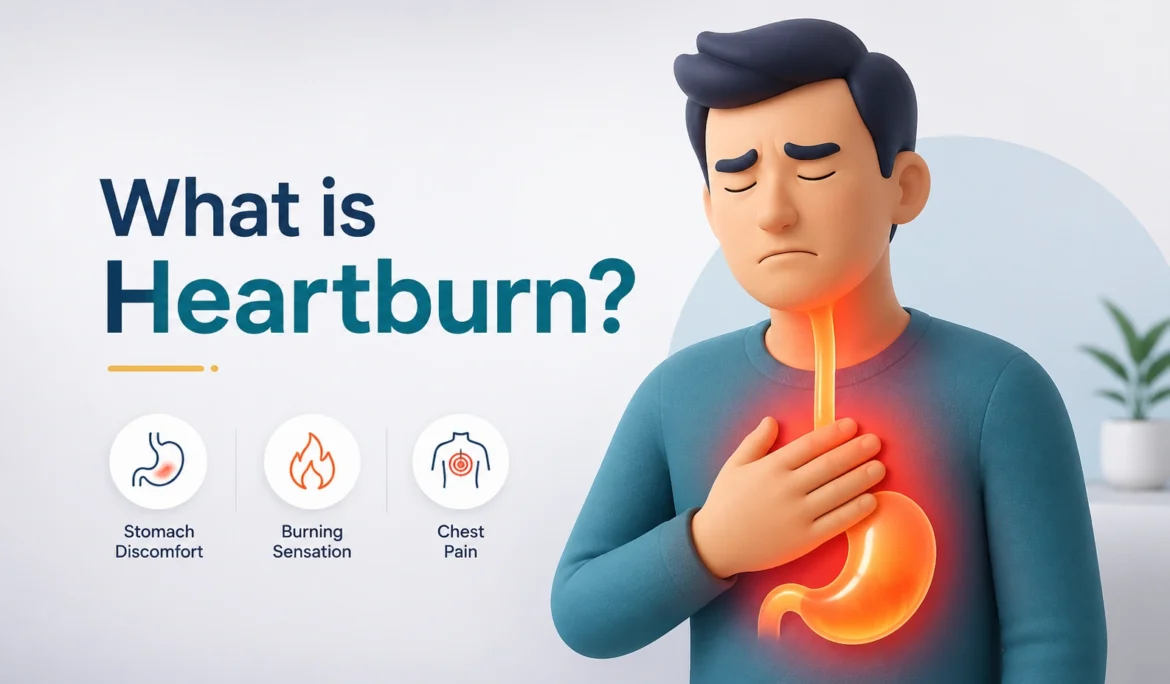
What Is Heartburn?
Heartburn is the most common symptom of acid reflux, a condition in which stomach acid flows backward into the oesophagus due to the improper functioning of the lower oesophageal sphincter (LES). The LES is a muscular valve that normally opens to allow food into the stomach and closes to prevent stomach contents from moving upward. When this valve relaxes or weakens, acidic stomach contents irritate the oesophageal lining, causing the characteristic burning sensation in the chest.
Despite its name, heartburn is not related to the heart. The discomfort usually develops behind the breastbone and may spread toward the throat. Many people notice that symptoms worsen after eating a large meal, consuming spicy or fatty foods, bending over, or lying down soon after eating. Some people also experience a sour or bitter taste in the mouth if stomach acid reaches the throat.
Heartburn Symptoms
A burning sensation behind the breastbone is the hallmark symptom of heartburn. The discomfort usually begins after eating and may become worse when you bend over, lie down, or eat a large meal. The burning feeling can last from a few minutes to several hours, depending on the cause and severity of acid reflux.
Common heartburn symptoms include:
- A burning pain or discomfort in the chest
- A sour, acidic, or bitter taste in the mouth
- Food or stomach acid coming back into the throat (regurgitation)
- Difficulty swallowing or a sensation of food getting stuck
- Frequent burping or belching
- A persistent sore throat or hoarseness
- Chronic cough, especially at night
- A feeling of a lump in the throat
If you face any of such symptoms,
Heartburn Causes and Risk Factors
Heartburn occurs when the lower oesophageal sphincter (LES) does not close properly, allowing stomach acid to flow back into the oesophagus.
Common Heartburn Causes
Several lifestyle, dietary, and medical factors can trigger acid reflux and heartburn, including:
- Large meals: Overfilling the stomach increases pressure and makes acid reflux more likely.
- Spicy and fatty foods: These foods can slow stomach emptying and relax the LES.
- Chocolate, peppermint, caffeine, and carbonated drinks: These may trigger reflux in some individuals by reducing LES pressure.
- Citrus fruits and tomato-based foods: Their acidity can worsen symptoms in people who are prone to heartburn.
- Lying down after eating: Reclining within two to three hours of a meal makes it easier for stomach acid to move into the oesophagus.
- Obesity or excess abdominal weight: Increased pressure inside the abdomen encourages acid reflux.
- Smoking: Tobacco weakens the LES and reduces saliva production, which normally helps neutralise stomach acid.
- Alcohol consumption: Alcohol can relax the LES and irritate the lining of the oesophagus.
- Pregnancy: Hormonal changes and the growing uterus increase pressure on the stomach, making heartburn common, especially during the second and third trimesters.
- Certain medications: Pain relievers such as NSAIDs, some blood pressure medicines, sedatives, and specific medications for osteoporosis may contribute to heartburn in some people.
Who Is at Higher Risk?
The risk of developing frequent heartburn is higher in people who:
- Are overweight or obese
- Are pregnant
- Eat large or late-night meals regularly
- Smoke or consume alcohol frequently
- Have a hiatal hernia
- Experience delayed stomach emptying
- Have a family history of GERD
- Frequently consume foods and beverages known to trigger acid reflux
Heartburn Treatment | Heart Hospital in Delhi
Most cases of occasional heartburn improve with lifestyle changes and medicines, but symptoms occurring two or more times a week should be evaluated by a cardiologist in Delhi.
1. Lifestyle Changes
Lifestyle modifications are often the first step in managing mild heartburn. Doctors commonly recommend:
- Eating smaller, more frequent meals instead of large portions.
- Avoiding spicy, fried, fatty, and highly acidic foods if they trigger symptoms.
- Limiting chocolate, peppermint, caffeinated beverages, carbonated drinks, and alcohol.
- Waiting at least 2–3 hours after eating before lying down or going to bed.
- Maintaining a healthy body weight to reduce pressure on the stomach.
- Quitting smoking, as tobacco weakens the lower oesophageal sphincter (LES).
- Elevating the head of the bed by 6–8 inches for people with frequent nighttime heartburn.
2. Heartburn Remedies at Home
People with occasional heartburn may find relief through simple home measures, including:
- Drinking water after meals to help clear acid from the oesophagus.
- Eating slowly and avoiding overeating.
- Wearing loose-fitting clothing to reduce abdominal pressure.
- Identifying and avoiding personal food triggers.
- Sleeping on the left side if nighttime reflux is a problem.
3. Medicines for Heartburn
If lifestyle changes are not enough, your doctor may recommend medications such as:
- Antacids, which neutralise stomach acid and provide quick, short-term relief.
- H2-receptor blockers, which reduce acid production and provide longer-lasting symptom control.
- Proton pump inhibitors (PPIs), which significantly decrease stomach acid production and are commonly prescribed for frequent heartburn or GERD.
Heartburn is usually a symptom of acid reflux, but persistent symptoms should never be ignored. Occasional episodes often improve with lifestyle changes and appropriate medication. However, frequent heartburn, recurring symptoms, or recurring chest discomfort may indicate gastroesophageal reflux disease (GERD) or another underlying condition that requires medical evaluation.
If you are looking for heart treatment in Delhi, consult an experienced cardiologist to help identify the cause and recommend the appropriate treatment. Primus Hospital offers comprehensive evaluation for digestive and chest-related symptoms, with access to experienced gastroenterologists, cardiologists, advanced diagnostic facilities, and emergency care services.