
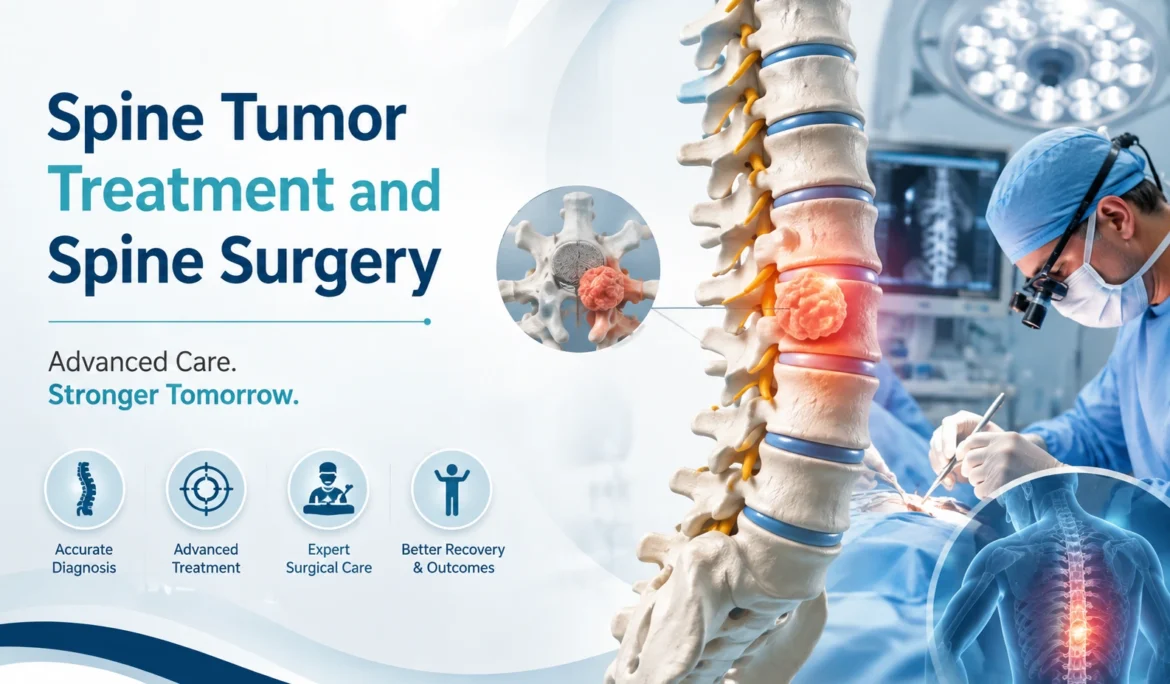
Persistent back pain that doesn’t improve with rest, worsens at night, or comes with numbness or weakness in your arms or legs, isn’t something to wait out. While most back pain has ordinary causes, in some cases, it can be a sign of a spinal tumor, a condition that’s far more treatable today than most people realise, especially with early diagnosis. If you’re researching spine tumor treatment or spine surgery in Delhi, this guide covers what you need to know.
What Is a Spinal Tumor?
A spinal tumor is an abnormal growth of tissue in or around the spinal cord and spinal column. These tumors can be benign (non-cancerous) or malignant (cancerous), and they’re generally classified into two categories:
- Primary spinal tumors originate in the spine or spinal cord itself. These are relatively rare.
- Metastatic (secondary) spinal tumors are far more common and occur when cancer from elsewhere in the body, most often the breast, lung, or prostate, spreads to the spine.
Spinal tumors are further classified by their location within the spine, whether they sit within the spinal cord itself (intramedullary), just outside it but within the protective membrane (intradural-extramedullary), or in the bony vertebral column (extradural/vertebral).
Common Symptoms of a Spinal Tumor
Spinal tumors don’t always cause obvious symptoms early on, which is part of why they can go undiagnosed for a while. Watch for:
- Back or neck pain that worsens at night or doesn’t improve with rest
- Pain that radiates to other parts of the body
- Numbness, tingling, or reduced sensitivity to temperature and pain
- Muscle weakness, particularly in the arms or legs
- Difficulty walking or a change in balance
- Loss of bowel or bladder control in more advanced cases
Because ordinary back pain is so common, doctors typically look for these additional “red flag” symptoms before suspecting a spinal tumor, since pain alone rarely points to one specific cause.
How Are Spinal Tumors Diagnosed?
If a spinal tumor is suspected, your neurosurgeon or spine specialist will typically recommend:
- MRI scan: The primary imaging tool for detecting spinal tumors and understanding their exact location and size
- CT scan: sometimes combined with a myelogram (a contrast dye study) for additional detail
- Biopsy: A small tissue sample may be taken to confirm whether the tumor is benign or malignant, and to identify its exact type
This combination allows your spine specialist to build a precise treatment plan tailored to the tumor’s type, location, and behaviour.
Spine Tumor Treatment Options
Treatment depends heavily on whether the tumor is primary or metastatic, benign or malignant, and how it’s affecting the spinal cord and surrounding structures.
Surgery
For many primary spinal tumors, complete surgical removal (called en bloc resection) can offer a genuine cure. Most intradural-extramedullary tumors, including common types like nerve sheath tumors and meningiomas, can often be fully removed with minimal lasting neurological impact when treated by an experienced surgical team. For metastatic tumors, surgery is generally used to relieve pressure on the spinal cord, stabilise the spine, and reduce pain, rather than to cure the underlying cancer.
Minimally Invasive and Stabilisation Procedures
In select cases, minimally invasive techniques like vertebroplasty or kyphoplasty, where bone cement is injected to stabilise the affected vertebra after tumor removal, can restore spinal support and significantly improve mobility and pain control.
Radiation Therapy
Radiation is often used either alongside surgery or as a standalone treatment, particularly for tumors that can’t be fully removed or where surgery carries higher risk. Stereotactic radiosurgery delivers precisely targeted radiation to the tumor while minimising exposure to surrounding healthy tissue.
Chemotherapy and Targeted Therapy
These are used more selectively for spinal tumors compared to other cancers, generally reserved for specific tumor types or in combination with other treatments, particularly for metastatic disease.
Monitoring
For small, asymptomatic, benign tumors that aren’t growing or causing problems, doctors may simply recommend regular MRI monitoring rather than immediate intervention.
Notably, according to clinical data, up to 10% of people with symptomatic metastatic spinal tumors can be candidates for surgical treatment, underscoring just how carefully these decisions are individualised based on each patient’s overall prognosis and the specific behaviour of their tumor.
Spine Surgery Cost in Delhi
Spine surgery cost in Delhi varies considerably depending on the specific procedure, tumor complexity, hospital, and length of stay. As a general reference:
- Standard spine surgeries in Delhi (such as discectomy, laminectomy, or spinal fusion) typically range from roughly ₹1,15,000 to ₹5,50,000, depending on technique and complexity
- Spine tumor removal surgery specifically tends to sit toward the higher end of this range, given the added complexity of tumor resection, neuromonitoring, and often longer hospital stays
Several factors influence the final cost:
- Type of tumor (primary vs. metastatic) and its location in the spine
- Whether the procedure is open surgery or a minimally invasive approach
- Length of ICU and hospital stay required
- Need for spinal stabilisation hardware (screws, rods, cages)
- Pre-surgical imaging, biopsy, and diagnostic workup
- Post-surgical physiotherapy and rehabilitation
It’s always best to get a personalised estimate directly from your hospital after a consultation and imaging review, since spine tumor cases vary significantly from one patient to the next.
When to Consult a Spine Specialist in Delhi
You should see a spine specialist in Delhi promptly if you experience:
- Back or neck pain that’s worsening, especially at night, and isn’t improving with rest
- New numbness, tingling, or weakness in your limbs
- Difficulty walking or a noticeable change in coordination
- Loss of bladder or bowel control
- A known history of cancer along with new or worsening back pain
Early evaluation genuinely matters here. Outcomes for spinal tumors tend to be significantly better when the tumor is caught and treated before it causes major neurological damage.
Conclusion
A spinal tumor diagnosis can feel overwhelming, but with today’s imaging, surgical techniques, and combination treatment approaches, outcomes have improved significantly, particularly when caught early. If you’re dealing with persistent back pain or neurological symptoms and considering spine tumor treatment or spine surgery in Delhi, Primus Super Speciality Hospital offers experienced neurosurgical care to help you understand your diagnosis and the treatment path best suited to your condition.
Primus Super Speciality Hospital houses a dedicated Department of Neuroscience offering comprehensive spine care. The hospital’s neurosurgical team is equipped for advanced techniques including deep brain stimulation, computer-assisted surgery, and minimally invasive spine procedures that aim to reduce scarring and speed up recovery. With personalised treatment planning built around each patient’s lifestyle, health needs, and specific spinal condition, Primus offers coordinated, experienced care for patients navigating a spinal tumor diagnosis in Delhi.