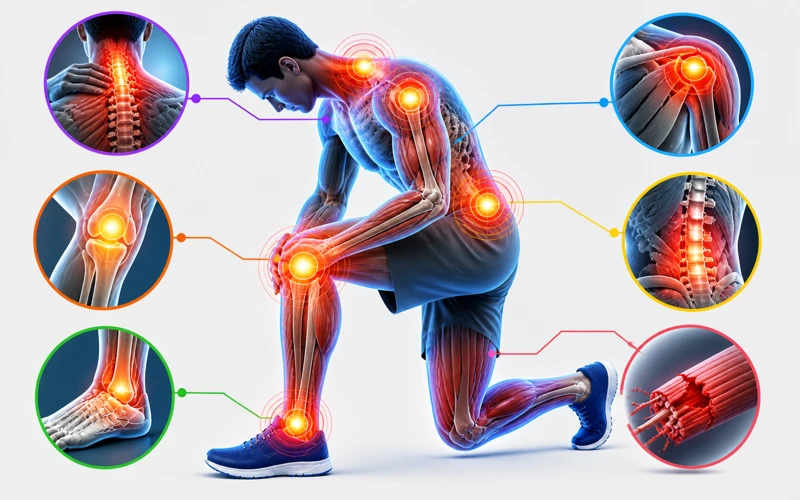
Up to 90% of sports-related injuries involve muscle strains or sprains (NIAMS). Body pain often starts with small muscle fiber damage caused by overload or sudden movement. A muscle strain occurs when fibers stretch beyond their limit and develop micro-tears.
12–24 hours after activity, pain may increase due to delayed onset muscle soreness, which peaks within 24 to 72 hours as per Studies as per Phyio Pedia. This pattern creates confusion between normal workout soreness and actual muscle injury.
A key difference lies in tissue damage depth. Mild soreness affects surface fibers, while a strain disrupts deeper muscle structure and restricts movement. Prolonged sitting, improper lifting, and sudden physical activity are three key triggers of work out without warm-up. These factors increase stress on muscles in the neck, back, and legs.
Persistent pain for more than 7 days or reduced mobility indicates the need for clinical evaluation. An orthopaedic specialist in Delhi assesses severity using physical examination and imaging when required.
Muscle Strain Symptoms
These primary symptoms define a muscle strain: localized pain, reduced strength, and restricted movement. These symptoms occur when muscle fibers experience micro-tearing due to overload or sudden force.
Pain intensity often increases 2–24 hours after injury as inflammation develops in the affected muscle region. This makes early symptoms appear mild before becoming more noticeable.
1. Localized Muscle Pain in Delhi Patients
- Pain is concentrated in a specific muscle group
- Worsens with movement or pressure
- Common in neck, back, calf, and thigh muscles
2. Muscle Tightness and Reduced Strength
- Muscle feels stiff even at rest
- Weakness during lifting or walking
- Loss of normal flexibility in the affected area
3. Swelling and Tenderness
- Mild swelling appears within 24–48 hours
- Tenderness increases when touching the area
- In moderate strains, bruising may develop
4. Functional Limitation
- Difficulty bending, turning, or stretching
- Reduced range of motion in joints connected to the muscle
- Pain increases during routine activities like walking or sitting
Muscle Strain vs Muscle Tear in Delhi: Key Differences
These differences separate a muscle strain from a muscle tear. Both conditions involve muscle fiber damage, but severity, recovery time, and functional impact differ significantly.
1. Level of Tissue Damage
- Muscle strain: Partial stretching or micro-tearing of fibers
- Muscle tear: Complete or near-complete rupture of muscle fibers
- Tear involves deeper structural damage than strain
2. Pain Intensity Pattern
- Strain: Mild to moderate pain that increases with movement
- Tear: Sudden, sharp, and severe pain at the time of injury
- Tear often causes immediate functional limitation
3. Mobility and Strength Loss
- Strain: Movement is painful but still possible
- Tear: Significant weakness or inability to use affected muscle
- In severe tears, walking or lifting becomes difficult
4. Recovery Duration in Delhi Cases
- Mild strain: 1–3 weeks recovery
- Moderate strain: 3–6 weeks recovery
- Muscle tear: 2–3 months or longer depending on severity
- Requires structured rehabilitation and medical supervision
Muscle Pain After Workout: Normal Soreness or Injury
2 different conditions can occur after exercise: delayed onset muscle soreness (DOMS) and actual muscle strain. Both feel similar initially, but their timing, intensity, and recovery patterns differ clearly.
1. Delayed Onset Muscle Soreness (Normal Response)
- Pain begins 12–24 hours after exercise
- Peaks between 24–72 hours
- Caused by microscopic muscle fiber stress
- Common after new or intense workouts
- Improves naturally within a few days
2. Muscle Strain (Injury Condition)
- Pain starts during or immediately after activity
- Sharp or localized discomfort in one muscle area
- May limit movement or strength
- Does not improve quickly without rest
- Can worsen with continued activity
3. Key Difference in Delhi Patients
- DOMS: General soreness across multiple muscles
- Strain: Specific pain in one defined muscle region
- DOMS improves with light movement
- Strain worsens with movement or pressure
4. When Workout Pain Becomes a Concern
- Pain lasting more than 5–7 days
- Increasing stiffness instead of improvement
- Difficulty performing daily activities
- Local swelling or sharp pain in one area
Muscle Strain Grades: Level 1, 2, 3
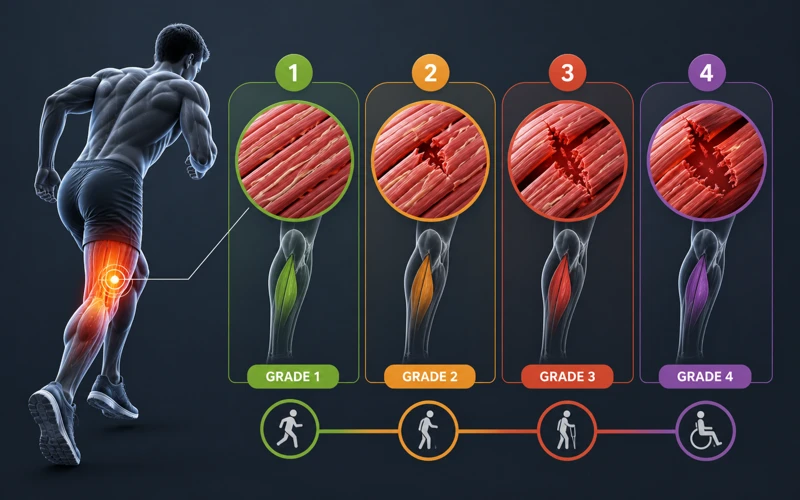
These grades classify muscle strain severity based on fiber damage, pain intensity, and functional loss. These grades help determine treatment approach and recovery timeline.
1. Grade 1 Muscle Strain (Mild)
- Minimal tearing of muscle fibers
- Mild pain during movement
- No major loss of strength
- Slight stiffness or discomfort
- Recovery: 1–3 weeks (NHS reference range)
2. Grade 2 Muscle Strain (Moderate)
- Partial muscle fiber tear
- Noticeable pain during activity and rest
- Reduced strength and flexibility
- Possible swelling or bruising
- Recovery: 3–6 weeks (Cleveland Clinic reference range)
3. Grade 3 Muscle Strain (Severe)
- Complete muscle tear or rupture
- Severe pain at the time of injury
- Major loss of movement or function
- Visible swelling or deformity in some cases
- Recovery: 2–3 months or longer (Johns Hopkins reference range)
Muscle Strain Treatment at Home Care to Medical Therapy
These structured treatment stages are used in muscle strain management depending on severity, symptom duration, and functional limitation at a good Orthopedic hospital in Delhi.
1. Immediate Care (First 24–72 Hours)
- Rest the affected muscle completely
- Apply ice packs for 15–20 minutes at intervals
- Avoid heat application in early phase
- Reduce physical activity to prevent worsening
2. Early Recovery Phase
- Gentle movement to prevent stiffness
- Light stretching after pain reduction
- Compression support in swollen areas
- Gradual return to basic daily activities
3. Medical Treatment Phase in Delhi
- Pain relief medication as prescribed
- Muscle relaxants in moderate cases
- Physiotherapy for mobility restoration
- Ultrasound or imaging if injury is unclear
4. Advanced Care for Severe Cases
- MRI or diagnostic imaging for Grade 2–3 strains
- Structured physiotherapy programs
- Guided rehabilitation exercises
- Rare cases may require surgical consultation
When to Visit an Orthopaedic Hospital in Delhi for Muscle Pain
These clear clinical signs indicate that muscle pain has progressed beyond self-care and requires specialist evaluation. Early consultation helps prevent worsening of tissue damage.
1. Pain Persists Beyond 7 Days
- Pain does not improve after rest
- Symptoms remain constant or worsen over time
- Suggests moderate or deeper muscle injury
2. Loss of Normal Movement
- Difficulty bending, walking, or turning
- Muscle stiffness affecting daily activities
- Reduced joint mobility linked to affected muscle
3. Increasing Swelling or Bruising
- Swelling continues after initial 48 hours
- Visible discoloration appears in the affected area
- Indicates possible Grade 2 or Grade 3 strain
4. Sharp or Recurrent Pain Episodes
- Sudden pain spikes during light movement
- Pain returns immediately after activity
- Suggests incomplete healing or ongoing tissue stress
5. Weakness in Affected Muscle Group
- Inability to perform basic strength actions
- Noticeable difference compared to opposite side
- Common in unresolved or severe strains
Muscle strain occurs when muscle fibers undergo excessive stress, leading to micro-tears that trigger pain, stiffness, and reduced mobility. In most mild cases, symptoms improve within 1–3 weeks.
Pain patterns vary across the body, especially in the neck, back, calf, and leg muscles, where daily posture, workload, and physical activity place repeated stress. Differentiating between normal workout soreness and actual muscle injury is critical.
Early recognition of symptoms and correct grading of injury helps prevent long-term complications such as chronic weakness or recurrent strain. When pain limits movement, causes swelling, or does not improve with rest, medical evaluation becomes necessary.
If muscle pain or strain is affecting your daily life, timely evaluation can prevent worsening injury.
At Primus Hospital, Delhi, orthopaedic specialists provide structured diagnosis and treatment for muscle strains, including advanced imaging, physiotherapy support, and personalized rehabilitation plans based on injury severity.
Whether it is neck strain from posture, back pain from daily strain, or leg muscle injury from activity, expert care helps restore mobility safely and efficiently.
Book a consultation at Primus Hospital, Delhi to get accurate diagnosis and targeted muscle strain treatment from experienced orthopaedic specialists.