Around 2.4 billion people worldwide could benefit from rehabilitation, highlighting the growing importance of physiotherapy in managing injuries, musculoskeletal disorders, and post-surgical recovery. For people with orthopaedic conditions, rehabilitation is not just about relieving pain it plays a vital role in restoring movement, rebuilding strength, and helping them return to daily activities safely.
Whether you’re recovering from a fracture, managing arthritis, dealing with a ligament injury, or healing after orthopaedic surgery, timely physiotherapy for orthopaedic issues can significantly improve your recovery journey.
Choosing the right physiotherapy for orthopaedic issues in Delhi is equally important. An experienced rehabilitation team works closely with orthopaedic specialists to design treatment programmes tailored to your condition, recovery goals, and lifestyle.
Below we will explore how orthopaedic physiotherapy in Delhi supports faster healing, the conditions it treats, what you can expect during rehabilitation, and when you should seek care at an orthopaedics hospital in Delhi to achieve the best possible recovery.
What is Orthopaedic Physiotherapy?
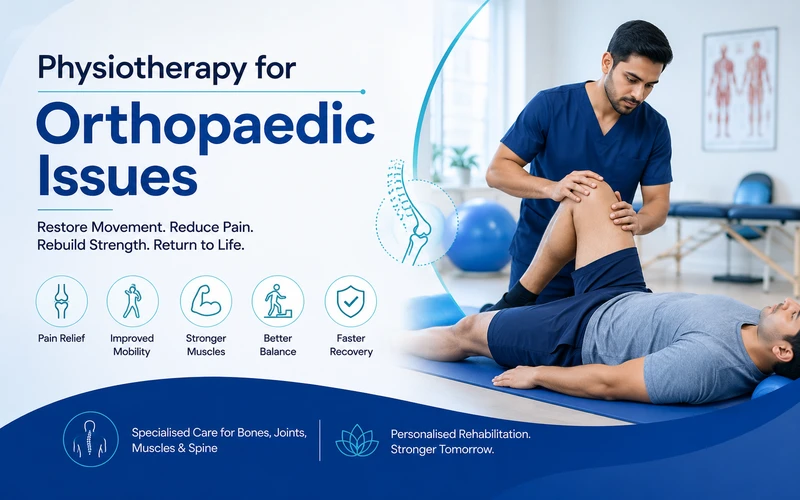
Orthopaedic physiotherapy is a specialised branch of rehabilitation that focuses on diagnosing, treating, and managing conditions affecting the bones, joints, muscles, ligaments, tendons, and spine. Its primary goal is to reduce pain, restore movement, improve strength, and help patients regain their ability to perform everyday activities safely.
Conditions Treated with Orthopaedic Physiotherapy
Orthopaedic physiotherapy in Delhi is commonly recommended for a wide range of musculoskeletal conditions, including:
- Fractures and post-fracture rehabilitation
- Joint replacement recovery (knee, hip, or shoulder)
- Osteoarthritis and rheumatoid arthritis
- Frozen shoulder
- Back and neck pain
- Ligament sprains and tendon injuries
- Sports-related musculoskeletal injuries
- Post-operative orthopaedic rehabilitation
- Muscle strains and joint stiffness
How Is Orthopaedic Physiotherapy Different from General Physiotherapy?
While general physiotherapy addresses a broad range of health conditions, orthopaedic physiotherapy specifically focuses on the musculoskeletal system and functional recovery following injury, surgery, or degenerative conditions.
| General Physiotherapy | Orthopaedic Physiotherapy |
| Treats neurological, cardiopulmonary, paediatric, and musculoskeletal conditions | Focuses specifically on bones, joints, muscles, ligaments, tendons, and the spine |
| Broad rehabilitation across multiple specialties | Specialised rehabilitation for orthopaedic injuries and disorders |
| May address mobility and function across various health conditions | Restores joint movement, muscle strength, balance, and functional independence after orthopaedic problems |
How Physiotherapy Helps Orthopaedic Issues Heal Faster
Healing after an orthopaedic injury or surgery is a gradual process. While the body naturally repairs damaged bones, muscles, ligaments, and tendons, physiotherapy for orthopaedic issues helps optimise each stage of recovery by reducing pain, restoring movement, rebuilding strength, and improving overall function.
1. Reduces Pain and Controls Inflammation
Pain and swelling are common after an injury or orthopaedic procedure. If left unmanaged, they can limit movement and delay rehabilitation.
An orthopaedic physiotherapist uses evidence-based techniques to help manage these symptoms, including:
- Manual therapy
- Therapeutic exercises
- Soft tissue mobilisation
- Heat or cold therapy, when appropriate
- Electrotherapy, where clinically indicated
As pain decreases, patients can begin moving the affected area more comfortably, allowing rehabilitation to progress safely.
2. Restores Joint Mobility and Flexibility
After prolonged immobilisation or surgery, joints often become stiff, making everyday movements difficult.
Physiotherapy focuses on gradually restoring the joint’s normal range of motion through:
- Guided stretching exercises
- Joint mobilisation techniques
- Flexibility training
- Controlled movement exercises
Improving mobility early in the recovery process helps patients regain independence in daily activities such as walking, climbing stairs, reaching overhead, or bending comfortably.
3. Rebuilds Muscle Strength
Muscles surrounding an injured joint weaken quickly when movement is restricted.
A structured strengthening programme helps:
- Restore muscle power
- Improve joint stability
- Support injured tissues during healing
- Reduce strain on surrounding structures
- Improve overall physical function
Exercises are introduced progressively based on the patient’s recovery stage, ensuring safe and effective rehabilitation.
4. Improves Balance, Coordination, and Movement
Orthopaedic injuries can affect posture, balance, and walking patterns, increasing the risk of falls or reinjury.
A rehabilitation programme may include:
- Balance training
- Gait re-education
- Functional movement exercises
- Core stability training
- Coordination exercises
These interventions help patients move more confidently while improving overall body mechanics.
5. Prevents Long-Term Complications
Without appropriate rehabilitation, patients may develop complications that prolong recovery and affect long-term function.
Physiotherapy helps reduce the risk of:
- Joint stiffness
- Muscle wasting
- Reduced flexibility
- Poor posture
- Compensatory movement patterns
- Recurrent injuries
Early intervention supports a smoother transition from injury to full functional recovery.
6. Supports a Safe Return to Daily Activities
The ultimate goal of orthopaedic physiotherapy in Delhi is not simply pain relief it is helping patients safely return to their normal lifestyle.
As recovery progresses, rehabilitation becomes increasingly functional, focusing on activities specific to the patient’s needs, such as:
- Walking independently
- Climbing stairs
- Returning to work
- Resuming recreational activities
- Participating in sports safely
By gradually increasing activity levels under professional supervision, physiotherapy helps patients regain confidence while reducing the likelihood of reinjury.
Recovering from an orthopaedic condition involves more than allowing bones, muscles, or joints to heal naturally. It requires a structured rehabilitation plan that restores mobility, rebuilds strength, improves balance, and helps you return to your daily routine safely. Whether you’re recovering from a fracture, managing arthritis, rehabilitating after surgery, or dealing with chronic back or joint pain, physiotherapy for orthopaedic issues plays a vital role in supporting every stage of recovery.
Seeking timely orthopaedic physiotherapy in Delhi can also help reduce the risk of complications such as joint stiffness, muscle weakness, reduced flexibility, and recurrent injuries. With a personalised treatment plan and consistent rehabilitation, patients can improve functional recovery and regain confidence in their movement.
At Primus Hospital, we believe that effective orthopaedic care extends beyond diagnosis and surgery. Our dedicated team of orthopaedic specialists and experienced physiotherapists works together to create personalised rehabilitation programmes that address your specific condition, recovery goals, and lifestyle needs.
If you’re looking for expert physiotherapy for orthopaedic issues in Delhi, the multidisciplinary team at Primus Hospital is here to help you restore movement, rebuild strength, and return to the activities you enjoy with confidence.
Book a consultation with the orthopaedic and physiotherapy specialists at Primus Hospital today and take the first step towards a stronger, more active recovery.