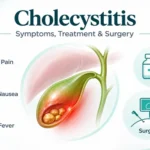









A sudden, sharp pain under the right ribs after a heavy meal is easy to dismiss as gas or acidity. When it is severe, keeps coming back or arrives with fever and vomiting, the gallbladder may be the cause. Cholecystitis is inflammation of the gallbladder, and it often needs medical care rather than home remedies. This guide covers the symptoms, causes, tests, treatment options and surgery, and explains when to see a doctor.
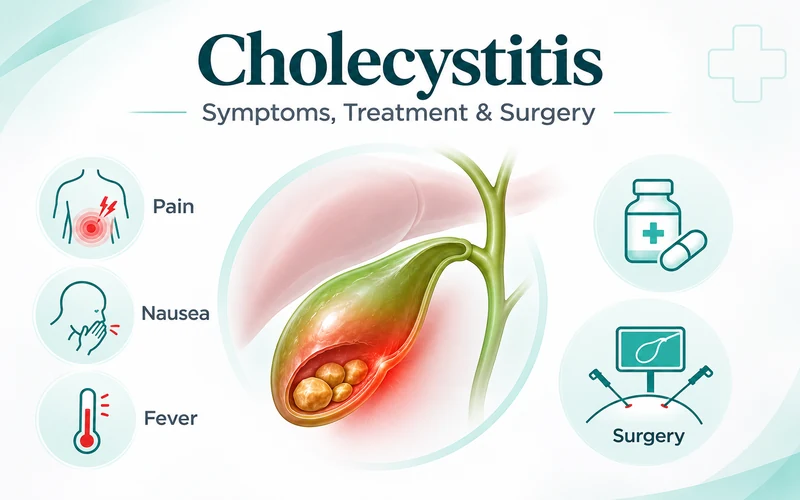
Cholecystitis is inflammation of the gallbladder, most often caused by gallstones blocking the duct that drains it. The main symptom is severe pain in the upper right or middle of the belly, often after a meal, sometimes with nausea, vomiting and fever. Treatment usually starts in hospital with fasting, fluids, pain relief and antibiotics if infection is present. Because it often returns, most people eventually need surgery to remove the gallbladder, usually through keyhole surgery.
What Is Cholecystitis?
The gallbladder is a small organ under the liver that stores bile, a fluid that helps digest fats. When a stone or another blockage stops bile from draining, it builds up, and the gallbladder becomes inflamed. Cholecystitis can be acute, meaning it comes on suddenly, or chronic, meaning inflammation returns over time.
In acute cholecystitis, the pain and fever tend to be strong and sudden, and the person usually feels unwell enough to seek help. In the chronic form, repeated mild episodes can go on for months, with bloating, discomfort after fatty meals and no clear fever. Both forms usually trace back to gallstones, which is why a doctor will look for them first. Mild, repeated symptoms still deserve a check-up, because the gallbladder can become more inflamed and scarred each time.
Cholecystitis Symptoms
According to Mayo Clinic, the signs include:
- Severe pain in the upper right or centre of the belly
- Pain that spreads to the right shoulder or back
- Tenderness when the belly is touched
- Nausea and vomiting
- Fever
Symptoms often start after a meal, especially a large or fatty one. In chronic cases, blood test markers may be normal, so a doctor may need more than one test to confirm the cause.
What Causes It?
| Cause | How it leads to inflammation |
| Gallstones | They block the cystic duct, so bile builds up. This is the most common cause |
| Bile duct blockage | Stones, thickened bile, sludge, kinking or scarring stop bile from draining |
| Tumour | A growth prevents bile from draining |
| Infection | Some infections, including viral ones, can inflame the gallbladder |
| Reduced blood flow | Serious illness can cut blood supply to the gallbladder |
Gallstones are also the main risk factor. The risk of complications is higher in older people, in people with diabetes and in those who delay treatment.
When to See a Doctor
Contact a doctor for any belly pain that keeps returning or worries you. Go to an emergency department if the pain is so strong that you cannot sit still or find a comfortable position, or if pain comes with fever and repeated vomiting. Waiting can allow complications to develop.
How Cholecystitis Is Diagnosed
A doctor starts with your history and a physical exam, checking how tender the upper belly is. Common tests include:
- Blood tests, which can show signs of infection
- Ultrasound, which is often the first imaging test
- CT scan or MRCP, which gives a closer view of the gallbladder and ducts
- HIDA scan, which tracks bile flow and shows where it is blocked
Cholecystitis Treatment in Delhi
Treatment most often involves a hospital stay to bring the inflammation down.
| Treatment | Purpose |
| Fasting | Rests the gallbladder |
| Fluids through a vein | Prevents dehydration |
| Pain medicines | Controls discomfort until inflammation eases |
| Antibiotics | Treat infection, if the gallbladder is infected |
| ERCP | Removes stones blocking the bile ducts |
| Gallbladder drainage | Clears infection when surgery is not possible |
Symptoms are likely to improve in two to three days, but the inflammation often returns. That is why a doctor will usually discuss surgery even after you feel better.
Cholecystitis Surgery
Gallbladder removal is called cholecystectomy. In time, most people with cholecystitis need it.
- Laparoscopic (keyhole) surgery uses a few small cuts, with a camera and instruments passed through them. It is the usual method, and it generally means less pain and smaller scars.
- Open surgery uses a larger cut and is rarely needed.
Timing depends on how severe the symptoms are and how risky surgery is for you. If the risk is low, surgery may happen during the same hospital stay. After the gallbladder is removed, bile flows directly from the liver to the small intestine, so you can still digest food. Some people notice more frequent loose stools.
What Happens If Cholecystitis Is Not Treated?
Untreated cholecystitis can lead to serious problems:
- Infection of the bile
- Gangrene, meaning tissue death in the gallbladder wall
- A tear or perforation of the gallbladder, which can be life-threatening
- Pancreatitis, if a gallstone blocks the pancreatic duct
- Sepsis, in severe untreated cases
People with diabetes face a higher risk of the rarer, severe forms.
Eating and Prevention After Treatment
After treatment, small, regular meals are easier on the digestive system than large portions. Limiting fried and high-fat foods also helps. To lower your chances of gallstones, avoid saturated and trans fats, keep regular meal times, stay active and maintain a healthy weight. Avoid rapid weight loss, which can increase the risk of stones.
Cholecystitis Treatment in Delhi at Primus Hospital
If you are looking for cholecystitis treatment in Delhi, the first step is an accurate diagnosis. Primus Hospital has a department of gastroenterology, whose listed procedures include endoscopy and ERCP, and a department of radiology for imaging. Our department of minimal access and GI surgery covers laparoscopic procedures and lists gallbladder problems such as gallstones among the reasons to consult a specialist. Whether you need a gastro specialist hospital in Delhi for a diagnosis or a surgeon for keyhole surgery, a doctor can plan care around your tests, your overall health and the severity of the attack.
Cholecystitis rarely settles for good on its own. Pain under the right ribs, especially with fever or vomiting, deserves a medical review, and early treatment lowers the chance of complications. Knowing the signs and acting quickly makes the next step simpler.
Book an appointment with a gastroenterologist at Primus Hospital, or Contact Us to plan your visit.