According to the validated evidence, Bell’s palsy affects approximately 15–30 people per 100,000 population each year and accounts for the majority of cases of sudden peripheral facial paralysis. Most patients recover well, especially when treatment begins within 72 hours of symptom onset. Bell’s palsy is a neurological condition caused by inflammation of the facial (seventh cranial) nerve, leading to sudden weakness or paralysis on one side of the face. It can make simple activities such as smiling, blinking, or speaking difficult, but it is not the same as a stroke and requires prompt medical evaluation for an accurate diagnosis. This article explains the symptoms, causes, diagnosis, treatment options, recovery timeline, and special considerations during pregnancy. It also highlights when to seek expert care for Bell’s Palsy treatment in Delhi, at a neurology or neurosurgery hospital, to ensure timely diagnosis and appropriate management.
What Is Bell’s Palsy?
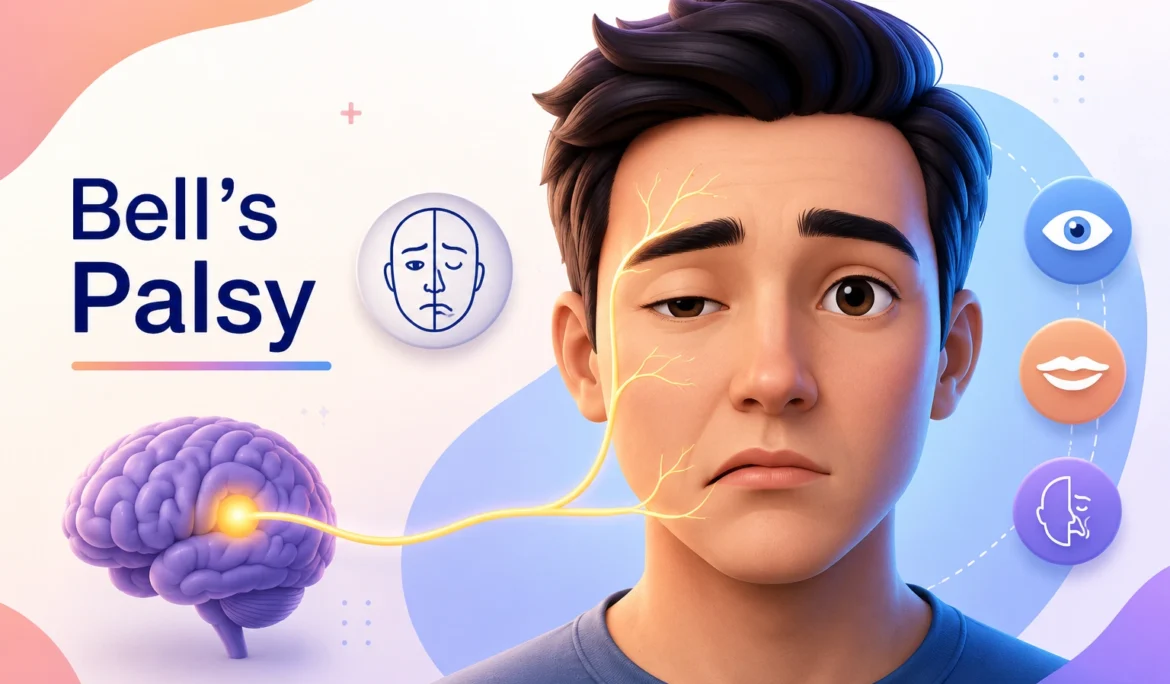
Bell’s palsy is a neurological disorder that causes sudden weakness or paralysis of the muscles on one side of the face due to inflammation of the facial (seventh cranial) nerve. This nerve controls facial expressions, blinking, tear production, and part of the sense of taste. When it becomes inflamed or compressed, the affected side of the face may droop, making it difficult to smile, close the eye, or raise the eyebrow. Although the exact cause is not always known, viral infections such as the herpes simplex virus are believed to trigger the condition in many cases.
Bell’s palsy is not a neurosurgical disorder in most patients and is usually managed with medications, eye protection, and facial rehabilitation under the care of a neurologist or ENT specialist. However, if symptoms are atypical, recurrent, caused by trauma, or associated with a tumour or other structural brain condition, evaluation at a neurosurgery hospital in Delhi may be necessary to rule out serious underlying causes. Early diagnosis is essential because treatment started within 72 hours offers the best chance of complete recovery.
Causes, Risk Factors, and Symptoms of Bell’s Palsy
Although the exact cause of Bell’s palsy remains unclear, it is commonly linked to inflammation and swelling of the facial nerve, often triggered by viral infections such as the herpes simplex virus (HSV-1). Other viruses, including varicella-zoster virus, Epstein–Barr virus, and influenza, have also been associated with the condition. The inflamed nerve becomes compressed as it passes through the narrow facial canal, disrupting the nerve signals that control facial muscles.
Certain factors increase the risk of developing Bell’s palsy, including pregnancy (particularly during the third trimester or shortly after childbirth), diabetes, upper respiratory infections, and a weakened immune system. While Bell’s palsy can occur at any age, it is most commonly seen in adults between 15 and 60 years.
Symptoms usually appear suddenly and reach their maximum severity within 48 to 72 hours. Common signs include:
- Sudden weakness or paralysis on one side of the face
- Drooping of the mouth or eyelid
- Difficulty smiling, blinking, or closing one eye
- Drooling and difficulty eating or drinking
- Changes in taste on the front part of the tongue
- Increased sensitivity to sound in one ear
- Pain around the ear or jaw before facial weakness develops
- Dry eye or excessive tearing
Bell’s Palsy vs Stroke & Diagnosis
Although Bell’s palsy and a stroke can both cause sudden facial weakness, they are different conditions that require different treatments. Bell’s palsy affects the facial nerve outside the brain (peripheral nervous system), while a stroke results from interrupted blood flow to the brain. In Bell’s palsy, weakness typically involves the entire side of the face, making it difficult to raise the eyebrow, close the eye, or smile. In contrast, a stroke often causes facial weakness along with symptoms such as arm or leg weakness, slurred speech, vision changes, confusion, or loss of balance, requiring emergency medical attention.
Doctors usually diagnose Bell’s palsy based on your medical history, symptom onset, and a physical examination of facial muscle function. Additional tests are not always necessary, but MRI or CT scans may be recommended if symptoms are unusual, recurrent, develop gradually, or suggest another neurological condition. In some cases, electromyography (EMG) or nerve conduction studies help assess the extent of facial nerve damage and estimate recovery. Early and accurate diagnosis allows healthcare providers to rule out serious conditions and begin the most appropriate treatment as soon as possible.
How to Cure Bell’s Palsy: Treatment in Delhi
Treatment for Bell’s palsy is most effective when started within 72 hours of symptom onset. The treatment plan depends on the severity of symptoms and the underlying cause.
Medicines
Oral corticosteroids, such as prednisolone, are the first-line treatment for most patients and help reduce swelling around the facial nerve. In selected cases where a viral infection is suspected, your doctor may prescribe antiviral medications alongside corticosteroids. These medicines should only be taken under medical supervision.
Eye Care
If you are unable to close the affected eye completely, protecting the eye becomes a priority. Doctors may recommend lubricating eye drops during the day, eye ointment at night, and wearing an eye patch or taping the eyelid while sleeping to prevent dryness and corneal injury.
Facial Rehabilitation and Motor Points
Facial physiotherapy can help improve muscle coordination during recovery, particularly in patients with persistent weakness. Therapists may recommend facial muscle exercises, massage, and mirror-guided movements to restore normal facial expressions. Bell’s palsy motor points refer to specific areas where facial muscles receive nerve stimulation. In selected cases, specialists may use motor point assessment as part of rehabilitation planning, but electrical stimulation is not routinely recommended for every patient and should only be performed under professional guidance.
Conclusion
Bell’s palsy is a treatable neurological condition that causes sudden weakness or paralysis on one side of the face. Early diagnosis and treatment ideally within 72 hours can significantly improve recovery and reduce the risk of long-term complications. If you experience sudden facial weakness, consult a specialist promptly to receive an accurate diagnosis and appropriate treatment.
At Primus Hospital, our experienced neurology and neurosurgery specialists provide comprehensive care for Bell’s palsy, including accurate diagnosis, advanced imaging, medical management, facial rehabilitation, and follow-up support. If you or a loved one develops sudden facial weakness, schedule a consultation with our team for timely evaluation and personalized treatment.