
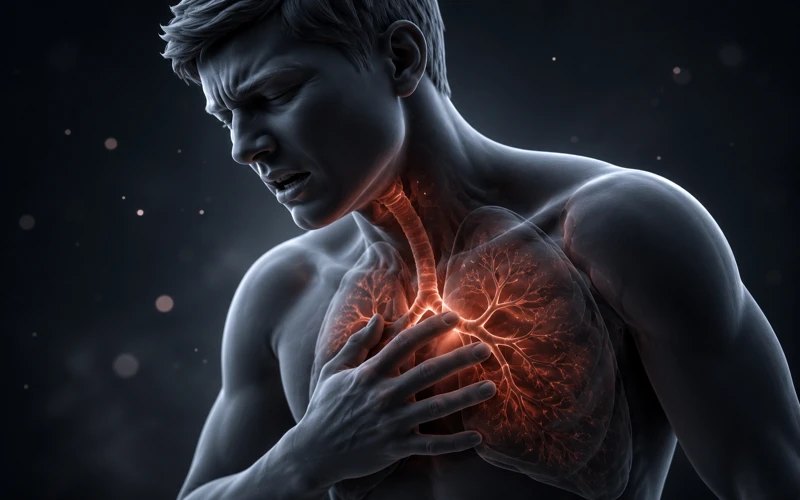
Exposure to high heat can increase breathing demand by up to 20–30%, according to CDC extreme heat data. In hot and humid conditions, the body struggles to regulate temperature efficiently, which directly affects lung function and breathing comfort.
Shortness of breath, medically called dyspnea, occurs when the body cannot meet oxygen demand at a normal breathing rate of 12–20 breaths per minute. In Delhi summers, high temperature combined with humidity reduces oxygen efficiency and increases strain on the respiratory system. Inside the body, heat causes blood vessels to expand and heart rate to increase. At the same time, humid air reduces the efficiency of cooling through sweat evaporation by nearly 40%, making breathing feel heavier and more effortful.
Not all breathlessness is dangerous. Temporary shortness of breath can occur during heat exposure, physical activity, or dehydration. However, persistent or worsening breathlessness may indicate an underlying respiratory or cardiac condition requiring cardiology treatment in Delhi.
Shortness of Breath Cases in Delhi Summer
Shortness of breath in hot and humid Delhi conditions occurs when the respiratory system works harder to maintain oxygen balance under environmental stress. Clinical evidence shows that high heat increases respiratory workload, forcing the lungs and heart to function at a higher baseline demand. Inside the lungs, oxygen exchange occurs in tiny air sacs called alveoli. During extreme heat and humidity, oxygen diffusion becomes less efficient because the body is simultaneously trying to regulate temperature and maintain circulation. This dual demand increases the sensation of breathlessness.
- Increased breathing effort occurs as oxygen demand rises during heat exposure
- Alveolar gas exchange efficiency reduces under thermal stress conditions
- Heart rate increases to compensate for reduced oxygen delivery efficiency
- Airway resistance may feel higher in humid conditions due to dense moisture in inhaled air
- Respiratory muscles fatigue faster during prolonged exposure to hot environments
How Breathing Is Affected by Heat or Humidity?
Shortness of breath, or dyspnea, is a clinical condition where breathing feels difficult, shallow, or insufficient for normal oxygen needs.
In Delhi’s hot and humid climate, this sensation becomes more noticeable because the body is already under thermal stress. The cardiovascular and respiratory systems work together to maintain oxygen delivery, but environmental heat increases the workload on both systems.
- Breathing feels faster or heavier due to increased oxygen demand under heat stress
- The body prioritizes cooling, which diverts blood flow and increases respiratory effort
- Humidity increases air density, making inhalation feel more laborious
- Oxygen exchange becomes less efficient when respiratory rate rises above normal range
- Even mild activity may trigger noticeable breathlessness in sensitive individuals
Why Shortness of Breath Increases in Hot Weather and Humidity in Delhi?
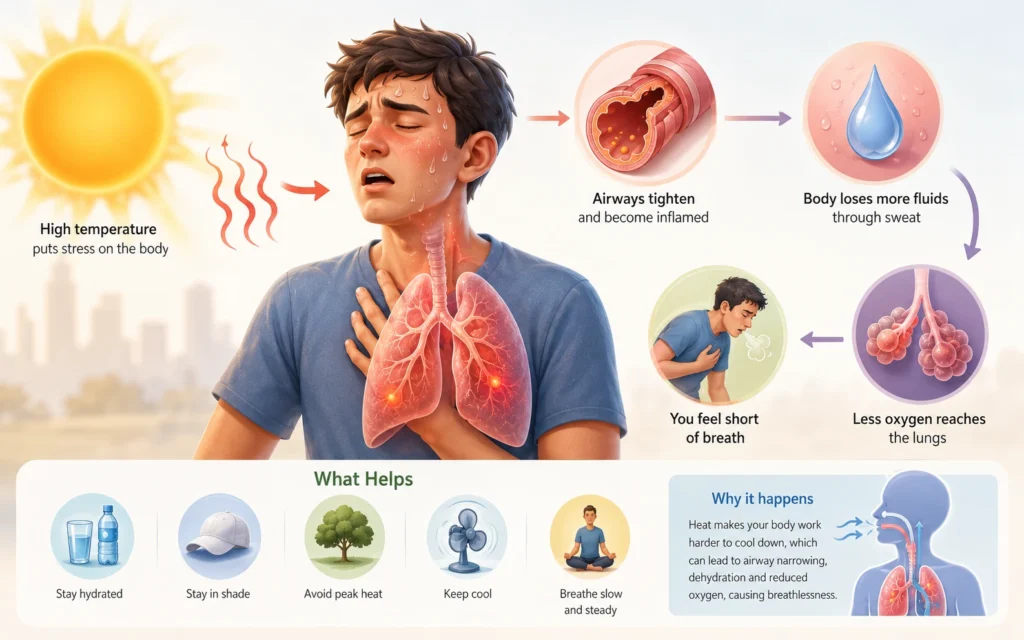
Shortness of breath becomes more common in Delhi summers because the body is forced to manage both heat regulation and oxygen delivery at the same time. Clinical studies show that exposure to high temperature can increase respiratory demand, which makes breathing feel more effortful even at rest or mild activity levels.
Humidity further worsens this effect by reducing the body’s ability to cool itself. When sweat evaporation drops in high humidity conditions, internal temperature rises faster, forcing the heart and lungs to work harder to stabilize the body.
- Heat increases metabolic demand, raising oxygen consumption requirements
- Humidity reduces cooling efficiency, increasing internal heat load
- Respiratory rate rises above the normal breaths per minute range under stress
- Heart rate increases to maintain oxygen circulation, adding to breathing discomfort
- Air feels heavier due to moisture content, increasing perceived inhalation effort
Shortness of Breath Causes: Heat, Pollution, and Lung Stress
Shortness of breath in Delhi is not caused by heat alone. It results from a combination of environmental stressors and physiological strain on the lungs. When temperature rises above normal limits, the respiratory system already works harder, and additional factors like humidity and air pollution further increase breathing difficulty.
- Heat stress increases oxygen demand, raising baseline breathing effort
- Air pollution particles (PM2.5) irritate airway lining and reduce airflow efficiency
- Humidity increases airway resistance, making inhalation feel heavier
- Inflammation in airways can develop in sensitive individuals exposed to polluted air
- Existing conditions like asthma or bronchitis worsen breathing difficulty in combined exposure
Shortness of Breath Symptoms
Shortness of breath symptoms vary depending on severity, duration, and underlying cause. In Delhi’s hot and humid conditions, symptoms often appear earlier because the respiratory system is already under environmental stress. Clinical assessment focuses on both breathing pattern changes and associated physical signs.
Shortness of breath is considered clinically significant when breathing becomes noticeably harder at rest or during minimal activity, especially when it deviates from the normal respiratory rate.
- Increased breathing rate at rest, indicating respiratory stress beyond normal limits
- Feeling of tightness or heaviness in the chest during inhalation
- Difficulty completing full breaths, especially in humid heat conditions
- Fatigue during mild activity such as walking short distances
- Dizziness or lightheadedness due to reduced oxygen efficiency in severe cases
Feeling any of these symptoms?
Shortness of Breath in Pregnancy
Shortness of breath during pregnancy is common due to increased oxygen demand and physiological changes in the respiratory system.
In Delhi’s hot and humid climate, this condition can become more noticeable because the body is already under additional thermal stress. The combination of increased metabolic demand and environmental heat reduces breathing comfort further.
- Oxygen demand increases by ~20–30% during pregnancy, raising baseline respiratory effort
- Growing uterus reduces lung expansion space in later stages of pregnancy
- Heat and humidity increase breathing workload, making breathlessness more noticeable
- Mild exertional breathlessness is common even during normal daily activities
- Rapid breathing episodes may occur during heat exposure or dehydration
High-Risk Groups for Breathlessness in Delhi Summer
Certain groups experience shortness of breath more frequently in Delhi’s hot and humid conditions due to reduced physiological reserve or increased oxygen demand. Clinical observations show that environmental heat stress impacts vulnerable populations more significantly, especially when baseline lung or cardiovascular efficiency is already reduced.
- Elderly individuals, due to reduced lung elasticity and weaker respiratory muscle strength
- Asthma patients, where airway inflammation worsens with heat and pollution exposure
- Individuals with chronic lung disease (COPD/bronchitis), who already have reduced airflow capacity
- Cardiac patients, as heat increases heart workload and oxygen demand
- Pregnant women, due to naturally increased oxygen requirements
Temporary Breathlessness vs Short Breath Disease
Shortness of breath in hot and humid Delhi conditions is not always a sign of disease. Clinically, it is important to distinguish between temporary environmental breathlessness and pathological respiratory conditions. This distinction is based on duration, triggers, and symptom severity.
- Temporary breathlessness appears during heat exposure or physical activity and improves with rest
- Medical breathlessness may occur even at rest or during minimal exertion
- Environmental causes do not usually produce chest pain or persistent wheezing
- Persistent symptoms beyond 24–48 hours may indicate underlying lung or heart conditions
- Worsening pattern over time is a key warning sign for clinical evaluation
Shortness of breath is a physiological response that occurs when the body cannot maintain normal oxygen exchange under stress. In Delhi’s hot and humid climate, this becomes more noticeable because the respiratory system works harder to balance temperature regulation and oxygen demand.
While temporary breathlessness is common during heat exposure or exertion, persistent or worsening symptoms may indicate an underlying respiratory or cardiac condition. Understanding the difference between environmental breathlessness and medical dyspnea helps ensure appropriate care and avoids delay in treatment.
If you are experiencing frequent or worsening shortness of breath in summer or humid conditions, medical tests are recommended. Primus Super Speciality Hospital provides specialized respiratory and pulmonology care for accurate diagnosis and treatment of breathing-related conditions.
Early consultation at Primus helps identify whether breathlessness is environmental or linked to an underlying medical condition, ensuring timely and effective treatment in Delhi.