

Acute Kidney Injury affects 13%–18% of hospitalized patients worldwide, based on KDIGO clinical data. This condition, also called acute renal failure, occurs when the kidneys suddenly lose their ability to filter waste and balance fluids in the body.
Acute kidney failure does not happen in a single step. It progresses through clear clinical phases that reflect how severely the kidneys are damaged and how they respond over time. These phases help doctors track disease severity, decide treatment timing, and predict recovery chances.
In most patients, kidney function changes over hours to days, starting with subtle injury and potentially progressing to complete filtration failure if untreated. Early detection is important because it signals the beginning of acute kidney injury.
In Delhi, delayed recognition is common because early symptoms are mild and non-specific. Patients often seek medical care only after urine output drops below normal levels or swelling begins to appear.
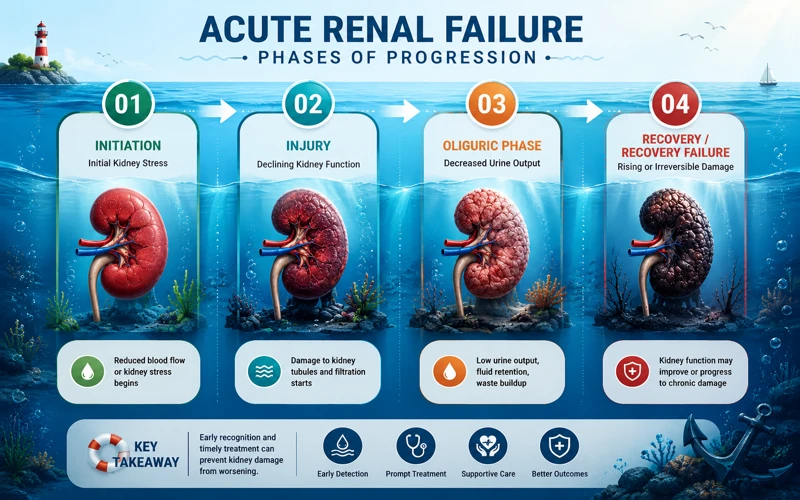
Initial Phase of Acute Renal Failure
A serum creatinine rise of ≥0.3 mg/dL within 48 hours marks the earliest detectable biochemical sign of acute kidney injury. This early period is called the initial phase.
During this phase, the kidneys are already under injury but still maintain near-normal filtration. Because of this, symptoms are often mild or completely absent. Many patients in Delhi and similar urban settings do not realize kidney damage is starting at this stage.
The most important early change is a gradual reduction in urine output, often dropping below 0.5 mL/kg/hour, although not all patients notice it immediately. Blood tests may also show a slow rise in creatinine, but still within near-normal range in some cases.
This phase is usually triggered by conditions such as dehydration, low blood pressure, severe infection, or exposure to kidney-stressing medicines. The damage is still reversible if the cause is corrected early.
Oliguric Phase Progression and Kidney Function Decline
Urine output below 400 mL/day is a key clinical marker of the oliguric phase, according to the Cleveland Clinic. This phase usually develops after the initial injury and can last 1 to 3 weeks, depending on the underlying cause and how quickly treatment is started.
During this stage, kidney function drops significantly. The kidneys are no longer able to properly filter waste products, leading to a steady buildup of toxins like urea and creatinine in the blood. Clinically, this is the most severe and high-risk phase of acute renal failure.
Patients may start showing visible symptoms such as swelling in the legs, puffiness around the eyes, nausea, and increasing fatigue. Blood pressure often rises due to fluid retention. Without timely intervention, complications like severe electrolyte imbalance, metabolic acidosis, and fluid overload can develop, making this phase clinically critical for survival and recovery outcomes.
Diuretic Phase Recovery Pattern in Acute Kidney Failure
Urine output can increase to 2–5 liters per day during the diuretic phase. This phase usually begins after the oliguric stage and lasts for about 7–14 days, depending on kidney recovery speed.
At this stage, the kidneys start regaining their filtering ability, but they cannot concentrate urine properly. This leads to excessive fluid loss from the body, even though overall kidney function is still not fully normal.
Key changes or symptoms
- Urine output rises sharply: often 2–5 L/day
- Risk of dehydration increases due to fluid loss
- Electrolyte imbalance becomes common, especially low potassium and sodium fluctuations
- Creatinine levels start to stabilize, but may still remain elevated
Patients may feel weaker during this phase despite increased urine output. This happens because the body is losing fluids and salts faster than they are being replaced. You should consult a kidney hospital in Delhi if you ever experienced these symptoms.
Recovery Phase of Acute Renal Failure and Long-Term Kidney Function Monitoring
Kidney function recovery may take weeks to 12 months in severe acute kidney injury cases. This phase begins after urine output and kidney filtration gradually stabilize following the diuretic stage.
In this stage, the kidneys slowly regain their ability to filter waste products and maintain fluid balance. However, recovery is not immediate, and full normalization of function depends on the severity and cause of the initial injury.
Key clinical recovery changes
- Creatinine levels gradually return toward baseline, but may take weeks to normalize
- Urine output stabilizes within normal daily ranges (about 800–2000 mL/day in adults)
- Energy levels improve slowly as toxin buildup reduces
- Kidney concentration ability improves over time, restoring fluid balance
Acute Kidney Failure Causes Leading to Phase Progression in Delhi Patients
Dehydration and low blood pressure are among the most common prerenal causes of acute kidney injury, contributing to reduced kidney perfusion in a large proportion of cases. These causes directly influence how quickly a patient moves through the phases of acute renal failure.
Acute kidney injury is usually triggered by one of three major cause groups, and each group affects kidney phases differently.
1. Prerenal causes (reduced blood flow to kidneys)
- Severe dehydration (vomiting, diarrhea, heat exposure)
- Low blood pressure due to shock or blood loss
- Heart failure reducing effective circulation
These causes often lead to a rapid transition from initial phase to oliguric phase within hours, if not corrected early.
2. Intrinsic renal causes (direct kidney damage)
- Kidney infections (severe pyelonephritis)
- Drug-induced toxicity (NSAIDs, certain antibiotics)
- Acute tubular necrosis due to prolonged ischemia
These typically cause longer oliguric phases (up to 1–3 weeks) and slower recovery patterns.
3. Postrenal causes (urine flow obstruction)
- Kidney stones blocking urinary tract
- Enlarged prostate in older patients
- Tumors causing urinary blockage
These lead to progressive urine retention, which accelerates the onset of oliguria and worsening kidney stress.
Conclusion
Acute kidney failure progresses through four clear clinical phases: initial, oliguric, diuretic, and recovery, each reflecting a different level of kidney stress and healing response.
As kidney function begins to recover, urine output increases in the diuretic phase, but this does not immediately mean full recovery. The final recovery phase can take weeks to several months, and requires continuous monitoring of creatinine, electrolytes, and overall kidney performance.
If you or your family member is experiencing symptoms such as reduced urine output, swelling, fatigue, or suspected kidney dysfunction, early medical evaluation is critical.
At Primus Hospital, experienced nephrology specialist in Delhi provide comprehensive diagnosis and stage-based management of acute kidney injury. From emergency evaluation to advanced kidney care, timely intervention can significantly improve recovery outcomes.
Seek expert consultation at the earliest signs of kidney trouble and avoid delay in treatment, especially during the early and oliguric phases where kidney damage is still reversible.