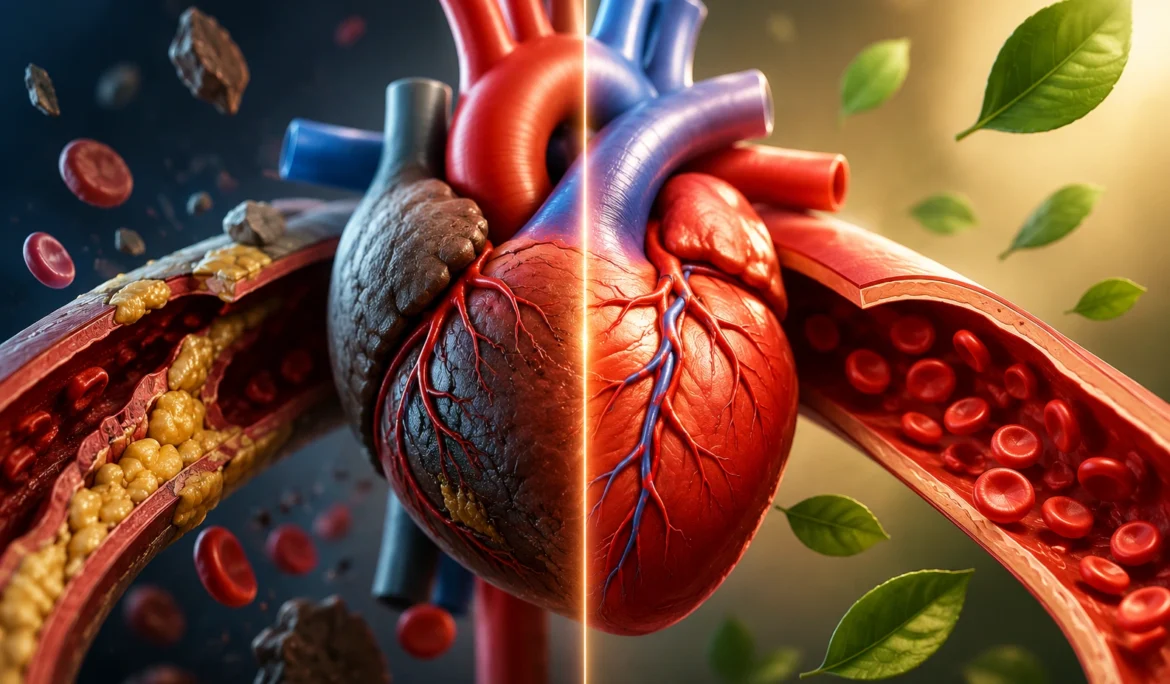
85–90% of heart disease cases involve coronary artery blockage, making it the primary cardiac risk globally as per NHLBI. In patients, early-stage blockage can reduce with medical treatment and risk control, while advanced blockage above clinical thresholds requires procedures like angioplasty or bypass surgery.
Heart blockage forms when plaque builds inside coronary arteries over years. This buildup restricts blood flow to the heart. Reversal depends on blockage severity, cholesterol levels, and timely diagnosis through tests like angiogram in heart hospital in Delhi.
Delhi provides access to cardiologists, diagnostic imaging, and interventional procedures. This article covers causes, blockage types, angiogram use, and treatment pathways based on clinical thresholds.
Causes of Heart Blockage in Adults
Heart blockage develops when fatty deposits called plaque build up inside coronary arteries. In Delhi adults, this process is strongly linked to lifestyle, metabolic health, and long-term exposure to risk factors.
High LDL cholesterol above 160 mg/dL increases plaque formation in arteries, narrowing blood flow over time (American Heart Association). This narrowing often begins silently and progresses for years before symptoms appear.
Smoking, diabetes, and uncontrolled blood pressure accelerate arterial damage. In urban populations like Delhi, sedentary routines and high-fat diets further increase risk of coronary artery disease progression.
Age also plays a role. Atherosclerotic changes can begin early in life, with fatty streaks detected before age 20, slowly evolving into clinically significant blockage later (NHLBI).
Types of Heart Blockage (Mild, Moderate, Severe %)
Heart blockage is classified based on the percentage of narrowing in the coronary arteries. This classification helps cardiologists in Delhi decide whether lifestyle management, medication, or procedures like angioplasty are required.
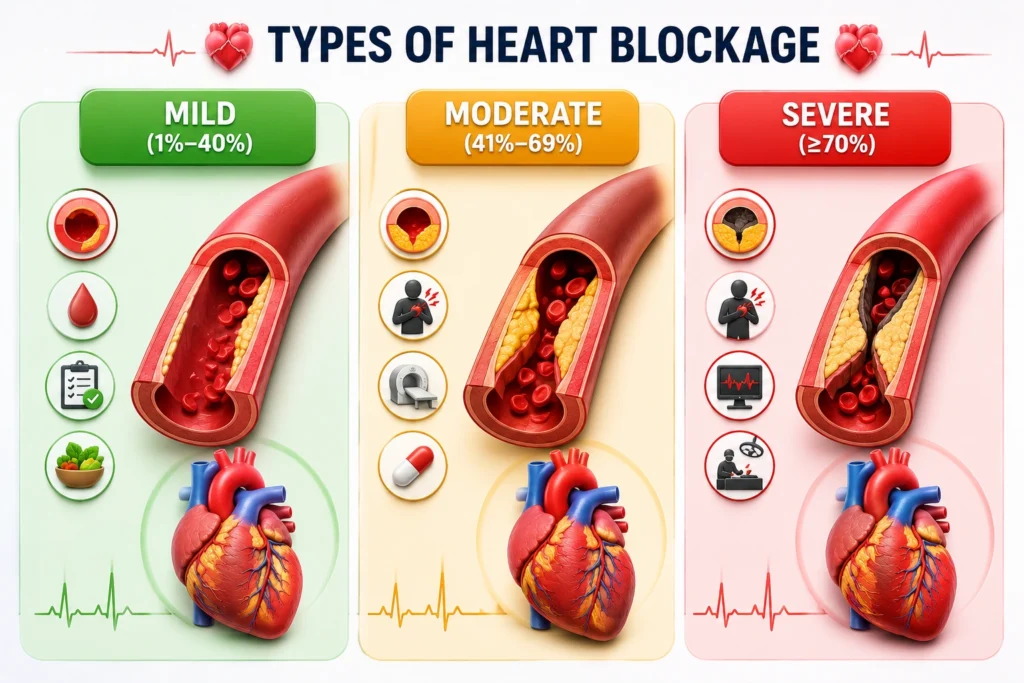
Mild Blockage (1%–40%)
- Artery narrowing is still limited
- Blood flow remains mostly normal
- Often detected during routine checkups in Delhi hospitals
- Managed with lifestyle changes and cholesterol control
Moderate Blockage (41%–69%)
- Partial restriction of blood flow begins
- Symptoms like chest discomfort may appear during exertion
- Doctors in Delhi often recommend stress tests or CT angiography
- Treatment includes medications to stabilize plaque and prevent progression
Severe Blockage (≥70%)
- Significant reduction in blood flow to heart muscle
- High risk of angina or heart attack
- Usually confirmed through angiogram in Delhi cardiac centers
- Often requires angioplasty or bypass surgery depending on artery condition
Heart Blockage Symptoms
Heart blockage symptoms vary depending on how much the coronary arteries are narrowed. In Delhi patients, symptoms often appear gradually and may be mistaken for acidity, fatigue, or stress in early stages.
- Mild chest discomfort during physical activity
- Shortness of breath while climbing stairs or walking
- Unusual fatigue even after light exertion
- Chest pain (angina), especially during exertion or stress
- Pain spreading to arm, jaw, or back
- Increased breathlessness during routine activities
- Persistent chest pain even at rest
- Sudden sweating, nausea, or dizziness
- High risk of heart attack symptoms
When Cardiologists in Delhi Recommend Angiogram
An angiogram is a diagnostic test used to detect narrowing or blockages in the coronary arteries. Cardiologists in Delhi recommend it when non-invasive tests suggest significant risk of reduced blood flow to the heart.
Clinical Triggers for Angiogram
- Chest pain (angina) not responding to medication
- Stress test showing reduced oxygen supply to the heart
- CT angiography indicating >50% arterial narrowing (NHS guideline reference)
- Sudden worsening of breathlessness or fatigue
Purpose of Angiogram in Delhi Hospitals
- Identify exact location of artery blockage
- Measure severity of narrowing in percentage
- Guide treatment decisions (medication vs angioplasty vs bypass surgery)
- Prevent risk of heart attack through early intervention
Who Typically Needs It
- Patients with suspected moderate to severe blockage
- Diabetics with persistent chest symptoms
- Individuals with abnormal ECG or stress test results
Heart Blockage Angiogram Process in Delhi Cardiology Hospitals
An angiogram is a minimally invasive imaging procedure used in Delhi hospitals to visualize coronary artery blockages in real time. It helps cardiologists determine the exact severity and location of arterial narrowing.
Step 1: Pre-Procedure Assessment
- Blood tests and ECG are performed
- Fasting is required for 6–8 hours before the test
- Allergies to contrast dye are checked
Step 2: Catheter Insertion
- A thin catheter is inserted through the wrist or groin artery
- Local anesthesia is used, so the patient remains awake
- The catheter is guided toward the heart using imaging
Step 3: Dye Injection & Imaging
- Contrast dye is injected into coronary arteries
- X-ray imaging captures blood flow in real time
- Blockages appear as narrowed or restricted flow areas
Step 4: Results Interpretation
- Cardiologists in Delhi measure blockage percentage
- Results determine whether medication, angioplasty, or bypass is needed
- Immediate treatment may be performed in severe cases
Treatment of Heart Blockage in Delhi Based on Severity
Treatment of heart blockage in Delhi is decided based on the percentage of artery narrowing, symptoms, and angiogram results. The main goal is to restore blood flow and reduce risk of heart attack.
Mild Blockage (1%–40%)
- Managed with lifestyle changes and medicines
- Statins are used to reduce LDL cholesterol below risk levels
- Blood pressure and diabetes control is prioritized
- Regular follow-ups in Delhi cardiology clinics
Moderate Blockage (41%–69%)
- Combination of medication and monitoring
- Anti-platelet drugs may be prescribed to prevent clot formation
- Lifestyle modification is strictly recommended
- CT angiography or repeat tests are used to track progression
Severe Blockage (≥70%)
- Interventional treatment is usually required
- Angioplasty with stent placement is commonly performed in Delhi hospitals
- In multi-vessel disease, bypass surgery (CABG) may be recommended
- Emergency treatment is needed if symptoms indicate high heart attack risk
Heart blockage can be partially reversed in early stages when plaque buildup is still soft and lifestyle changes are strictly followed. In mild cases, cholesterol reduction, medication, and diet control can slow or stabilize progression. However, in moderate to severe blockage (especially ≥70%), reversal is limited, and medical intervention becomes necessary.
If you are experiencing chest pain, breathlessness, or have been diagnosed with suspected heart blockage, timely evaluation is critical.
Book a consultation at Primus Hospital, Delhi for accurate diagnosis and personalized treatment planning before the condition progresses further.
Primus Super Speciality Hospital, Delhi offers advanced cardiac diagnostics including angiography, ECG, and interventional cardiology procedures under experienced specialists.