
Cardiovascular diseases account for 32% of global deaths worldwide as per WHO, with heart rhythm disorders forming a significant part of this burden.
Cardiac arrhythmia refers to an irregular heartbeat caused by disruption in the heart’s electrical signaling system. This can result in the heart beating too fast, too slow, or in an irregular pattern, affecting normal blood circulation.
In clinical practice, arrhythmia ranges from mild rhythm variations to serious conditions such as atrial fibrillation, which affects millions globally. Early identification is important because untreated rhythm disorders can increase the risk of complications such as stroke or sudden cardiac events.
In Delhi, advanced cardiology hospitals provide heart tests and treatment for arrhythmia using ECG, Holter monitoring, and electrophysiology studies. These facilities help identify the exact type of rhythm disturbance and guide treatment decisions based on severity.
Understanding arrhythmia meaning, its symptoms, and treatment options helps patients recognize when medical attention is needed. In most cases, timely diagnosis in a cardiology hospital in Delhi significantly improves management outcomes and reduces long-term cardiac risk.
Arrhythmia Meaning (Medical Explanation)
Normal resting heart rate ranges between 60–100 beats per minute (bpm) in adults, maintained by a precise electrical conduction system in the heart.
Cardiac arrhythmia occurs when this electrical signaling becomes irregular, causing the heart to beat in an abnormal rhythm. This disruption can affect how efficiently blood is pumped to the brain, lungs, and other organs.
Arrhythmia is not a single disease but a group of conditions that include fast heartbeat (tachycardia), slow heartbeat (bradycardia), or irregular rhythm patterns. These variations may occur intermittently or persist continuously depending on the underlying cause.
In a good heart hospital in Delhi, arrhythmia is diagnosed using ECG and rhythm monitoring tools that capture electrical activity patterns of the heart. These diagnostic tests help doctors identify whether the rhythm disturbance is benign or requires medical intervention.
Arrhythmia Meaning in Hindi (सरल चिकित्सा समझ)
Arrhythmia को हिंदी में “अतालता” कहा जाता है, जिसका अर्थ है दिल की धड़कन का अनियमित होना।
यह स्थिति तब होती है जब हृदय की विद्युत प्रणाली (electrical system) सही तरीके से काम नहीं करती, जिससे दिल की धड़कन बहुत तेज, बहुत धीमी या असामान्य हो सकती है।
सरल भाषा में समझें:
- सामान्य स्थिति में दिल एक स्थिर गति से धड़कता है
- अतालता में यह गति असंतुलित हो जाती है
- यह अस्थायी भी हो सकती है या लंबे समय तक बनी रह सकती है
Types of Cardiovascular Arrhythmia
Arrhythmia is classified based on how the heart rhythm changes and where the electrical disturbance originates.
1. Tachycardia (Fast Heart Rhythm)
- Heart rate rises above normal resting range (above 100 bpm)
- Electrical signals fire too quickly
- Can reduce efficiency of blood pumping
- Common in fever, stress, or heart disease
2. Bradycardia (Slow Heart Rhythm)
- Heart rate falls below normal range (below 60 bpm)
- Electrical signals slow down significantly
- May reduce oxygen supply to organs
- Can occur in conduction system disorders
3. Atrial Fibrillation (Irregular Upper Chamber Rhythm)
- Upper chambers (atria) beat in an irregular and uncoordinated manner
- Produces irregular pulse pattern
- Increases risk of blood clot formation
- Common long-term arrhythmia seen in cardiology practice
4. Ventricular Arrhythmia (Lower Chamber Rhythm Disorder)
- Originates in ventricles (lower heart chambers)
- Considered more serious due to pumping dysfunction risk
- May lead to sudden cardiac instability if untreated
- Requires immediate clinical evaluation in severe cases
Is Arrhythmia Dangerous? Risk Severity Explained
Not all arrhythmias are life-threatening, but some types can significantly increase health risks depending on severity and underlying heart condition.
1. Low-Risk Arrhythmia
- Occasional irregular beats may occur in healthy individuals
- Often triggered by stress, caffeine, or fatigue
- Usually does not require aggressive treatment
- Monitored through routine ECG checks
2. Moderate-Risk Arrhythmia
- Causes noticeable symptoms like palpitations or dizziness
- May indicate underlying heart disease
- Requires medical evaluation and medication control
- Regular follow-up in a cardiology hospital in Delhi is recommended
3. High-Risk Arrhythmia
- Includes severe ventricular rhythm disturbances
- Can significantly reduce heart pumping efficiency
- May increase risk of stroke or sudden cardiac arrest
- Requires immediate medical intervention
Arrhythmia Symptoms and Heartbeat
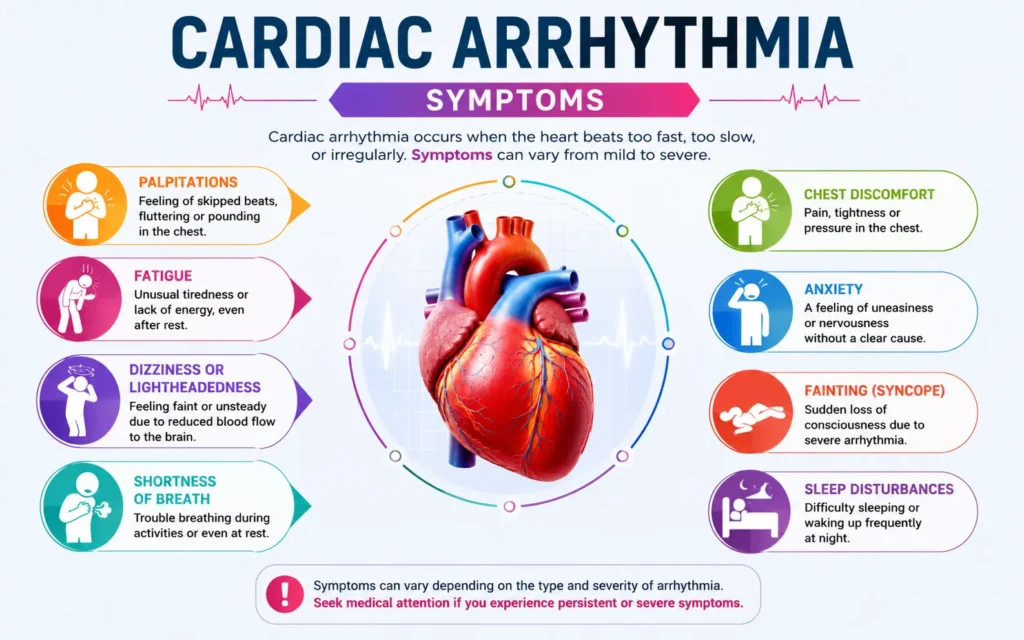
Arrhythmia symptoms vary depending on type, severity, and underlying heart condition. Some patients may not notice any symptoms, while others experience clear warning signs.
1. Palpitations (Irregular Heartbeat Sensation)
- Feeling of skipped beats or fluttering in the chest
- Heart may feel like it is pounding unusually fast or unevenly
- Often noticed during rest or emotional stress
2. Dizziness or Lightheadedness
- Reduced blood flow to the brain due to irregular rhythm
- Can occur suddenly and last for a few seconds or longer
- May worsen during physical activity
3. Shortness of Breath
- Heart may not pump efficiently during arrhythmia episodes
- Common in moderate to severe rhythm disturbances
- Often noticed while walking or climbing stairs
4. Chest Discomfort
- Mild to moderate pressure or tightness in chest
- Not always linked to heart attack but requires evaluation
- Can occur intermittently
5. Fatigue and Weakness
- Reduced oxygen delivery to muscles and organs
- Leads to persistent tiredness even after rest
- Common in long-standing arrhythmia cases
Cardiac arrhythmia is a condition where the heart beats in an irregular, too fast, or too slow rhythm due to electrical signal disruption. While some cases remain mild and harmless, others can become serious if left undiagnosed or untreated.
Early recognition of symptoms such as palpitations, dizziness, chest discomfort, or fatigue is important because arrhythmia cannot be confirmed by symptoms alone. Proper diagnosis using ECG, Holter monitoring, and electrophysiology studies is essential for accurate classification and treatment planning.
If you are experiencing symptoms of irregular heartbeat or have been advised further cardiac evaluation, Primus Hospital, Delhi offers specialized cardiology services for accurate diagnosis and treatment of arrhythmia.
Early consultation can help identify the exact cause of arrhythmia and prevent potential complications. If you notice persistent or recurring symptoms, seeking timely evaluation at a dedicated heart care center like Primus Hospital is strongly recommended.