Unlike adults, children have growing bones, active growth plates, and developing joints, which means musculoskeletal problems in childhood need a different diagnostic lens and a different treatment approach than the same symptoms would in an adult. Pediatric orthopaedics is the specialised branch of medicine built around exactly this distinction.
This guide explains what pediatric orthopaedic care covers, the most common conditions affecting children in Delhi NCR, how these conditions are diagnosed and treated, and what parents should look for when choosing a hospital for their child’s bone and joint health.
What Is Pediatric Orthopaedics treatment?
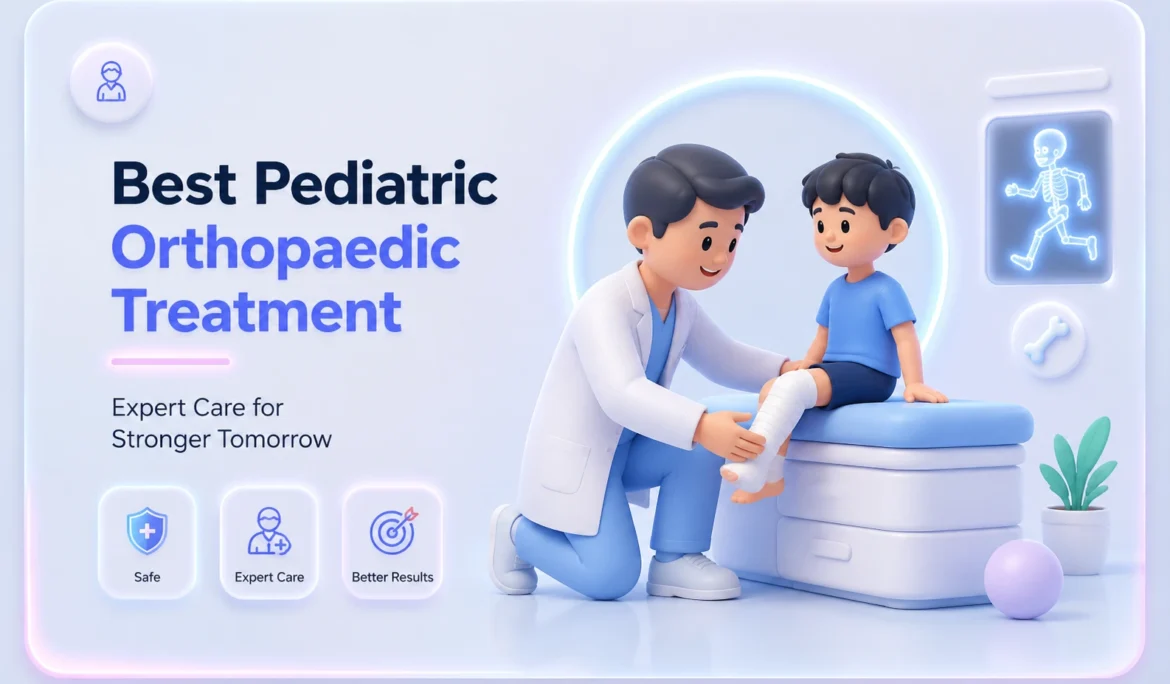
Pediatric orthopaedics focuses on diagnosing and treating conditions of the bones, joints, muscles, and spine in infants, children, and adolescents. Because a child’s skeleton includes active growth plates (areas of cartilage where bones lengthen), pediatric orthopaedic surgeons must factor in how a child’s body will continue to grow and develop, not just how to correct the problem in front of them today. A treatment that works well for an adult knee or hip can be entirely wrong for a child, since the wrong approach can affect a growth plate and alter how a limb develops over the following years.
Common Pediatric Orthopaedic Conditions
Pediatric orthopaedic conditions broadly fall into four categories: conditions present at birth, developmental conditions that emerge as a child grows, injuries, and infections or inflammatory conditions affecting bones and joints.
| Category | Common Conditions |
| Congenital (present at birth) | Clubfoot (CTEV), developmental dysplasia of the hip (DDH), congenital limb deformities |
| Developmental / growth-related | Scoliosis, Perthes disease, slipped capital femoral epiphysis (SCFE), limb length discrepancy, in-toeing/out-toeing, flat feet |
| Traumatic | Growth plate fractures, greenstick fractures, elbow and forearm fractures, sports injuries |
| Neuromuscular / other | Orthopaedic complications of cerebral palsy, juvenile idiopathic arthritis, bone infections |
Symptoms That Warrant a Pediatric Orthopaedic Diagnosis in Delhi
Children often cannot clearly describe pain, so parents and caregivers need to watch for physical signs rather than relying only on verbal complaints. Consult a pediatric orthopaedic specialist in Delhi if your child shows:
- A limp or noticeable change in the way they walk or run
- Reluctance to bear weight on a leg, or to use one arm normally
- Visible asymmetry one shoulder, hip, or leg appearing different from the other
- Persistent joint pain, swelling, or stiffness, especially if it wakes the child at night
- Curvature or unevenness noticed in the back, particularly during growth spurts
- Toes turning noticeably inward or outward while walking
- A fracture or injury that does not improve within the expected healing window
- Delayed walking or unusual gait patterns in toddlers
How Pediatric Orthopaedic Conditions Are Diagnosed
- Clinical and developmental history including birth history, milestones, and family history of musculoskeletal conditions
- Physical examination assessing gait, joint range of motion, limb alignment, and spinal curvature
- X-rays the primary imaging tool for fractures, hip position, and spinal curves, adapted to minimise radiation exposure in children
- Ultrasound particularly useful for newborn hip screening in suspected DDH, since a baby’s hip is still largely cartilage and not yet visible on X-ray
- MRI used selectively for detailed evaluation of Perthes disease, infections, or soft tissue injuries
- Gait analysis for children with neuromuscular conditions or unexplained walking abnormalities
Pediatric Orthopaedic Treatment in Delhi Options
Pediatric orthopaedic treatment is built around achieving the best possible outcome while preserving a child’s ongoing growth potential, and ranges from simple observation to surgical correction.
Pediatric Orthopaedic treatment without surgery
- Casting and bracing the Ponseti method for clubfoot, Pavlik harnesses for DDH in infants, and spinal braces for moderate scoliosis
- Physiotherapy to build strength, correct gait patterns, and support recovery after injury or surgery
- Activity modification and monitoring for mild scoliosis, flexible flat feet, and other conditions that often improve as the child grows
- Pain management and anti-inflammatory care for conditions like transient synovitis or mild Perthes disease
Pediatric Orthopaedic surgery in Delhi
- Closed or open reduction for hip dysplasia not responding to bracing
- Growth-plate-sparing fracture fixation for complex pediatric fractures
- Corrective osteotomy for significant limb deformity or advanced Perthes disease
- In-situ pinning for slipped capital femoral epiphysis
- Spinal fusion or growth-friendly instrumentation for progressive or severe scoliosis
- Soft tissue release or tendon transfer procedures for neuromuscular orthopaedic conditions such as those associated with cerebral palsy
Hospital for Pediatric Orthopaedic Care
A child’s bones are not simply smaller versions of adult bones, so the hospital and specialist chosen matter significantly for long-term outcomes. When evaluating a hospital for a child’s orthopaedic needs, parents should look for:
- Orthopaedic specialists experienced specifically in pediatric musculoskeletal conditions, not only adult joint replacement or trauma
- Child-appropriate imaging protocols that limit radiation exposure
- On-site pediatric anaesthesia expertise for children requiring procedures or surgery
- Access to physiotherapy and rehabilitation designed for children
- A multidisciplinary environment connecting orthopaedics with general pediatrics, since some musculoskeletal conditions are linked to broader developmental or metabolic issues
Primus Super Speciality Hospital, located in Chanakyapuri, New Delhi, is a NABH-accredited multi-specialty hospital that houses a dedicated Department of Orthopaedics & Joint Replacement, within which paediatric orthopaedics is offered as a defined area of care. Several elements of the hospital’s setup are directly relevant to families seeking pediatric orthopaedic evaluation:
- A stated focus on tailored orthopaedic care for children, addressing growth-related concerns, congenital issues, and childhood injuries within a compassionate, patient-focused approach
- Clinical content published by the hospital specifically addressing pediatric hip conditions such as Perthes disease, reflecting the department’s engagement with common childhood orthopaedic issues
- Access to advanced diagnostic imaging, including MRI and 3D imaging, supporting precise evaluation of complex pediatric musculoskeletal conditions
- A hospital-wide Department of Paediatrics & Child Care, allowing coordinated care between general pediatricians and orthopaedic specialists when a child’s bone or joint issue is linked to a broader developmental condition
- Modular operation theatres and dedicated critical care infrastructure, supporting safe surgical management when non-surgical treatment is not sufficient
Most childhood bone and joint conditions, from clubfoot to growth plate fractures, respond very well to timely, specialist-led treatment and many resolve completely when caught early. The biggest factor in a good outcome is rarely the condition itself; it is how quickly it is recognised and how appropriately it is managed for a still-growing skeleton.
If your child is showing signs of a limp, joint pain, spinal curvature, or has experienced a fracture that needs specialist attention, timely evaluation makes a real difference to long-term outcomes. The orthopaedic team at Primus Super Speciality Hospital offers dedicated pediatric orthopaedic assessment backed by advanced imaging and a multidisciplinary child-care environment. Book an appointment today.