
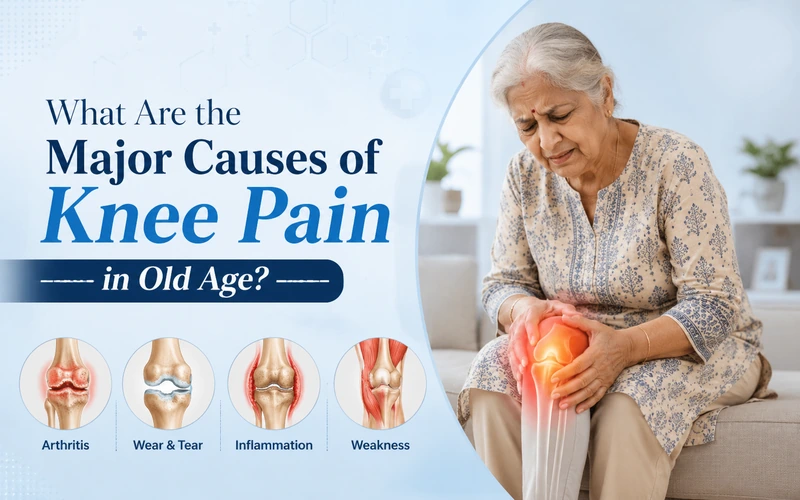
Knee pain isn’t just an inconvenience for many older adults, it’s often the difference between walking to the market comfortably and dreading every staircase. If knee pain has been slowing you or a parent down, you’re dealing with something extremely common, and importantly, something with real treatment options. This guide explains what typically causes knee pain in old age, when it needs medical attention, and what permanent treatment from a joint specialist in Delhi actually looks like.
Why Does Knee Pain Become So Common With Age?
The knee is a weight-bearing joint that absorbs enormous stress over a lifetime, every step, squat, and stair climb adds up. As cartilage, the smooth tissue cushioning the joint, naturally thins with age, the knee becomes more vulnerable to pain, stiffness, and reduced mobility.
Research shows that roughly 10% of men and 13% of women aged 60 and older have symptomatic knee osteoarthritis, and among adults over 70, that figure climbs to as high as 40%. In other words, knee pain in old age isn’t rare, it’s one of the most predictable parts of ageing joints, which is exactly why understanding its specific causes matters for choosing the right treatment.
Major Causes of Knee Pain in Old Age
1. Osteoarthritis
Osteoarthritis is, by a wide margin, the leading cause of knee pain in older adults. It’s a degenerative condition where the cartilage cushioning the knee joint gradually wears away, eventually allowing bone to rub against bone. Common signs include pain that worsens with activity, stiffness after sitting or resting, and a grinding or crunching sensation during movement. Unlike a single injury, osteoarthritis develops gradually over years, which is why many people initially dismiss it as “just getting older.”
2. Rheumatoid Arthritis
Unlike osteoarthritis, rheumatoid arthritis is an autoimmune condition where the body’s immune system mistakenly attacks the joint lining, causing inflammation, swelling, and pain. It often affects both knees simultaneously and can appear alongside joint pain in the hands and other areas.
3. Ligament and Meniscus Wear or Old Injuries
Previous injuries, even ones from decades earlier, like a torn ligament or meniscus, can resurface as chronic pain later in life as surrounding tissue weakens with age. Falls, sprains, or twisting injuries that seemed minor at the time can leave lasting joint instability.
4. Tendinitis and Bursitis
Inflammation of the tendons (tendinitis) or the small fluid-filled sacs that cushion the joint (bursitis) can develop from repetitive strain or overuse, causing localised pain, swelling, and tenderness around the knee.
5. Gout
Gout is caused by a buildup of uric acid crystals in the joint, leading to sudden, often severe pain, swelling, and redness. While it can affect various joints, the knee is a common site, particularly in older adults with certain dietary or metabolic risk factors.
6. Excess Body Weight
Every extra kilogram of body weight adds multiplied pressure on the knee joint with each step. Over years, this accelerates cartilage wear and significantly increases the risk and severity of osteoarthritis.
7. Reduced Muscle Strength
As we age, the muscles supporting the knee, particularly the quadriceps, naturally weaken without regular activity. Weaker supporting muscles mean the knee joint absorbs more direct stress, contributing to pain and instability over time.
When Is Knee Pain a Sign of Something Serious?
Most knee pain in older adults develops gradually, but you should seek prompt medical evaluation if you notice:
- Sudden, severe pain or swelling
- Visible deformity or inability to bear weight
- Redness and warmth around the joint, which could indicate infection or gout
- Pain that wakes you up at night or doesn’t improve with rest
- Knee locking, buckling, or giving way
What Is the Permanent Treatment for Knee Pain?
There’s no single universal “permanent fix,” since the right treatment depends entirely on the underlying cause and severity. That said, treatment generally follows a structured path:
Conservative, Non-Surgical Treatment (First Line)
For most people, particularly in the early to moderate stages, treatment starts with non-surgical approaches: weight management, targeted physiotherapy and strengthening exercises, anti-inflammatory medication, and sometimes corticosteroid or lubricating injections. These measures can meaningfully reduce pain and improve mobility, especially when started early.
Knee Replacement Surgery
When conservative treatment no longer provides adequate relief, particularly in advanced osteoarthritis, knee replacement surgery is often the most effective long-term solution. During the procedure, damaged cartilage and bone are removed and replaced with an artificial joint made of metal and plastic components. For patients with severe, disabling knee osteoarthritis, this remains the closest thing to a truly “permanent” solution, offering lasting pain relief and restored mobility for the vast majority of patients.
Knee replacement surgery in Delhi typically costs between roughly ₹1.5 lakh and ₹6.5 lakh per knee, depending on the hospital, the type of implant used, and whether it’s a total or partial replacement. Your surgeon will help determine which type of implant and approach suits your specific joint condition.
When Should You See a Joint Specialist in Delhi?
Consult an orthopaedic or joint specialist if your knee pain is persistent, worsening, or affecting your ability to walk, climb stairs, or sleep comfortably. Early evaluation often means more treatment options and better long-term outcomes, since advanced joint damage is harder to manage conservatively.
Knee pain in old age has real, identifiable causes, and understanding them is the first step toward genuine, lasting relief rather than simply managing discomfort day to day. Whether your pain calls for physiotherapy, medication, or knee replacement surgery, the right treatment plan starts with an accurate diagnosis from an experienced specialist. If knee pain has been limiting your mobility, Primus Super Speciality Hospital in Delhi offers experienced orthopaedic care to help you move comfortably again.