

More than 8 million healthcare visits each year are linked to urinary tract infections (UTIs), making them one of the most common bacterial infections affecting both men and women (source). While many people use the term “urine infection” broadly, infections can develop in different parts of the urinary tract and vary in severity depending on the affected area.
A urine infection occurs when bacteria enter the urinary system and multiply within the urethra, bladder, ureters, or kidneys. The condition can cause symptoms such as burning during urination, frequent urges to urinate, cloudy urine, abdominal discomfort, and pelvic pain. In some cases, the infection may spread to the kidneys and require urgent medical attention.
Understanding the different types of urine infection is important because each type affects the body differently and may require a specific treatment approach. This guide explains the main urine infection types, the differences between urine infection in men and women, the causes of urine infection after sex, the connection between abdominal pain and urinary infections, and when to seek treatment from a urine infection doctor in Delhi.
What Is a Urine Infection?
A urine infection, also known as a urinary tract infection (UTI), occurs when bacteria enter the urinary system and begin multiplying within the urinary tract.
The urinary system consists of four main parts:
- Kidneys
- Ureters
- Bladder
- Urethra
An infection can develop in any of these areas. The location of the infection determines the type of urine infection and the symptoms a person may experience.
Most urine infections occur when bacteria from the digestive tract enter the urethra and travel upward into the urinary system. The bladder is the most commonly affected organ, but untreated infections can spread to the kidneys and become more serious.
Common Symptoms of a Urine Infection
Symptoms can vary depending on the affected area, but commonly include:
- Burning sensation during urination
- Frequent urge to urinate
- Passing small amounts of urine
- Cloudy or foul-smelling urine
- Blood in the urine
- Lower abdominal discomfort
- Pelvic pain
- Fever and chills in severe infections
Are Urine Infections Different in Men and Women?
Women experience urine infections more frequently than men. Research suggests that approximately 50–60% of women develop at least one urinary tract infection during their lifetime (source). The shorter female urethra allows bacteria to reach the bladder more easily, increasing infection risk.
Although urine infections are less common in men, they often require careful evaluation because they may be associated with prostate enlargement, urinary obstruction, or other underlying conditions.
Understanding where the infection occurs is important because different parts of the urinary tract can develop different types of infections, each with its own symptoms, complications, and treatment approach.
Main Types of Urine Infection
5 major urine infection types affect different parts of the urinary system. Identifying the location of the infection helps doctors determine the severity of the condition and select the most appropriate treatment.
Types of Urine Infection at a Glance
| Infection Type | Affected Area | Common Symptoms |
| Urethritis | Urethra | Burning urination, discharge, irritation |
| Cystitis | Bladder | Frequent urination, pelvic pain, cloudy urine |
| Pyelonephritis | Kidneys | Fever, chills, back pain, nausea |
| Recurrent UTI | Repeated urinary infections | Recurring symptoms and repeated episodes |
| Complicated UTI | Any part of urinary tract with underlying risk factors | Severe or persistent symptoms |
Urethritis
The urethra is the tube that carries urine out of the body. Urethritis occurs when bacteria or, in some cases, sexually transmitted infections cause inflammation of the urethra.
Common symptoms include:
- Burning during urination
- Itching or irritation
- Frequent urge to urinate
- Discharge from the urethra
Urethritis may affect both men and women, although symptoms are often more noticeable in men.
Cystitis
The bladder is the most common site of urinary tract infections. Cystitis develops when bacteria enter and multiply inside the bladder.
Common symptoms include:
- Frequent urination
- Urgent need to urinate
- Burning sensation while urinating
- Lower abdominal discomfort
- Cloudy or foul-smelling urine
Women experience cystitis more frequently because bacteria can reach the bladder more easily through the shorter female urethra.
Pyelonephritis (Kidney Infection)
Kidney infections occur when bacteria travel upward from the bladder into one or both kidneys. Infection involving 1 or both kidneys requires prompt medical evaluation because it can lead to serious complications if left untreated.
Common symptoms include:
- High fever
- Chills
- Flank or back pain
- Nausea and vomiting
- Painful urination
Unlike simple bladder infections, kidney infections often require urgent treatment.
Recurrent Urinary Tract Infection
Recurrent UTI is commonly defined as 2 infections within 6 months or 3 infections within 12 months. Some individuals experience repeated infections despite previous treatment.
Common contributing factors include:
- Incomplete bladder emptying
- Urinary tract abnormalities
- Sexual activity
- Postmenopausal changes in women
- Chronic medical conditions
Patients with recurrent infections often require additional evaluation to identify underlying causes.
Complicated Urinary Tract Infection
Complicated UTIs occur when infection develops in the presence of factors that increase the risk of treatment failure or complications.
Risk factors may include:
- Kidney stones
- Urinary obstruction
- Enlarged prostate
- Diabetes
- Catheter use
- Structural abnormalities of the urinary tract
These infections often require more extensive evaluation and medical management than uncomplicated bladder infections.
Understanding the different urine infection types can help patients recognise symptoms early and seek appropriate treatment before complications develop.
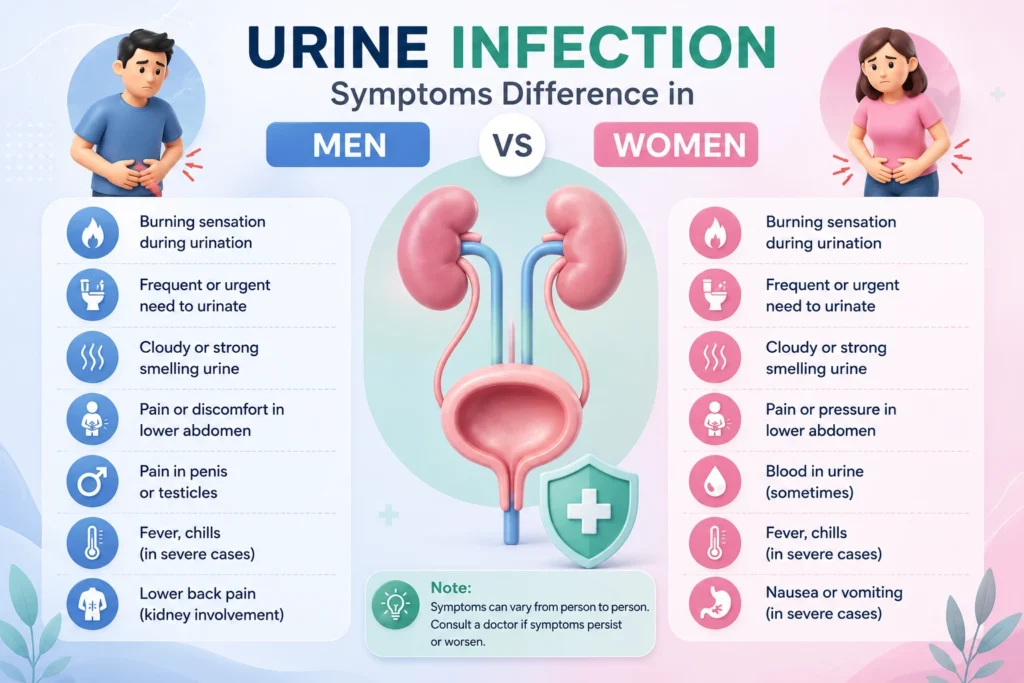
Urine Infection in Women
Urine infections are significantly more common in women than in men. Female anatomy plays a major role in this increased risk.
The female urethra measures approximately 4 cm in length, which allows bacteria to travel to the bladder more quickly. Because the urethral opening is located closer to the anus, bacteria from the digestive tract can enter the urinary tract more easily.
Risk Factors for Urine Infection in Women
Several factors increase the likelihood of developing a urinary infection:
- Sexual activity
- Pregnancy
- Menopause
- Use of certain contraceptive methods
- Poor hydration
- Previous urinary tract infections
Women who experience repeated infections may develop recurrent UTIs, which are commonly defined as two infections within 6 months or three infections within 12 months.
Why Are Women More Likely to Develop Urine Infections?
The shorter female urethra is the primary reason. Bacteria have a shorter distance to travel before reaching the bladder, increasing the likelihood of infection. Hormonal changes during pregnancy and menopause can also affect the natural protective mechanisms of the urinary tract.
When Should Women Seek Medical Attention?
Fever, severe abdominal pain, back pain, nausea, or blood in the urine should not be ignored. These symptoms may indicate that the infection has spread beyond the bladder and requires prompt medical evaluation from a specialist in Delhi.
Early diagnosis and treatment can help prevent complications and reduce the risk of recurrent infections.
Urine Infection in Men
Men older than 50 years have a higher risk of developing urinary tract infections due to conditions that affect normal urine flow. Although urine infections are less common in men than in women, they often require careful medical evaluation because an underlying urinary tract problem may be present.
The longer male urethra provides greater protection against bacterial entry into the bladder. As a result, urinary infections occur less frequently in younger men. When infections do develop, doctors often investigate for contributing factors such as prostate enlargement, urinary obstruction, kidney stones, or structural abnormalities.
Causes of Urine Infection in Men
Several conditions can increase the risk of infection, including:
- Enlarged prostate
- Kidney stones
- Urinary retention
- Catheter use
- Diabetes
- Urinary tract abnormalities
Are Urine Infections More Serious in Men?
Urine infections in men are often classified as complicated infections because they may be associated with an underlying medical condition. For this reason, recurrent infections, severe symptoms, or persistent urinary problems should not be ignored.
Conclusion
Urine infections can affect different parts of the urinary tract, including the urethra, bladder, and kidneys. Understanding the various types of urine infection, their symptoms, and risk factors can help ensure timely diagnosis and treatment. While women are more likely to develop urinary infections, men may experience infections due to underlying conditions such as prostate enlargement or urinary obstruction. Symptoms such as burning during urination, frequent urination, abdominal pain, fever, or recurrent infections should never be ignored, as early treatment can help prevent complications.
Persistent urinary symptoms, recurrent infections, abdominal pain, or difficulty urinating may require evaluation by an experienced urology specialist. At Primus Hospital, patients receive comprehensive care for urinary tract infections, including advanced diagnostic testing, personalised treatment plans, and management of recurrent or complicated infections.
Schedule a consultation with a urology specialist at Primus Hospital for expert diagnosis and treatment of urinary tract infections in men and women.