
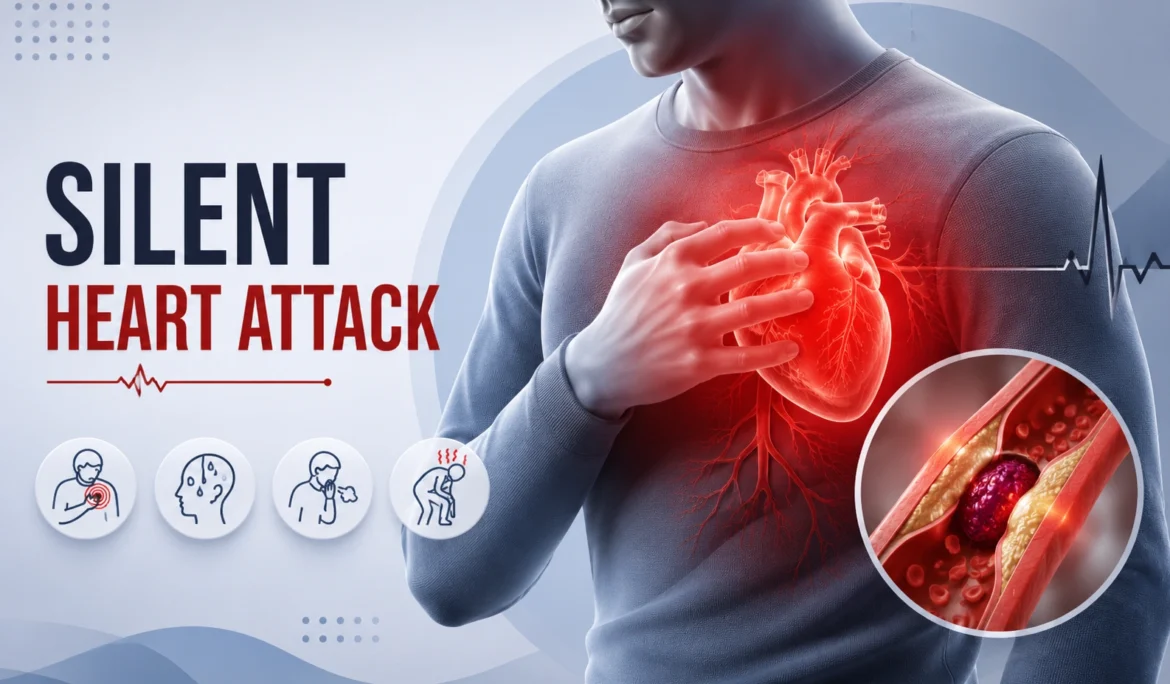
A friend mentions, almost in passing, that a routine ECG picked up “an old heart attack” they never knew they’d had. It sounds almost implausible, how do you have a heart attack and not notice? And yet it happens far more often than most people realise. This guide walks through exactly what a silent heart attack is, why it happens, what your real odds look like if you’ve had one, and is there a treatment according to cardiologists in Delhi.
What Is a Silent Heart Attack?
A silent heart attack, medically known as a silent or unrecognised myocardial infarction, is a heart attack that occurs with minimal, atypical, or no noticeable symptoms at all. The heart muscle suffers the exact same underlying damage as in a “typical” heart attack, blood flow to part of the heart is blocked, heart cells die from lack of oxygen, and scar tissue forms in their place. The only real difference is that the person experiencing it doesn’t recognise, at the time, that anything serious is happening.
Cardiologists sometimes describe “silent” as a slightly misleading term. It’s not always that there are zero symptoms, it’s that the symptoms don’t match what people expect a heart attack to feel like, so they get brushed off as something else entirely: fatigue, indigestion, a pulled muscle, or a bad night’s sleep.
How Does It Occur? The Medical Explanation
A heart attack happens when blood flow to part of the heart muscle is severely reduced or completely blocked, most often because a fatty plaque inside a coronary artery ruptures and forms a clot. The heart tissue downstream of that blockage is starved of oxygen, and if blood flow isn’t restored quickly, that tissue begins to die.
In a “typical” heart attack, this triggers intense chest pain because the affected nerves send a strong pain signal. In a silent heart attack, that pain signal is weaker, delayed, or interpreted by the brain as something milder, possibly due to nerve sensitivity differences, the specific location of the blockage, or other individual factors that researchers are still working to fully understand.
What Are the Major Causes of a Silent Heart Attack?
The underlying causes are largely identical to those behind any heart attack:
- Coronary artery disease: Plaque buildup narrowing the arteries supplying the heart
- Diabetes: Can damage nerves over time (a condition called diabetic neuropathy), which may blunt the perception of chest pain during a cardiac event
- High blood pressure: Places continuous strain on the heart and blood vessels
- High cholesterol: Directly contributes to arterial plaque formation
- Smoking: Damages blood vessel linings and accelerates plaque buildup
- Being female or older in age: Research consistently shows women and older adults are more likely to experience atypical or minimal symptoms during a heart attack, making silent presentations more common in these groups
- Sedentary lifestyle and obesity: Compound risk through their effects on blood pressure, cholesterol, and blood sugar
What Is the Mortality Rate of Silent Heart Attack?
This is the part that tends to surprise people the most: a silent heart attack is not a “mild” or lower-risk version of a heart attack in terms of long-term outcomes. A landmark study from the National Heart, Lung, and Blood Institute, following participants in the ICELAND MI cohort study, found that after 10 years, 49% of people with an unrecognised heart attack had died, compared to 51% of those with a clinically diagnosed heart attack, and just 30% of people with no heart attack at all.
In other words, the 10-year mortality risk for silent heart attacks was nearly identical to that of heart attacks that were caught and treated at the time. The danger isn’t that silent heart attacks cause less damage, it’s that the damage often goes completely untreated and unmonitored for years, simply because nobody knew it had happened.
What’s the Chance of Survival After a Silent Heart Attack?
Survival is genuinely possible, and often good, but it depends heavily on what happens after diagnosis, not just the event itself. Once a silent heart attack is identified, typically through an ECG, blood tests, or imaging done for an unrelated reason, the same treatments, medications, and lifestyle interventions used for any heart attack apply and can meaningfully improve long-term outcomes. The real risk lies in silent heart attacks that stay undiscovered, since ongoing, undetected heart damage raises the risk of future complications like heart failure, abnormal heart rhythms, and stroke.
How Is a Silent Heart Attack Diagnosed?
Since there’s often no dramatic moment prompting an ER visit, silent heart attacks are usually discovered incidentally, through:
- ECG (electrocardiogram), sometimes performed during a routine check-up
- Blood tests checking for cardiac enzyme markers
- Echocardiogram, which can reveal areas of the heart that aren’t contracting normally due to old damage
- Cardiac MRI or CT scan, increasingly used to detect scar tissue from a past, unrecognised event
- Stress testing, which may reveal reduced blood flow to certain areas of the heart
Treatment of Silent Heart Attack in Delhi: What Comes Next
Once diagnosed by a cardiologist in Delhi, treatment focuses on preventing further damage and reducing the risk of a future cardiac event. This typically includes medications such as blood thinners, statins for cholesterol management, and blood pressure medication, alongside lifestyle changes: quitting smoking, adopting a heart-healthy diet, regular physical activity, and consistent cardiology follow-up. In select cases, particularly where significant artery blockage is found, procedures like angioplasty or bypass surgery may be recommended.
When Should You Get Screened?
Given how easily silent heart attacks slip past unnoticed, proactive screening matters more than waiting for symptoms. This is especially true if you have diabetes, high blood pressure, a family history of heart disease, or are over 40. A routine cardiac check-up, well before any symptoms appear, is often the only realistic way to catch a silent heart attack early.
A silent heart attack causes exactly the same heart damage as one that announces itself with textbook chest pain, the only difference is that nobody notices at the time, and that difference can be costly. With mortality outcomes nearly matching those of recognised heart attacks, the real defence isn’t waiting for dramatic symptoms, it’s proactive screening, especially for anyone with diabetes, high blood pressure, or a family history of heart disease. If it’s been a while since your heart has been properly checked, Primus Hospital offers the cardiac expertise to find out where you actually stand.