More than 3 million people worldwide live with implanted heart pacemakers, used to regulate abnormal heart rhythms and maintain an adequate heart rate. According to the NCBI, a normal resting heart rate ranges between 60 and 100 beats per minute, and medical intervention may be required when the heart beats significantly slower due to electrical conduction problems.
The heart normally controls its rhythm through a natural pacemaker called the sinoatrial (SA) node, which generates electrical signals that trigger heart contractions. When this natural electrical system fails or becomes irregular, the heart may beat too slowly or irregularly, reducing blood flow to vital organs. In such cases, cardiologists in Delhi recommend the implantation of a cardiac pacemaker device to restore a stable heart rhythm.
Pacemaker therapy is commonly recommended for conditions such as bradycardia, heart block, cardiomyopathy, and sick sinus syndrome, especially when symptoms like dizziness, fainting, or severe fatigue appear.
Heart Pacemaker Meaning and Function
A normal adult heart beats 60–100 times per minute, controlled by an electrical signal generated in the sinoatrial (SA) node, the heart’s natural pacemaker. When this electrical signal becomes weak, delayed, or blocked, the heart rate may drop below 60 beats per minute, leading to reduced blood circulation. (Source: NHLBI)
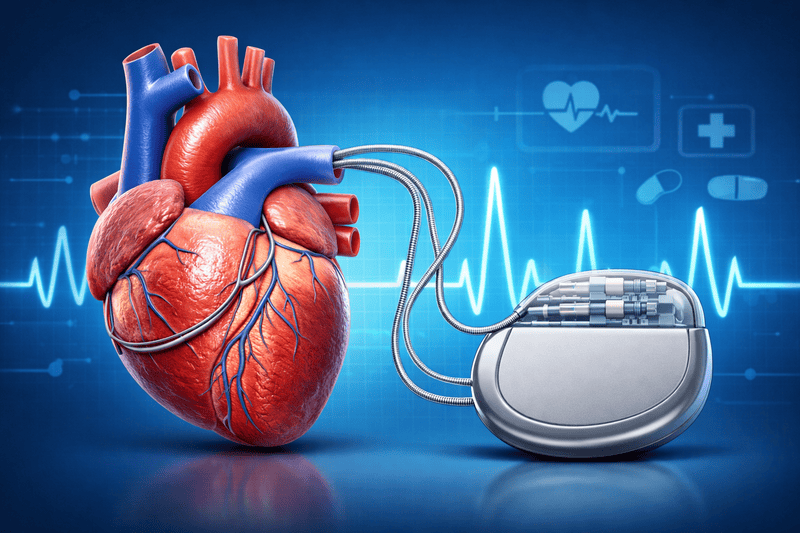
A heart pacemaker is a small electronic medical device implanted under the skin of the chest to regulate abnormal heart rhythms. The device sends controlled electrical impulses measured in milliseconds to stimulate heart muscles and maintain a stable heartbeat. These impulses ensure that the heart contracts at an appropriate rate when the natural pacing system fails.
A pacemaker system usually contains three main components:
- Pulse generator – produces electrical signals and contains the battery and microelectronics.
- Leads (wires) – thin insulated wires that carry electrical impulses from the generator to the heart muscle.
- Electrodes – located at the end of the leads to deliver signals directly to heart tissue.
The device continuously monitors heart rhythm. If the heart rate falls below the programmed level, the pacemaker immediately sends an electrical impulse to restore normal rhythm. This function allows the heart to maintain adequate blood flow to the brain and other organs.
When Cardiologists Recommend Heart Pacemaker Treatment in Delhi
A pacemaker is recommended when the heart rate becomes abnormally slow and produces symptoms, particularly when the pulse drops below 60 beats per minute due to electrical conduction disorders. Cardiologists evaluate the severity of rhythm disturbance and recommend pacemaker implantation when medication cannot correct the problem.
Pacemaker treatment is commonly advised when the heart’s electrical system fails to maintain consistent rhythm. The heart may pause for several seconds between beats, leading to reduced blood flow to the brain and other organs. Patients often experience dizziness, fainting, or extreme fatigue in such cases.
Cardiologists may recommend pacemaker implantation in the following clinical situations:
Symptomatic bradycardia
Heart rhythm slows significantly below normal levels and causes fainting, fatigue, or shortness of breath.
Electrical conduction block
Electrical signals between the upper and lower chambers of the heart become delayed or blocked, disrupting coordinated heartbeats.
Failure of the natural pacemaker (SA node dysfunction)
The sinoatrial node produces irregular electrical signals, causing alternating slow and fast heart rhythms.
Post–heart surgery rhythm disturbances
Some patients develop conduction problems after cardiac surgery that require long-term pacing support.
In cardiology hospital in Delhi, specialists confirm the need for pacemaker therapy through heart rhythm monitoring, diagnostic testing, and clinical evaluation before recommending pacemaker implantation.
Symptoms That Indicate Pacemaker Requirement
Symptomatic bradycardia occurs when the heart rate falls below 60 beats per minute and produces noticeable health symptoms, indicating inadequate blood flow to vital organs. Patients experiencing these symptoms require cardiology evaluation to determine whether pacemaker therapy is necessary. (Source: Cleveland Clinic)
Frequent fainting (syncope)
Temporary loss of consciousness may occur when the brain receives insufficient blood supply due to slow heart rhythm.
Persistent dizziness or lightheadedness
Reduced cardiac output can cause recurring dizziness, especially during standing or physical activity.
Extreme fatigue during routine activity
Patients with slow heart rhythm may experience unusual tiredness because the heart cannot pump enough oxygenated blood.
Shortness of breath during mild exertion
Insufficient blood circulation may cause breathing difficulty during walking or light physical activity.
Irregular or slow pulse
A consistently slow pulse detected during medical examination may indicate electrical conduction abnormalities.
Cardiologists investigate these symptoms using diagnostic heart rhythm tests to determine whether pacemaker implantation is required.
Heart Conditions That Require Pacemaker Therapy
Permanent pacemaker implantation is commonly recommended for specific cardiac conduction disorders, particularly in adults over 65 years of age, where electrical signaling in the heart becomes unstable or blocked. These conditions interfere with the heart’s ability to maintain a consistent rhythm.
Bradycardia
Bradycardia occurs when the heart rate drops below 60 beats per minute and the heart cannot pump enough blood to meet the body’s needs. Persistent symptomatic bradycardia is one of the most common indications for pacemaker implantation.
Atrioventricular (AV) Heart Block
Heart block develops when electrical signals traveling from the atria to the ventricles become delayed or completely blocked. In advanced AV block, the ventricles may beat at 30–40 beats per minute, which can significantly reduce blood circulation.
Sick Sinus Syndrome
Sick sinus syndrome occurs when the heart’s natural pacemaker (SA node) produces irregular electrical signals. Patients may experience alternating slow and fast heart rhythms, known as tachy-brady syndrome, requiring pacemaker support to maintain stable heart rate.
Congenital Conduction Disorders
Some individuals are born with abnormalities in the heart’s electrical conduction pathways. These congenital defects can interfere with normal electrical signaling and may require pacemaker therapy for rhythm stabilisation.
Diagnostic Tests Before Pacemaker Implantation in Delhi
Electrocardiogram testing records heart rhythm within a few seconds of electrical activity, allowing cardiologists to detect abnormal heart rate patterns and conduction delays. This test is typically the first diagnostic step used to identify rhythm disorders requiring pacemaker therapy.
Electrocardiogram (ECG)
ECG records the heart’s electrical signals using electrodes placed on the chest. The test identifies rhythm abnormalities such as bradycardia, heart block, or irregular electrical conduction.
Holter Monitoring
Holter monitoring records heart rhythm continuously for 24–48 hours, allowing doctors to detect intermittent rhythm disturbances that may not appear during a standard ECG.
Electrophysiology Study (EPS)
Electrophysiology testing measures electrical conduction inside the heart using specialized catheters. This procedure helps identify specific conduction defects and determine whether pacemaker implantation is necessary.
Echocardiography
Echocardiography uses ultrasound imaging to evaluate heart structure and pumping ability. This test helps cardiologists identify structural heart conditions that may contribute to abnormal heart rhythm.
Cost of pacemaker surgery in Delhi
Pacemaker surgery cost in Delhi typically varies depending on the type of device used, hospital infrastructure, and the complexity of the patient’s condition. On average, the cost of pacemaker implantation in Delhi starts from ₹2.9 lakh and can go till ₹7.5 lakh or more, especially in multi-specialty or private hospitals with advanced cardiac care facilities. The final cost may include pre-surgical evaluations, device cost (single-chamber, dual-chamber, or advanced pacemakers), surgeon fees, hospital stay, and post-procedure monitoring. It is important to note that prices can fluctuate based on the brand and technology of the pacemaker, with newer or MRI-compatible devices costing significantly higher.
Heart rhythm disorders can lead to serious health complications when the heart cannot maintain a stable electrical signal. A normal heart rhythm typically ranges from 60 to 100 beats per minute, and significant slowing due to electrical conduction problems may require a pacemaker to regulate the heartbeat and maintain adequate blood circulation.
Patients experiencing symptoms such as persistent dizziness, fainting episodes, severe fatigue, or irregular pulse should undergo a cardiology evaluation to determine whether pacemaker therapy is required. Accurate diagnosis through ECG, Holter monitoring, and cardiac assessment helps specialists identify rhythm disorders and determine the appropriate treatment pathway.Patients seeking advanced cardiac care can consult specialists at Primus Super Speciality Hospital, a multi-specialty healthcare facility offering cardiology and cardiac surgery in Delhi. The hospital provides evaluation for heart rhythm disorders, diagnostic cardiac testing, and pacemaker implantation procedures performed by experienced cardiology teams.
FAQs
A heart pacemaker is required when the heart beats too slowly (bradycardia) or irregularly due to electrical conduction problems. It is commonly recommended in conditions like heart block, sick sinus syndrome, and cardiomyopathy, especially when symptoms such as dizziness, fainting, or fatigue are present.
The cost of pacemaker surgery in Delhi typically ranges from ₹2.9 lakh to ₹7.5 lakh or more, depending on the type of pacemaker. Advanced or MRI-compatible devices increase the overall cost
Symptoms that indicate need for a pacemaker include frequent fainting (syncope), persistent dizziness, extreme fatigue, shortness of breath during mild activity, and a consistently slow or irregular pulse
Before pacemaker implantation, cardiologists perform diagnostic tests such as Electrocardiogram (ECG), Holter monitoring, Electrophysiology Study (EPS), and echocardiography. These tests help identify heart rhythm disorders and determine the need for pacemaker therapy.