More than 3.5 million sports injuries occur globally each year during recreational and professional physical activities, according to the World Health Organization (WHO). Cricket injuries, football ligament tears, gym-related muscle strains, and running injuries continue to increase among active adults and athletes in Delhi. Sports injury treatment in Delhi now includes orthopedic assessment, physiotherapy, rehabilitation programs, and minimally invasive surgical procedures for faster recovery.
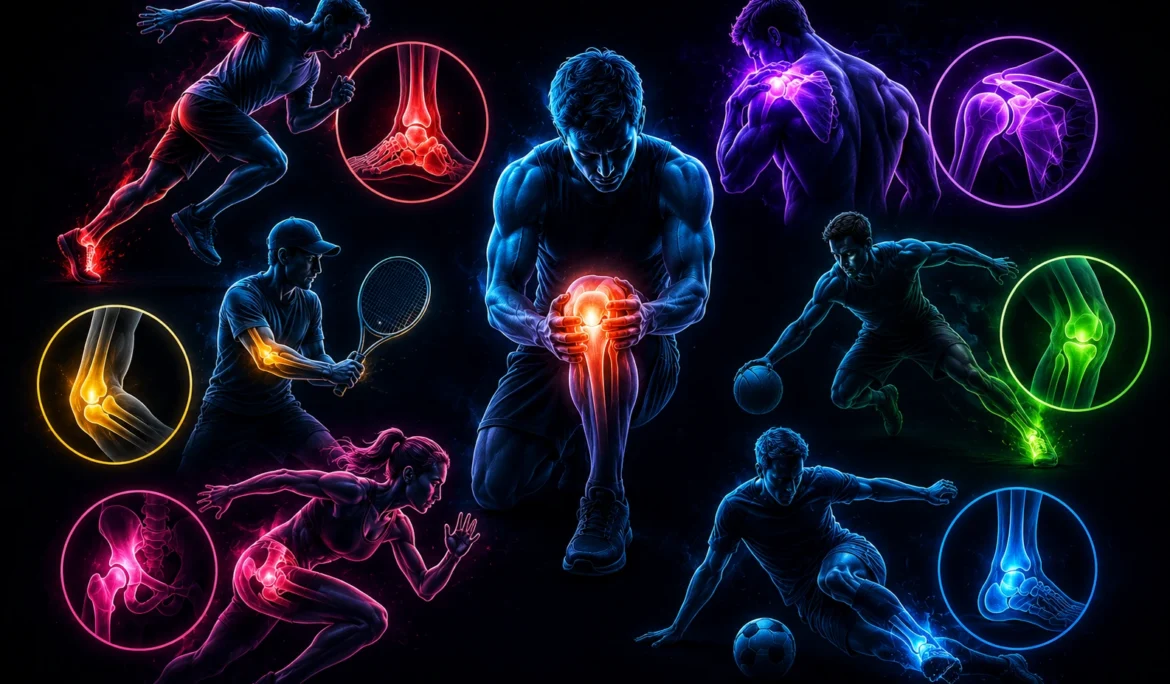
Different types of sports injuries affect muscles, ligaments, tendons, bones, and joints. Acute injuries such as ankle sprains and shoulder dislocations usually occur after sudden impact or twisting movements. Overuse injuries develop gradually from repetitive stress during sports training, gym workouts, or long-distance running. Delhi sports injury centres commonly treat ACL tears, rotator cuff injuries, tendon inflammation, hamstring strains, and stress fractures among amateur and professional athletes.
Sports injury rehab in Delhi focuses on pain control, mobility restoration, muscle strengthening, and return-to-sport rehabilitation. Treatment plans vary according to injury severity, athlete age, activity level, and recovery goals. Sports injury hospitals use MRI scans, functional movement assessment, and physiotherapy protocols to reduce reinjury risk and improve recovery timelines.
Types of Sports Injuries Treated in Delhi Sports Injury Centres
Sports injury centres in Delhi manage a wide range of musculoskeletal injuries affecting athletes, fitness enthusiasts, and active individuals. These injuries are broadly classified based on tissue involvement, mechanism of injury, and severity.
- Acute sports injuries occur suddenly during physical activity or contact sports. Common examples include ankle sprains, shoulder dislocations, ligament tears, and fractures. These injuries often result from sudden twisting, direct impact, or falls and require immediate clinical evaluation to prevent further damage.
- Overuse injuries develop gradually due to repetitive stress on muscles, tendons, and joints. According to the Sports Authority of India Sports Science Division, injury risk increases significantly when training load rises by more than 10% per week. In Delhi athletes, common overuse injuries include tendonitis, stress fractures, runner’s knee, and shoulder impingement from gym workouts or endurance sports.
- Joint-specific injuries are highly prevalent in sports clinics, especially involving the knee, shoulder, and ankle. Knee injuries such as ACL tears represent a major portion of sports trauma cases. Research from the AAOS Sports Injuries Guide shows that nearly 30% of running-related injuries affect the knee joint, highlighting its vulnerability in active populations.
- Muscle and tendon injuries include hamstring strains, calf tears, and rotator cuff injuries. These typically occur due to insufficient warm-up, poor flexibility, or sudden explosive movements during sports activities.
Sports injury hospitals categorize treatment based on severity and sport type to ensure targeted rehabilitation and faster return-to-play outcomes.
Acute Sports Injuries Common in Athletes
Acute sports injuries occur suddenly during physical activity due to impact, collision, twisting, or accidental falls. These injuries are frequently reported in cricket, football, gym training, badminton, and running-related activities.
The most common acute sports injuries include ligament sprains, muscle strains, joint dislocations, and fractures. Ligament sprains often affect the ankle and knee when the joint is twisted beyond its normal range. Muscle strains commonly involve the hamstrings, quadriceps, and calf muscles during sudden sprinting or heavy lifting.
Shoulder dislocations are seen in contact sports and falls, while wrist and forearm fractures are common in impact-based activities such as cycling accidents or sports collisions. These injuries typically require immediate medical evaluation to prevent long-term complications like instability or chronic pain.
According to the AAOS Sports Injuries Guide, acute injuries often present with sudden pain, swelling, and reduced joint movement, making early diagnosis critical for effective treatment.
Overuse Sports Injuries Seen in Rehabilitation Clinics
Overuse sports injuries develop gradually due to repeated stress on muscles, tendons, and joints without adequate recovery time. These injuries are increasingly common among gym users, runners, cricket players, and amateur athletes who follow high-frequency training routines.
The most frequently reported overuse injuries include tendinitis, stress fractures, shin splints, and joint impingement syndromes. These conditions do not occur from a single incident but from continuous micro-trauma over weeks or months of training.
According to the Sports Authority of India Sports Science Division, injury risk increases significantly when training load rises by more than 10% per week. This rapid progression without recovery is a key contributing factor in overuse injuries among active individuals.
Treatment focuses on activity modification, pain management, physiotherapy, and structured rehabilitation programs.
Knee, Shoulder, and Ankle Sports Injuries
Knee, shoulder, and ankle injuries represent the most frequently treated joint-related injuries sports injury centres due to their high involvement in running, jumping, lifting, and contact-based activities.
- Knee injuries are among the most severe and commonly reported conditions. They include ACL (anterior cruciate ligament) tears, meniscus injuries, and patellar tendon strain. These injuries often occur during sudden direction changes in football, cricket fielding, or gym squats.
- Shoulder injuries frequently occur in overhead sports such as cricket bowling, badminton, and weight training. Common conditions include rotator cuff tears, shoulder impingement, and dislocations. These injuries typically result from repetitive overhead motion or sudden trauma, leading to pain, weakness, and reduced range of motion.
- Ankle injuries are highly prevalent in running and contact sports. Ankle sprains occur when ligaments are overstretched during sudden twisting or landing on uneven surfaces. These injuries are often underestimated but can lead to chronic instability if not properly rehabilitated.
Treatment for Different Types of Sports Injuries in Delhi
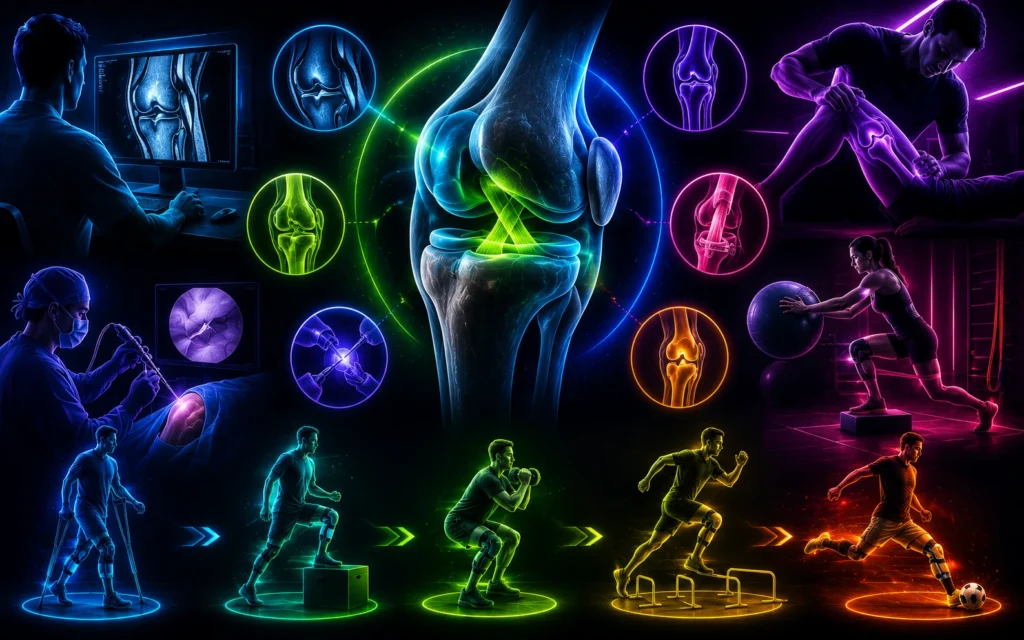
Sports injury treatment in Delhi follows a multi-modal medical approach depending on injury type, severity, and functional limitation. Sports injury hospitals and rehabilitation centres use a combination of conservative care, physiotherapy, and surgical procedures to restore mobility and prevent recurrence.
- Acute injury treatment (sprains, strains, dislocations, fractures)
Initial management focuses on pain control and tissue protection. Common treatments include rest, ice application, compression, and elevation (RICE protocol). Immobilization using braces, splints, or slings is used for joint protection. Severe fractures or dislocations may require reduction procedures and casting or surgical fixation. - Ligament injuries (ACL, MCL, ankle ligaments)
Treatment depends on tear severity. Partial tears are managed with physiotherapy, bracing, and strength training. Complete tears often require arthroscopic ligament reconstruction followed by structured rehabilitation programs lasting several months. - Muscle and tendon injuries (hamstring strain, rotator cuff injury, Achilles tendinitis)
Treatment includes activity modification, anti-inflammatory management, and progressive physiotherapy. Advanced cases may use ultrasound therapy, dry needling, or platelet-rich plasma (PRP) injections to support tissue healing. - Overuse injuries (shin splints, stress fractures, tendonitis)
Management involves complete rest from aggravating activities, load modification, corrective exercise programs, and biomechanical correction. Stress fractures may require temporary immobilization or reduced weight-bearing protocols. - Joint injuries (knee, shoulder, ankle injuries)
Treatment combines imaging-based diagnosis, physiotherapy, joint stabilization exercises, and in severe cases, minimally invasive arthroscopic surgery. Rehabilitation focuses on restoring range of motion, strength, and stability.
Sports injuries range from mild muscle strains to complex ligament tears and joint damage, requiring timely diagnosis and structured treatment. Early identification of symptoms, accurate imaging, and classification of injury type play a critical role in preventing long-term complications. With rising participation in cricket, football, gym training, and running activities, the demand for structured sports injury treatment and rehabilitation continues to increase. A well-planned recovery pathway combining physiotherapy, rehabilitation exercises, and, when required, surgical intervention ensures safe return to sport and reduces reinjury risk.
For advanced sports injury treatment and complete rehabilitation care, Primus Hospital, Delhi provides specialized orthopedic and sports medicine services designed for athletes and active individuals. The hospital offers comprehensive diagnosis using modern imaging, personalized physiotherapy programs, and evidence-based rehabilitation protocols for faster and safer recovery.
Book a consultation at Primus Hospital, Delhi for expert evaluation, sports injury treatment, and rehabilitation support tailored to your condition.