Stroke affects about 15 million people globally every year, with millions requiring emergency neurological care . A significant portion of these cases involve brain clot formation or intracranial bleeding that may require urgent medical or surgical intervention.
In clinical neurology, a “brain clot” refers to a collection of blood within or around brain tissue caused by hemorrhage or blocked blood flow. This condition is often linked to stroke and becomes life-threatening when it increases pressure inside the skull. In hospitals, brain clot cases are treated as neurological emergencies. Patients are rapidly evaluated through CT or MRI scans to determine whether surgery is required or if medical management is sufficient. The success of brain clot surgery depends heavily on timing, clot size, brain region affected, and overall patient health.
Medical research shows that outcomes improve significantly when treatment is initiated within the critical emergency window of a few hours after symptom onset. Delays in reaching a neurology or neurosurgery hospital in Delhi can increase the risk of complications, disability, or mortality.
Brain Clot Symptoms in Delhi Patients
Stroke-related brain clot symptoms occur suddenly in most cases and require emergency treatment within minutes to hours, as highlighted in WHO stroke guidance . In Delhi neurology emergency, early recognition of these symptoms directly impacts survival and surgical outcomes.
- Sudden severe headache without known cause
- Weakness or numbness on one side of the body
- Difficulty speaking or understanding speech
- Loss of balance or coordination
- Sudden vision problems in one or both eyes
Emergency Symptoms Seen in Delhi Hospitals
Patients arriving in Delhi emergency departments often present with:
- Reduced consciousness or confusion
- Seizures in severe cases
- Vomiting associated with raised brain pressure
- Facial drooping or asymmetry
When Brain Clot Require Surgery? Brain hospital in Delhi
Brain clot surgery is considered when imaging shows significant bleeding, pressure buildup, or risk of brain tissue damage. In Delhi neurosurgery hospitals, the decision is made urgently after CT or MRI evaluation in emergency settings.
Large Brain Clot or Hemorrhage
Surgery is often required when:
- The clot is large and compressing brain tissue
- There is visible midline shift on brain imaging
- Intracranial pressure is rising rapidly
Failure of Medical Management
In some patients, initial treatment includes:
- Blood pressure control
- ICU monitoring
- Medication to reduce swelling
Emergency Neurological Deterioration
Neurosurgeons in Delhi hospitals consider immediate surgery when patients show:
- Rapid loss of consciousness
- Worsening paralysis or neurological deficits
- Signs of brain herniation or severe swelling
Brain Clot Surgery Success Rate Explained
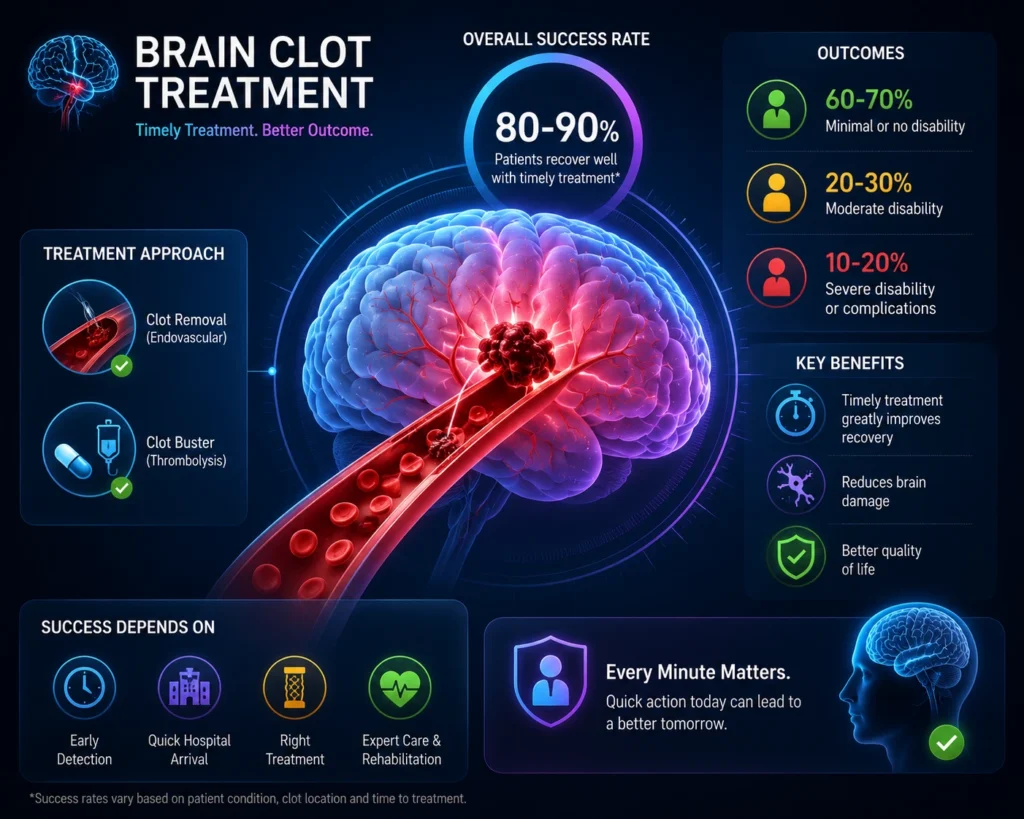
Stroke remains one of the leading causes of death and long-term disability worldwide, accounting for about 5 million deaths annually. In brain clot cases, surgical success is not defined by a single fixed percentage but by survival, neurological recovery, and prevention of further brain damage.
What “Success Rate” Means in Brain Clot Surgery
In neurosurgery practice in Delhi hospitals, success is measured by:
- Survival after emergency surgery
- Ability to regain neurological function
- Reduction of brain pressure and swelling
- Prevention of further bleeding or complications
Factors That Improve Success Rates
Early treatment within the first few hours significantly improves outcomes in stroke-related emergencies. Key factors include:
- Time from symptom onset to hospital admission
- Size and location of the brain clot
- Patient age and overall health condition
- Speed of neurosurgical intervention
- Availability of ICU and neurocritical care support
Types of Brain Clot Surgery in Hospitals
Surgical removal of brain clot (hematoma evacuation) is commonly performed in emergency neurosurgical cases to reduce pressure inside the skull.
Craniotomy (Open Brain Surgery)
- A section of skull is temporarily removed
- Surgeon accesses and removes the clot directly
- Used in large or complex brain hemorrhages
- Requires ICU monitoring after surgery
Burr Hole Surgery
- Small hole drilled in skull
- Used for draining liquid or semi-liquid clot
- Less invasive compared to craniotomy
- Often used in chronic or subdural hematoma cases
Decompressive Surgery
- Skull is partially opened to relieve brain pressure
- Used in severe swelling or brain edema cases
- Life-saving in critical emergency situations
Hematoma Evacuation
- Direct removal of collected blood clot
- Done through open or minimally invasive approach
- Helps restore normal brain pressure and blood flow
Recovery After Brain Clot Surgery
Most patients require intensive care monitoring for the first 24–72 hours after brain clot surgery to stabilize brain pressure and neurological function.
Immediate Post-Surgery Phase (0–72 Hours)
Patients are closely monitored for:
- Brain swelling or re-bleeding
- Blood pressure fluctuations
- Oxygen and neurological status
- Consciousness level and reflex response
Hospital Recovery Phase (3–10 Days)
Once stable, patients may:
- Begin gradual movement in bed
- Undergo repeated CT scans if required
- Receive medication to prevent seizures or swelling
- Start basic neurological assessments
Rehabilitation Phase (Weeks to Months)
Recovery continues with:
- Physiotherapy for limb weakness
- Speech therapy if language is affected
- Occupational therapy for daily activities
- Regular neurologist follow-up in Delhi clinics
Stroke and brain clot conditions account for a significant share of global neurological deaths and disabilities. Brain clot surgery is often a life-saving intervention, but its success depends heavily on how quickly treatment begins and how severe the brain injury is at the time of admission.
In Delhi neurosurgical care, brain clot surgery is not defined by a single fixed success rate. Instead, outcomes depend on multiple factors such as clot size, brain region affected, patient age, and time taken to reach a hospital. Early diagnosis through CT or MRI scanning and immediate neurosurgical decision-making significantly improve survival chances and neurological recovery.
Even after successful surgery, recovery continues for weeks to months through ICU care, physiotherapy, and regular neurological follow-up. Many patients regain partial or full function when treated in time, while delayed cases may result in long-term disability.
If a patient shows sudden symptoms such as weakness, speech difficulty, severe headache, or loss of consciousness, immediate hospital evaluation is critical.
Visit Primus Hospital, Delhi for urgent neurology consultation and advanced brain clot treatment under specialist neurosurgical care.