

Acute abdominal pain accounts for approximately 5–10% of emergency department visits, making it one of the most common reasons for urgent medical checkup.
Acute abdominal pain is a sudden onset of pain that may develop due to conditions affecting the digestive system, urinary tract, or other abdominal organs. While some cases result from mild digestive problems, others may indicate serious medical conditions such as appendicitis, gallstones, intestinal obstruction, or pancreatitis that require emergency treatment. Identifying the causes of abdominal pain early helps doctors determine the appropriate treatment and reduce the risk of complications.
If you experience persistent or severe pain, seek prompt abdominal pain treatment in Delhi from an experienced Internal medicine specialist.
Acute Abdominal Pain vs Chronic Abdominal Pain
Abdominal pain lasting less than 7 days is generally classified as acute abdominal pain, while pain that persists or recurs for weeks to months is considered chronic abdominal pain.
Although both conditions cause discomfort in the abdomen, acute abdominal pain and chronic abdominal pain differ in their onset, duration, underlying causes, and treatment approach.
| Acute Abdominal Pain | Chronic Abdominal Pain |
| Develops suddenly and lasts for a few hours to less than 7 days | Persists or recurs for several weeks or months |
| Often requires urgent medical evaluation | Usually develops gradually and requires planned medical assessment |
| May result from appendicitis, gallstones, kidney stones, intestinal obstruction, pancreatitis, or severe infections | Commonly associated with irritable bowel syndrome (IBS), inflammatory bowel disease (IBD), chronic gastritis, peptic ulcer disease, or other long-term conditions |
| Pain is often severe and may worsen rapidly | Pain may be mild, intermittent, or persistent |
| May occur with fever, vomiting, abdominal swelling, or blood in vomit or stool | May be associated with changes in bowel habits, bloating, or recurring digestive symptoms |
| Can require emergency surgery or immediate medical treatment | Usually managed with long-term medical treatment, dietary changes, and regular follow-up |
Common Causes of Acute Abdominal Pain
Appendicitis occurs most frequently between the ages of 10 and 30 years and is one of the leading surgical causes of acute abdominal pain in young adults.
The most frequent causes of abdominal pain include:
- Appendicitis: Inflammation of the appendix that usually causes pain in the lower right side of the abdomen and often requires emergency surgery.
- Gallstones: Gallstones can block the bile ducts, causing severe pain in the upper right abdomen, particularly after fatty meals.
- Kidney Stones: Stones passing through the urinary tract may cause sudden, severe pain in the side, back, or lower abdomen, often accompanied by blood in the urine.
- Gastroenteritis: Viral or bacterial infections can lead to abdominal cramps, diarrhea, nausea, vomiting, and dehydration.
- Peptic Ulcers: Ulcers in the stomach or duodenum may cause burning upper abdominal pain, especially between meals or at night.
- Pancreatitis: Inflammation of the pancreas can cause severe upper abdominal pain that may spread to the back and is often associated with nausea and vomiting.
- Intestinal Obstruction: A blockage in the intestine can cause severe abdominal pain, vomiting, abdominal swelling, and an inability to pass stool or gas.
- Urinary Tract Infection (UTI): Infections affecting the urinary system may cause lower abdominal pain, painful urination, and fever.
- Gynecological Conditions: In women, ovarian cysts, ectopic pregnancy, pelvic inflammatory disease, or ovarian torsion can present as acute abdominal pain and require urgent evaluation.
Symptoms and Risks of Acute Abdominal Pain
The symptoms of acute abdominal pain vary depending on the underlying cause. While some cases involve mild discomfort that resolves with appropriate treatment, others may indicate a serious medical emergency. Recognizing the warning signs early can help prevent complications and ensure timely abdominal pain treatment in Delhi.
Common Symptoms of Acute Abdominal Pain
Seek medical attention if you experience any of the following symptoms:
- Sudden, severe pain anywhere in the abdomen
- Pain that worsens with movement or coughing
- Fever and chills
- Nausea or persistent vomiting
- Abdominal swelling or bloating
- Loss of appetite
- Blood in vomit or stool
- Difficulty passing stool or gas
- Pain during urination or blood in the urine
- Dizziness, fainting, or excessive weakness
The location of the pain may also provide important clues. For example, pain in the lower right abdomen may suggest appendicitis, while pain in the upper right abdomen may be associated with gallbladder disease.
Home Remedies for Mild Abdominal Pain
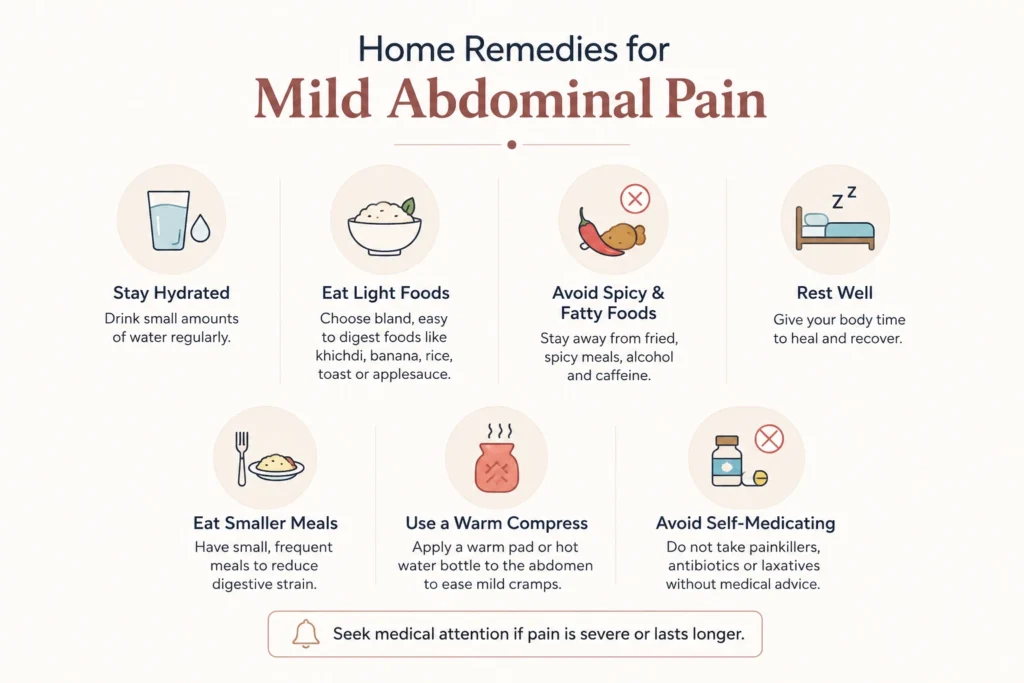
If your abdominal pain is mild and not accompanied by warning signs such as fever, persistent vomiting, blood in the stool, or severe tenderness, a few simple self-care measures may help relieve discomfort while you monitor your symptoms.
- Stay hydrated: Drink small amounts of water regularly to prevent dehydration, especially if the pain is associated with vomiting or diarrhea.
- Eat light, bland foods: Choose easily digestible foods such as bananas, rice, toast, applesauce, or plain khichdi until your symptoms improve.
- Avoid spicy and fatty foods: Fried foods, heavily spiced meals, alcohol, and caffeinated beverages may worsen digestive discomfort.
- Rest adequately: Allow your body time to recover, particularly if the pain is related to a mild viral illness or indigestion.
- Eat smaller meals: Consuming small, frequent meals instead of large portions may reduce digestive strain.
- Use a warm compress: Applying a warm heating pad or hot water bottle to the abdomen may help relieve mild muscle cramps. Avoid excessive heat and discontinue use if the pain worsens.
- Avoid self-medicating: Do not take painkillers, antibiotics, or laxatives without medical advice, as they may mask symptoms or worsen certain abdominal conditions.
Acute abdominal pain can range from a mild digestive problem to a serious medical emergency. Identifying the cause of abdominal pain early is essential for preventing complications and ensuring appropriate treatment. Timely diagnosis and the right treatment plan can improve recovery and reduce the risk of long-term health problems.
If you need expert consultation for recurrent digestive symptoms, or emergency care for acute abdominal pain, Primus Hospital offers patient-centered treatment tailored to your condition.
Book a consultation with the specialists at Primus Hospital today for accurate diagnosis, prompt treatment, and comprehensive care for acute abdominal pain and other abdominal conditions.