A diagnosis of heart failure can feel frightening, especially when the words arrive without warning during a routine check-up or after a frightening night in the emergency room. Yet heart failure is not a single dramatic event; it is a chronic condition that, with the right medical team, timely diagnosis, and consistent long-term care, can often be managed well for many years. This guide walks through the causes, symptoms, diagnostic pathway, and modern treatment landscape for heart failure.
What Is Heart Failure?
Heart failure does not mean the heart has stopped working. It means the heart muscle is no longer pumping blood as efficiently as the body needs, either because it cannot contract with enough force or because it cannot relax and fill properly between beats. As a result, blood and fluid can back up in the lungs, legs, and abdomen, while other organs may not receive enough oxygen-rich blood to function normally.
Types of Heart Failure
Doctors classify heart failure primarily by ejection fraction (EF), a measurement from an echocardiogram that shows the percentage of blood the left ventricle pumps out with each heartbeat.
| Type | Ejection Fraction | What It Means |
| HFrEF (reduced) | 40% or less | The heart muscle has weakened and cannot pump forcefully enough. |
| HFmrEF (mildly reduced) | 41% to 49% | Pumping strength is mildly below normal, often an intermediate stage. |
| HFpEF (preserved) | 50% or higher | The heart pumps a normal percentage but has become stiff and cannot fill properly; common in older adults, especially women. |
Common Causes of Heart Failure
Heart failure rarely appears out of nowhere. It is usually the cumulative result of one or more underlying conditions that place long-term strain on the heart muscle, including:
- Coronary artery disease and prior heart attacks, which damage or scar heart tissue
- Long-standing, poorly controlled high blood pressure (hypertension)
- Heart valve disorders, including rheumatic heart disease
- Cardiomyopathies (diseases of the heart muscle itself, sometimes genetic)
- Persistent arrhythmias, such as atrial fibrillation
- Diabetes and metabolic disease
- Congenital heart defects present from birth
- Certain viral infections, chemotherapy drugs, or chronic alcohol use that injure the heart muscle
Symptoms of Heart Failure
Heart failure symptoms often develop gradually and can be mistaken for normal ageing or general tiredness, which is why many cases go unrecognised until they become more advanced. Common warning signs include:
- Breathlessness during activity, while lying flat, or that wakes you at night
- Persistent fatigue and reduced ability to exercise or climb stairs
- Swelling in the legs, ankles, feet, or abdomen
- Rapid or irregular heartbeat
- Sudden weight gain from fluid retention
- Persistent cough or wheezing, sometimes with white or pink-tinged mucus
- Reduced appetite, nausea, or a feeling of fullness
- Difficulty concentrating or reduced alertness
How is Heart Failure Diagnosed?
An accurate diagnosis relies on a combination of clinical assessment and objective testing, typically including:
- Physical examination checking for fluid in the lungs, swelling, and abnormal heart sounds
- Electrocardiogram (ECG) records the heart’s electrical activity and can reveal past heart attacks or arrhythmias
- Echocardiogram an ultrasound of the heart that measures ejection fraction, chamber size, and valve function, and is considered central to confirming heart failure and its type
- Blood tests including BNP or NT-proBNP levels, kidney function, and thyroid function, which help confirm the diagnosis and identify contributing conditions
- Chest X-ray to check for fluid build-up around the lungs and heart enlargement
- Stress testing evaluates how the heart performs under exertion
- Cardiac MRI or coronary angiography used selectively for a more detailed structural picture or to assess blocked arteries
Heart Treatment in Delhi
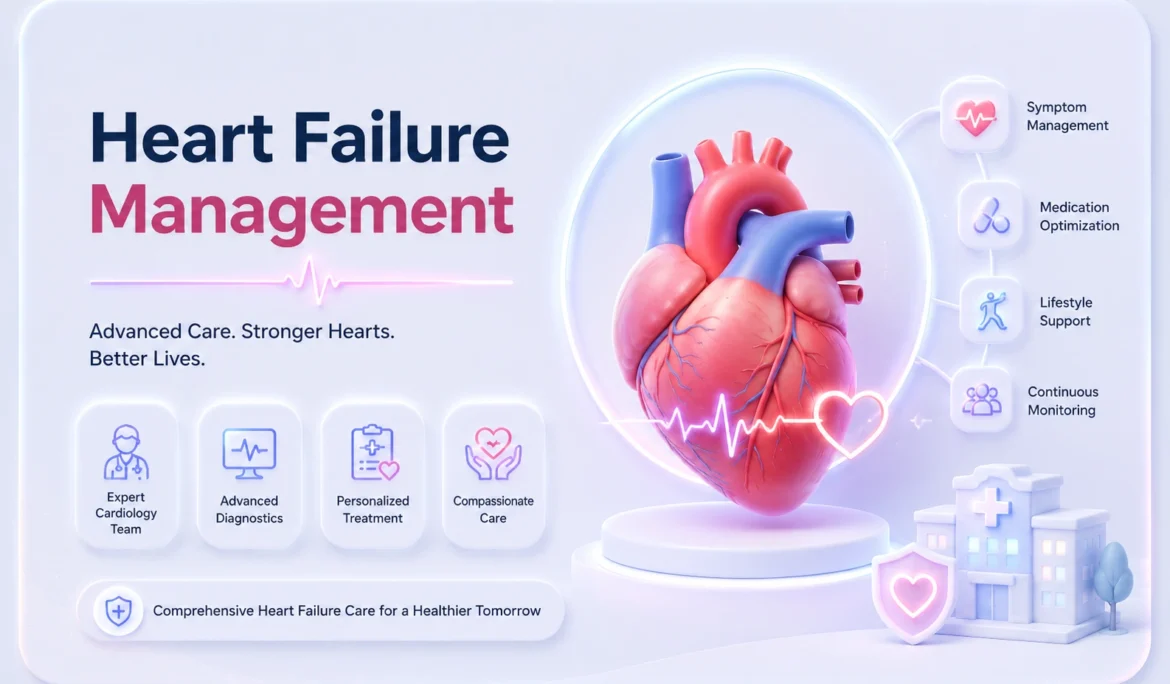
Heart failure treatment has advanced considerably over the past decade, and most patients today are managed with a combination of the following:
Guideline-directed Medical Therapy
Current international cardiology guidelines recommend a foundation of four medication classes for HFrEF, often referred to as the “four pillars” of therapy, because used together they have been shown to reduce hospitalisation and improve survival:
- ACE inhibitors, ARBs, or angiotensin receptor–neprilysin inhibitors (ARNI)
- Beta-blockers
- Mineralocorticoid receptor antagonists (MRAs)
- SGLT2 inhibitors originally developed for diabetes, now a core heart failure therapy
- Diuretics are used alongside these to relieve fluid retention and breathlessness
Device-based and surgery therapy
- Implantable cardioverter-defibrillators (ICDs) for patients at risk of dangerous heart rhythms
- Cardiac resynchronisation therapy (CRT) to coordinate the heart’s pumping action
- Coronary artery bypass grafting (CABG) or angioplasty and stenting when blocked arteries are a contributing cause
- Valve repair or replacement, including minimally invasive options such as TAVI, when valve disease is driving heart failure
- Mechanical circulatory support or heart transplantation in advanced, treatment-resistant cases
Why Choose Primus Hospital?
Primus Super Speciality Hospital, located in Chanakyapuri, New Delhi, is a NABH-accredited multi-specialty hospital that has been offering cardiac care since 2001. Its Department of Cardiology and Cardiac Sciences is built around several of the elements that matter most for heart failure management:
- 24×7 emergency and interventional cardiac care, supported by a flat-panel cardiac catheterisation lab for angiography and angioplasty
- Both invasive and non-invasive cardiology services, including ECG, stress testing, and echocardiography, along with advanced imaging such as 3D echocardiography and cardiac MRI
- Surgical capability for coronary artery bypass grafting (CABG), valve repair and replacement (including TAVI), and pacemaker implantation
- A multidisciplinary hospital environment that brings cardiology together with nephrology, endocrinology, pulmonology, and critical care under one roof relevant given how often heart failure coexists with kidney and metabolic conditions
- Dedicated intensive care infrastructure, including ICU and high-dependency unit beds, alongside modular operation theatres
Heart failure is a serious but manageable condition. Advances in medication, minimally invasive procedures, and device therapy mean that most patients today can expect meaningfully better outcomes than a generation ago, provided the condition is diagnosed early and managed consistently. Recognising symptoms promptly, undergoing thorough diagnostic evaluation, and choosing a hospital equipped for both emergency cardiac care and long-term follow-up are the three pillars that make the biggest difference to a patient’s long-term quality of life.
The cardiology team at Primus Super Speciality Hospital, Chanakyapuri, New Delhi, offers comprehensive diagnostic evaluation and long-term heart failure management under one roof. Book a consultation with a Primus heart specialist today at 011-6620-6630 or visit primushospital.com to take the first step toward better heart health.