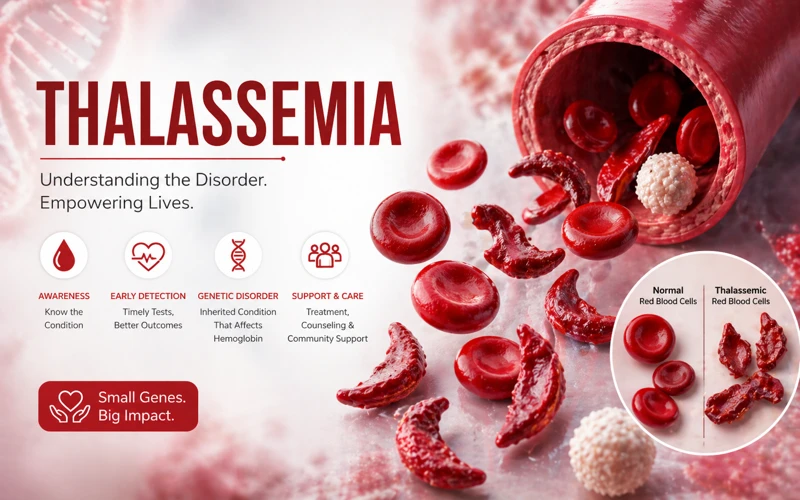
Around 5% of the global population carries thalassemia gene mutations, with India contributing a significant share of new cases each year. World Health Organization identifies thalassemia as a genetic blood disorder that affects hemoglobin production and leads to chronic anemia.
Thalassemia is broadly classified into minor, intermedia, and major types, with severity depending on gene inheritance from parents. In India, around 10,000–12,000 children are born with thalassemia major annually, mainly due to both parents being carriers. Thalassemics India
The key medical question patients and families ask is whether thalassemia can be treated or cured. The answer depends on severity. While thalassemia minor usually requires no active treatment, major cases need lifelong medical management such as blood transfusions and iron chelation therapy. In select cases, bone marrow transplant offers a potential cure with success rates reaching up to 80–90% when a matched donor is available. National Health Portal India
This guide explains symptoms, causes, classification, treatment options, and prevention strategies in simple terms, and differences between minor and major types.
What is Thalassemia? Classification Explained
Thalassemia is a genetic blood disorder in which the body produces abnormal hemoglobin, leading to reduced oxygen supply in the bloodstream. It is inherited when one or both parents carry defective genes, making it a non-communicable but hereditary condition. In India, thalassemia is commonly classified into three main types based on severity:
1. Thalassemia Minor
This is the mildest form. A person usually carries one defective gene and may have no or very mild symptoms. Most individuals do not require treatment and live normal lives. However, they can pass the gene to their children.
2. Thalassemia Intermedia
This form is moderate in severity. Patients may experience anemia symptoms but do not always require regular blood transfusions. Treatment depends on symptom intensity.
3. Thalassemia Major
This is the most severe form. It occurs when both genes are defective. It leads to severe anemia early in life and requires regular blood transfusions every 2–4 weeks to maintain hemoglobin levels. Centers for Disease Control and Prevention
Thalassemia Causes and Genetic Inheritance
Thalassemia is caused by inherited genetic mutations that affect the production of hemoglobin, the protein in red blood cells responsible for carrying oxygen throughout the body. It is not an infectious disease and cannot spread from person to person.
The condition is passed from parents to children through autosomal recessive inheritance. This means a child develops thalassemia only when they inherit defective genes from one or both parents.
Genetic Inheritance Pattern
- If one parent is a carrier (thalassemia minor), the child may inherit the trait but usually remains asymptomatic.
- If both parents are carriers, there is a 25% risk that the child will have thalassemia major.
- There is also a 50% chance the child becomes a carrier and a 25% chance the child is completely unaffected.
World Health Organization confirms that carrier screening is one of the most effective strategies to reduce new cases of severe thalassemia globally.
Causes in Indian Population
In India, thalassemia prevalence is higher in certain communities due to:
- High carrier frequency in specific regions
- Lack of widespread genetic screening before marriage
- Limited awareness about inherited blood disorders
Symptoms of Thalassemia in Children and Adults
Thalassemia symptoms vary depending on the type and severity of the condition. In mild cases (thalassemia minor), symptoms may be absent or very subtle, while in severe cases (thalassemia major), symptoms appear early in childhood and require medical attention.
Common Symptoms in Thalassemia Major
- Severe fatigue and weakness due to low hemoglobin
- Pale or yellowish skin (jaundice-like appearance)
- Slow growth and delayed development in children
- Enlarged spleen or liver (abdominal swelling)
- Bone deformities, especially in the face and skull
- Dark urine in some cases due to increased red blood cell breakdown
Symptoms in Thalassemia Minor
Thalassemia minor usually causes no noticeable symptoms, but some individuals may experience:
- Mild anemia
- Slight fatigue during physical activity
- Low hemoglobin levels detected in routine blood tests
Many people only discover they are carriers during family screening or pre-marriage testing.
Thalassemia Minor Meaning in Hindi
थैलेसीमिया माइनर (Thalassemia Minor) का मतलब होता है कि व्यक्ति में थैलेसीमिया जीन का केवल एक दोषपूर्ण कॉपी (gene mutation) मौजूद है। इसे हिंदी में समझें तो यह एक ऐसी स्थिति है जिसमें व्यक्ति “carrier” यानी वाहक (वाहक व्यक्ति) होता है, लेकिन उसे आमतौर पर गंभीर बीमारी नहीं होती।
इस स्थिति में व्यक्ति का शरीर लगभग सामान्य रूप से काम करता है क्योंकि दूसरा जीन सही होता है और पर्याप्त हीमोग्लोबिन बनाता रहता है।
Thalassemia Minor vs Thalassemia Major Comparison
Thalassemia is broadly divided into minor and major forms, and understanding the difference is important for diagnosis, treatment planning, and family counseling.
1. Severity Level
- Thalassemia Minor: Mild condition, usually no symptoms or very mild anemia
- Thalassemia Major: Severe condition, causes life-threatening anemia in early childhood
2. Symptoms
- Minor: Often no symptoms; mild fatigue in some cases
- Major: Severe fatigue, growth delay, bone deformities, enlarged organs
3. Treatment Requirement
- Minor: No regular treatment required in most cases
- Major: Requires lifelong blood transfusions every 2–4 weeks
4. Risk to Children
- Minor: Child may become a carrier
- Major: High risk if both parents are carriers
5. Lifestyle Impact
- Minor: Normal life expectancy and routine activities
- Major: Requires continuous medical care and monitoring due to iron overload risk
Conclusion: Is Thalassemia Treatment Possible?
Thalassemia is a genetic blood disorder that cannot be completely prevented after birth, but it can be effectively managed and, in some cases, potentially cured. Thalassemia minor usually does not require treatment, while thalassemia major requires ongoing medical care such as regular blood transfusions and iron chelation therapy to maintain healthy hemoglobin levels.
In select cases, a bone marrow or stem cell transplant offers a potential cure, especially when a fully matched donor is available. World Health Organization highlights that early diagnosis, regular monitoring, and proper treatment significantly improve quality of life and survival outcomes for patients with severe thalassemia.
For accurate diagnosis, long-term management, and advanced treatment options for thalassemia, specialized medical care is essential.
If you or your family member is dealing with thalassemia or wants preventive screening, early consultation can help avoid complications and improve long-term outcomes.
Book a consultation at Primus Hospital for expert thalassemia care and personalized treatment guidance.