
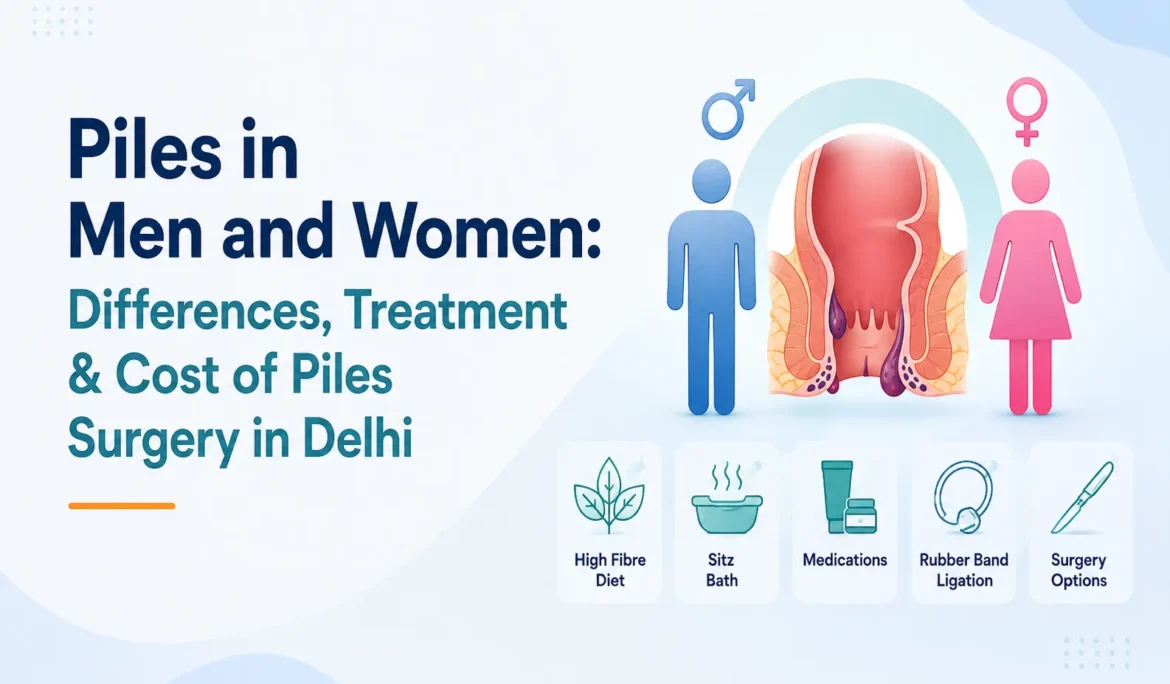
Piles medically known as haemorrhoids are among the most common yet most ignored health conditions in India. Many people suffer in silence for months, too embarrassed to seek help. If you have noticed rectal bleeding, itching around the anus, or persistent discomfort after bowel movements, you are not alone. According to research by the Association of Colon and Rectal Surgeons of India (ACRSI), approximately 5% of India’s population is living with active haemorrhoids at any given time, and nearly 50% of people will develop symptoms by the age of 50.
This article explains what piles are, how they differ between men and women, and what piles treatment and surgery options in Delhi are available.
What Are Piles?
Piles are swollen, inflamed veins in the lower rectum and anus. They fall into two main types:
- Internal piles develop inside the rectum. They are usually painless but often cause bright red bleeding during bowel movements.
- External piles form under the skin around the anus and are more likely to cause pain, itching, and swelling.
Internal piles are classified into four grades based on prolapse severity from Grade I (no prolapse, occasional bleeding) to Grade IV (permanently prolapsed, cannot be manually reduced). This grading directly determines the treatment approach.
Piles Symptoms
Common signs in both men and women include:
- Bright red blood on toilet paper or in the toilet bowl
- Pain, itching, or burning around the anus
- A feeling of incomplete bowel evacuation
- Swelling or a lump near the anus
- Mucus discharge after bowel movements
Important: Rectal bleeding should never be self-diagnosed as piles. A proper medical evaluation is essential to rule out other conditions, including colorectal cancer.
Piles in Men
Hospital-based studies in India consistently show that men account for a higher proportion of presenting patients approximately 66–68% though this likely reflects men’s greater willingness to seek anorectal care rather than a true difference in disease rates.
Men are particularly vulnerable due to:
- Heavy lifting and physical strain raises intra-abdominal pressure on rectal veins
- Low-fibre, high-processed-food diets leads to chronic constipation and straining
- Prolonged sitting desk jobs or long-distance driving increase sustained pressure
- Alcohol and smoking impair vascular integrity and worsen constipation
The most commonly reported symptoms in men are bleeding, pain during bowel movements, and anal itching.
Piles in Women
Women face unique triggers that make piles a particularly significant concern at certain life stages.
Pregnancy is the most well-recognised female-specific cause. As the uterus grows, it compresses pelvic veins and the rectum. Elevated progesterone relaxes blood vessel walls, making them more susceptible to swelling. Constipation itself common during pregnancy compounds the problem. According to Johns Hopkins Medicine, the pressure of carrying a baby puts extra stress on the blood vessels in the pelvic area, and straining during childbirth increases this further.
A large Korean population study published in PLOS ONE (involving over 194,000 participants) found that parous women (those who had given birth) had a significantly higher prevalence of haemorrhoidal disease than nulliparous women.
Beyond pregnancy, hormonal changes during menstruation and menopause can affect vein tone and blood flow in the pelvic region, increasing vulnerability.
Key Differences: Piles in Men vs. Women
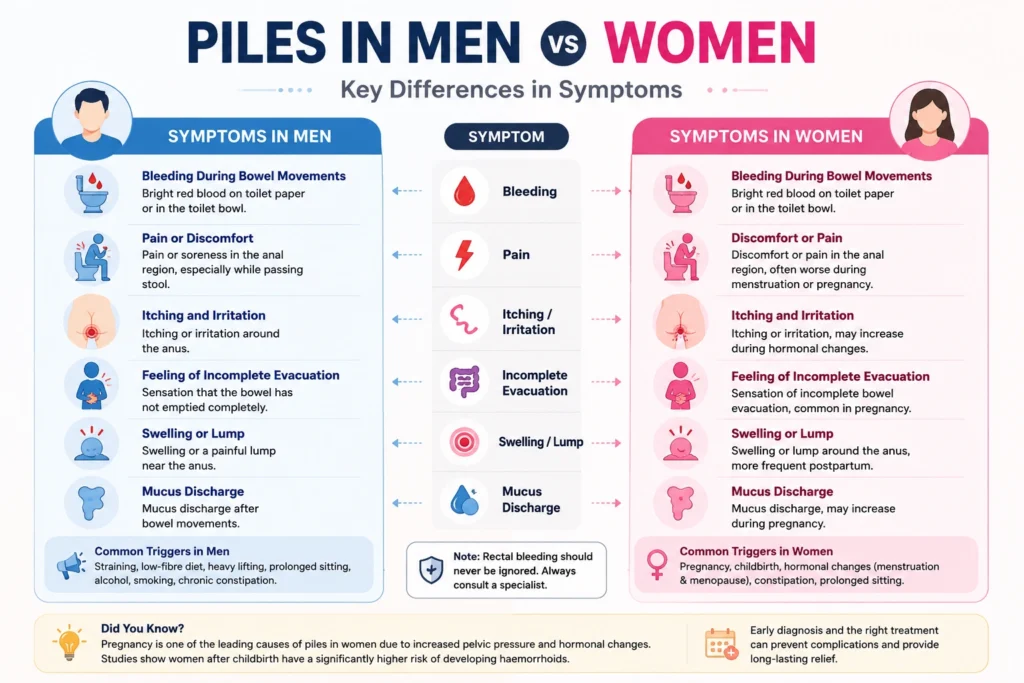
| Factor | Men | Women |
| Reported | Higher (66–69%) | Lower, likely underreported |
| Primary trigger | Straining, diet, lifestyle | Pregnancy, hormones, constipation |
| Peak risk period | Ages 40–60 | Pregnancy/postpartum; also middle age |
| Likelihood of seeking help | Higher | Lower due to social stigma |
Diagnosis
A doctor will conduct a physical examination and may perform:
- Anoscopy a small scope inserted into the anal canal to view internal haemorrhoids directly; the NIDDK (NIH) considers this the standard investigation
- Proctoscopy to assess the rectum and lower colon
- Colonoscopy or sigmoidoscopy recommended if there are alarm features like significant bleeding, anaemia, or a family history of colorectal cancer
Piles treatment without surgery in Delhi
Most Grade I and II piles respond well without surgery:
- Dietary changes: Increase fibre (25–35 g/day) and water intake to ease bowel movements
- Sitz baths: Soaking in warm water reduces inflammation and discomfort
- Topical creams and stool softeners: For short-term symptom relief
- Rubber Band Ligation (RBL): A rubber band cuts off the blood supply to an internal pile; it shrivels and falls off within days an effective outpatient procedure for Grade I and II haemorrhoids
- Sclerotherapy or Infrared Coagulation: Minimally invasive options to shrink smaller haemorrhoids
When Is Piles Surgery in Delhi Required?
Surgery is indicated for Grade III or IV haemorrhoids, cases where non-surgical treatments have failed, thrombosed piles, or severe and recurrent bleeding.
Types of Piles Surgery
- Conventional Hemorrhoidectomy: Surgical excision of haemorrhoidal tissue. Effective in approximately 95% of cases per NCBI data, though recovery takes 3–6 weeks.
- Stapled Hemorrhoidopexy (PPH): A circular stapler repositions internal prolapsed haemorrhoids, reducing their blood supply. Less postoperative pain, shorter hospital stay, though slightly higher long-term recurrence rates than conventional surgery.
- Laser Hemorrhoidoplasty: A laser probe delivers focused energy into the haemorrhoidal tissue, causing it to shrink. Typically a day-care procedure with minimal bleeding and faster return to normal activity (3–7 days). A review published in PMC (NCBI) noted favourable outcomes with no significant complications in Grade I–III haemorrhoids treated with laser techniques.
Cost of Piles Surgery in Delhi
Piles surgery costs in Delhi vary based on the procedure type, hospital accreditation, surgeon’s expertise, anaesthesia used, and duration of stay. Laser and stapler procedures typically cost more than conventional surgery due to specialised equipment. For an accurate, transparent estimate based on your diagnosis and grade of piles, consult directly with the surgical team at Primus Hospital.
It typically ranges from Rs. 35,000 to Rs. 1,45,000
Piles are highly treatable when caught early. Whether your symptoms are mild or you have been living with discomfort for years, the right treatment tailored to your grade of haemorrhoids and overall health can bring lasting relief. Do not let embarrassment delay care that can meaningfully improve your quality of life.
If you are experiencing rectal bleeding, pain, itching, or swelling around the anus, speak with a specialist today. Primus Super Speciality Hospital in Chanakyapuri, Central Delhi, is a NABH-accredited hospital with a dedicated Department of Minimal Access and GI Surgery. We offer in-house gastroenterology services, allowing patients to undergo diagnostic investigations like colonoscopy and proctoscopy within the same facility, without the inconvenience of being referred elsewhere. Book your confidential consultation at Primus Hospital, Delhi’s trusted destination for piles treatment.