
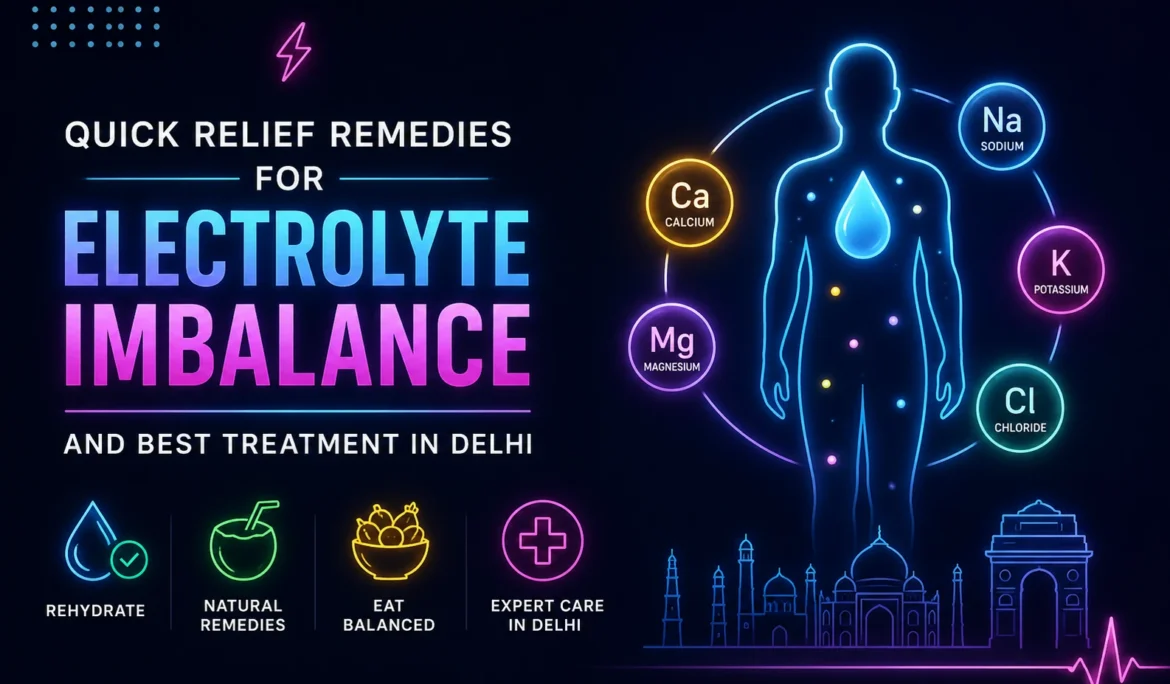
The human body is composed of approximately 50–60% water, and maintaining the right balance of electrolytes is essential for normal muscle function, nerve signalling, hydration, and heart rhythm regulation. Electrolytes such as sodium, potassium, calcium, magnesium, chloride, and phosphate help the body perform many critical functions every day.
An electrolyte imbalance occurs when the levels of these minerals become too high or too low. This imbalance can develop due to dehydration, excessive sweating, vomiting, diarrhoea, kidney disease, certain medications, or underlying medical conditions. While mild imbalances may cause symptoms such as fatigue, headaches, muscle cramps, or dizziness, severe electrolyte disturbances can lead to confusion, irregular heartbeat, seizures, and other serious complications.
Many mild cases improve with timely hydration, electrolyte replacement, and dietary adjustments. However, persistent or severe symptoms require medical evaluation and targeted treatment to identify and correct the underlying cause.
In this article, we explain what electrolyte imbalance is, its causes and symptoms, effective home remedies for quick relief, treatment options, and when to consult an electrolyte imbalance specialist or hospital in Delhi.
What Is Electrolyte Imbalance?
The body relies on at least six major electrolytes sodium, potassium, calcium, magnesium, chloride, and phosphate to regulate hydration, muscle contractions, nerve signalling, blood pressure, and heart function. An electrolyte imbalance occurs when one or more of these minerals become too high or too low in the bloodstream.
Electrolytes help maintain the body’s fluid balance and support communication between cells. Even small changes in electrolyte levels can affect how muscles, nerves, and organs function. More significant imbalances can lead to serious medical complications if left untreated.
Major Electrolytes and Their Functions
| Electrolyte | Main Function |
| Sodium | Regulates fluid balance and blood pressure |
| Potassium | Supports muscle contractions and heart rhythm |
| Calcium | Essential for bones, muscles, and nerve function |
| Magnesium | Helps regulate nerve and muscle activity |
| Chloride | Maintains fluid balance and acid-base regulation |
| Phosphate | Supports energy production and bone health |
How Does Electrolyte Imbalance Occur?
Electrolyte levels can become abnormal when the body loses excessive fluids or cannot properly regulate minerals. Common triggers include:
- Excessive sweating
- Vomiting
- Diarrhoea
- Dehydration
- Kidney disease
- Certain medications
- Hormonal disorders
For example, prolonged diarrhoea may cause sodium and potassium loss, while kidney disease can impair the body’s ability to regulate electrolyte levels effectively.
Electrolyte Imbalance Symptoms
Electrolyte imbalances can affect multiple organs because electrolytes play a direct role in muscle function, nerve signalling, hydration, and heart rhythm regulation. Symptoms vary depending on which electrolyte is affected and how severe the imbalance becomes.
Mild electrolyte disturbances may cause only minor discomfort, while severe imbalances can become medical emergencies requiring immediate treatment.
Mild Symptoms of Electrolyte Imbalance
Early symptoms are often nonspecific and can be mistaken for fatigue or dehydration.
- Fatigue
- Headache
- Muscle Cramps
- Weakness
- Increased Thirst
- Dry Mouth
These symptoms commonly occur when fluid loss exceeds fluid replacement.
Common Types of Electrolyte Imbalance
The body depends on a precise balance of sodium, potassium, calcium, magnesium, chloride, and phosphate to maintain normal cellular function. When the level of any of these electrolytes becomes too high or too low, specific electrolyte disorders can develop.
Each type of electrolyte imbalance affects the body differently and may require a unique treatment approach.
Major Types of Electrolyte Imbalance
| Type | Description | Common Symptoms |
| Hyponatremia | Low sodium levels | Headache, nausea, confusion, fatigue |
| Hypernatremia | High sodium levels | Excessive thirst, weakness, irritability |
| Hypokalemia | Low potassium levels | Muscle cramps, weakness, irregular heartbeat |
| Hyperkalemia | High potassium levels | Fatigue, muscle weakness, dangerous heart rhythm changes |
| Hypocalcemia | Low calcium levels | Muscle twitching, numbness, tingling |
| Hypercalcemia | High calcium levels | Fatigue, constipation, excessive urination |
| Hypomagnesemia | Low magnesium levels | Tremors, muscle spasms, weakness |
| Hypermagnesemia | High magnesium levels | Low blood pressure, weakness, confusion |
Electrolyte imbalance and best treatment in Delhi with Home Remedies for Quick Relief
Electrolyte losses caused by dehydration, excessive sweating, diarrhoea, or vomiting can sometimes be corrected with prompt fluid and electrolyte replacement. For mild electrolyte imbalances, certain home remedies may help restore balance and relieve symptoms such as fatigue, muscle cramps, dizziness, and weakness.
However, home remedies are appropriate only for mild symptoms. Severe electrolyte disturbances require medical evaluation and treatment.
1. Oral Rehydration Solution (ORS)
ORS is one of the most effective ways to replace both fluids and electrolytes lost through dehydration.
It helps replenish:
- Sodium
- Potassium
- Chloride
- Water
ORS is particularly useful during:
- Diarrhoea
- Vomiting
- Heat exhaustion
- Excessive sweating
2. Increase Fluid Intake
Dehydration is a common cause of electrolyte imbalance. Drinking adequate fluids throughout the day can help restore hydration and prevent further electrolyte loss.
Suitable fluids include:
- Water
- ORS
- Clear soups
- Electrolyte solutions recommended by healthcare professionals
3. Coconut Water
Coconut water naturally contains several electrolytes, including potassium and magnesium. It can help support hydration in mild cases of fluid loss.
However, coconut water should not replace medical treatment in moderate or severe electrolyte disturbances.
4. Consume Electrolyte-Rich Foods
Certain foods naturally contain important minerals that help restore electrolyte balance.
Examples include:
| Electrolyte | Food Sources |
| Potassium | Bananas, oranges, potatoes, spinach |
| Calcium | Milk, yoghurt, cheese |
| Magnesium | Nuts, seeds, legumes |
| Sodium | Soups and balanced meals containing salt |
A balanced diet can support recovery and reduce the risk of recurrent imbalances.
5. Rest and Avoid Excessive Heat Exposure
Continued sweating can worsen electrolyte depletion. Resting in a cool environment and avoiding strenuous activity may help prevent further fluid and electrolyte loss while recovery takes place.
When Home Remedies May Help
Home management may be appropriate when symptoms are mild and include:
- Fatigue
- Mild muscle cramps
- Increased thirst
- Headache
- Mild dizziness
Electrolyte imbalance and best treatment in Delhi
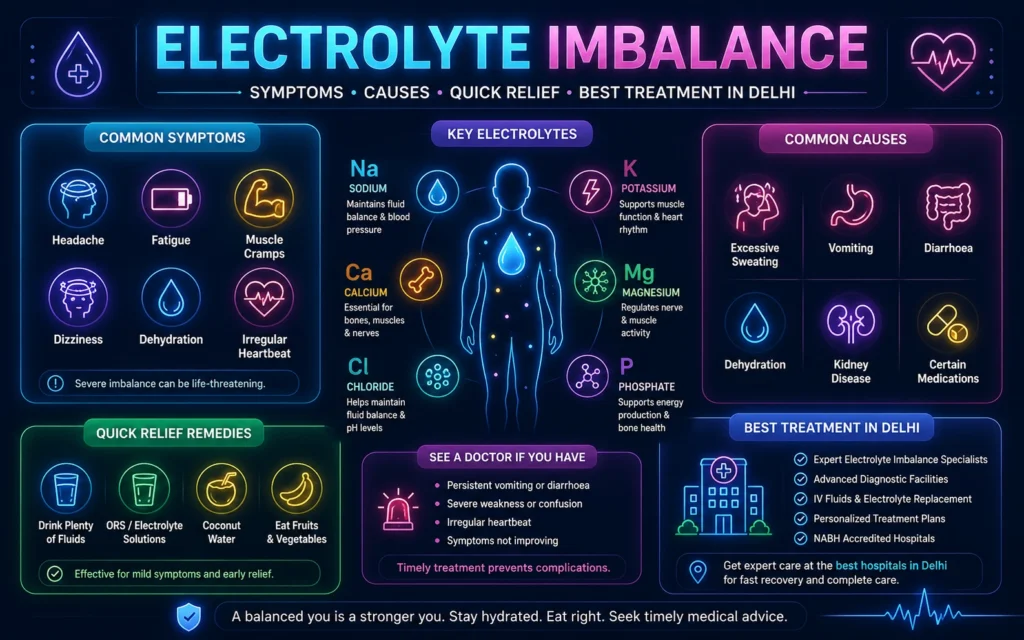
Treatment for electrolyte imbalance depends on the type of electrolyte affected, the severity of the imbalance, and the underlying cause. While mild cases may improve with hydration and dietary changes, moderate to severe imbalances often require medical treatment to prevent complications affecting the heart, muscles, kidneys, and nervous system.
Oral Electrolyte Replacement
For mild electrolyte disturbances, doctors may recommend:
- Oral rehydration solutions (ORS)
- Increased fluid intake
- Electrolyte-rich foods
- Oral electrolyte supplements
This approach is commonly used when dehydration, mild diarrhoea, or temporary fluid loss is the primary cause.
Intravenous (IV) Fluid Therapy
Patients with severe dehydration, persistent vomiting, significant diarrhoea, or marked electrolyte abnormalities may require intravenous fluids.
IV therapy allows healthcare providers to:
- Replace fluids rapidly
- Correct sodium and potassium imbalances
- Monitor electrolyte levels closely
- Prevent complications from severe dehydration
This treatment is often administered in a hospital or emergency care setting.
Medication Adjustments
Certain medications can contribute to electrolyte disturbances. If testing identifies medication-related electrolyte imbalance, doctors may:
- Adjust the dosage
- Change the medication
- Introduce electrolyte supplements
- Increase monitoring frequency
Patients should never stop prescribed medications without medical advice.
Treating the Underlying Cause
Long-term correction requires treatment of the condition responsible for the imbalance.
Examples include:
| Underlying Condition | Treatment Approach |
| Dehydration | Fluid and electrolyte replacement |
| Kidney Disease | Nephrology management and monitoring |
| Hormonal Disorders | Hormone-specific treatment |
| Diabetes | Blood sugar control |
| Chronic Diarrhoea | Gastrointestinal evaluation and treatment |
Electrolyte imbalance can range from mild dehydration-related symptoms to serious medical conditions affecting the heart, muscles, and nervous system. Recognising symptoms early, staying adequately hydrated, and seeking timely medical care can help prevent complications and support faster recovery.
If you are experiencing persistent fatigue, muscle cramps, dizziness, dehydration, or recurrent electrolyte disturbances, expert evaluation is important. At Primus Hospital, our experienced internal medicine specialists and multidisciplinary team provide comprehensive diagnosis, advanced testing, personalised treatment, and ongoing management for electrolyte imbalances and related medical conditions.
Schedule a consultation at Primus Hospital for expert care and timely treatment tailored to your health needs.